


Why use floral subscriptions in 2026: the complete guide
TL;DR:
- Floral subscriptions provide regular delivery of fresh, seasonal flowers that boost mood and save money. They are now more reliable with letterbox formats and popular for their emotional and practical benefits. Many consumers choose flexible plans that fit domestic needs while supporting wellbeing and convenience.
Floral subscriptions are recurring delivery plans that bring fresh, seasonal flowers to your door on a schedule you choose, removing the effort of repeated one-off purchases. The case for why use floral subscriptions 2026 is stronger than ever: fresh flowers boost parasympathetic activity at a statistically significant level, the UK subscription market hit £1 billion in 2024, and modern letterbox-friendly formats have made delivery more reliable than at any point before. Blumeflowers, a luxury floral retailer based in Birmingham, has built its subscription offer around exactly these shifts. Whether you want flowers for your own home or as a standing gift for someone you care about, the subscription model now makes more practical and emotional sense than buying ad hoc.
What are the key benefits of floral subscriptions in 2026?
Floral subscriptions deliver three distinct advantages: emotional wellbeing, financial savings, and time efficiency. Each one is backed by research, not marketing copy.
The mood and health case
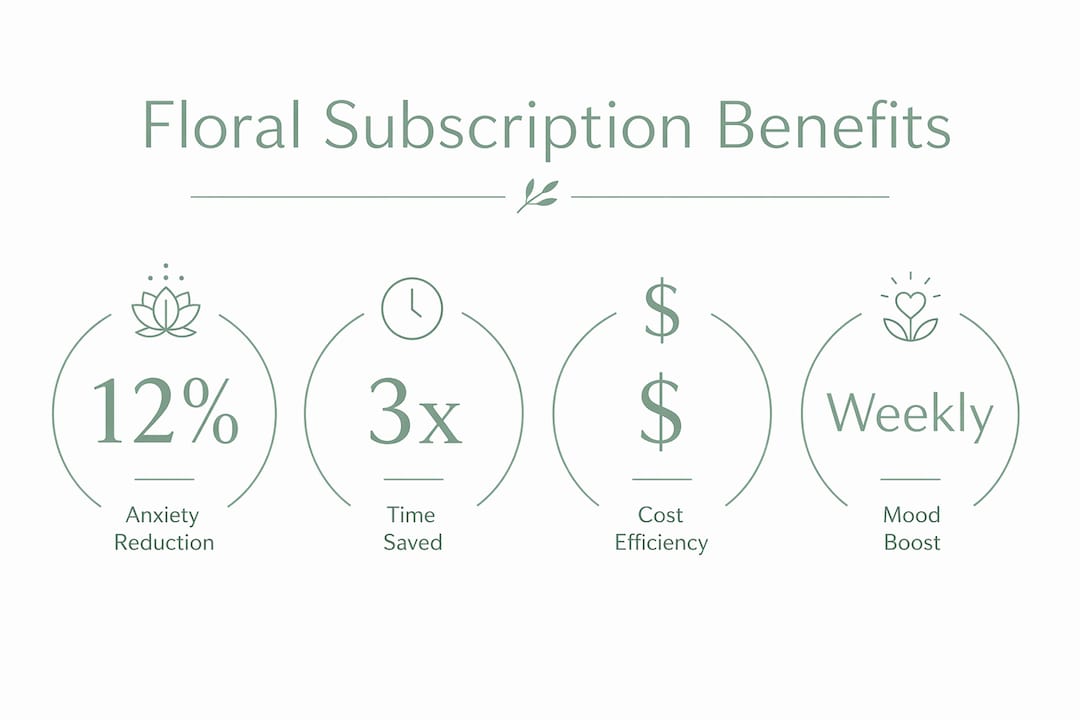
Fresh flowers produce measurable physiological changes. A controlled study found fresh flowers reduce anxiety scores by 12% over an eight-week period in households receiving weekly deliveries. That is not a minor effect. It is comparable to the benefit reported from other low-cost wellbeing interventions such as daily walks or mindfulness apps.
The emotional impact extends to gifting too. A meta-analysis covering studies up to 2025 found that 83% of people experienced emotional uplift from receiving flowers, with mood elevation lasting up to three days longer than for recipients of candles. Flowers trigger what researchers call a Duchenne smile, the involuntary, genuine expression of joy that other gifts rarely produce. A subscription means that response happens repeatedly, not just once.
“Receiving flowers is one of the few gift experiences that produces a genuine, involuntary smile every single time. The research is clear: the emotional benefit does not diminish with repetition.”
The science behind floral gifts confirms this pattern consistently across age groups and settings.
The financial and time-saving case
Subscriptions reduce the per-arrangement cost compared to buying individual bouquets at retail price. They also remove the mental load of remembering to order, choosing a florist, and managing delivery windows each time. The UK subscription model is forecast to grow over 16% annually through 2030, driven precisely by this combination of cost savings and convenience.
Key financial and practical benefits include:
- Lower cost per arrangement compared to one-off retail purchases
- No repeat decision fatigue from choosing flowers each time
- Consistent freshness because florists select blooms at their seasonal peak
- Reliable gifting without the risk of forgetting a standing commitment
- Flexible pause or skip options that protect your budget during quieter months
Pro Tip: Choose a designer’s choice plan rather than a fixed arrangement. Florists select whatever is freshest that week, which means you consistently receive higher-quality stems for the same price.
How have consumer attitudes shaped floral delivery services in 2026?
Consumer behaviour around flowers has shifted noticeably in 2026. Cost-of-living pressures have made buyers more deliberate, favouring fewer but more meaningful purchases over frequent impulse buys.
The move towards purposeful buying
UK consumers are buying fresh flowers more selectively, but they still prioritise them for gifting and special occasions. This has actually strengthened the subscription model. A standing subscription feels intentional rather than extravagant. It frames flowers as a regular, considered part of home life rather than an occasional treat.
A growing number of consumers now combine fresh subscriptions with artificial flowers for their interiors. Artificial blooms handle everyday styling, while fresh flowers arrive on subscription for gifting or to mark the week. This hybrid approach extends the visual impact of each delivery and reduces overall spend.
The letterbox delivery shift
Letterbox-friendly flower delivery has changed the logistics of floral subscriptions significantly. Slim-line packaging protects stems without requiring a signature, which means no missed drops and no redelivery fees. Urban households in particular benefit because someone is rarely home during standard delivery windows.
Value-conscious consumers in 2026 now prioritise longer vase life and lower delivery fees over traditional hand-tied bouquets. Letterbox formats allocate more of the budget to stem quality rather than packaging and logistics.
| Consumer priority in 2026 | Traditional bouquet | Letterbox subscription |
|---|---|---|
| Delivery reliability | Requires signature | No signature needed |
| Cost allocation | Packaging and wrapping | Stem quality |
| Missed delivery risk | High | Low |
| Vase life focus | Variable | Prioritised |
Pro Tip: If you live in a flat or work from home irregularly, a letterbox subscription removes the single biggest friction point in flower delivery. No waiting in, no redelivery, no wilted stems left on a doorstep.
What types of floral subscription plans are available?
Floral subscription plans vary by frequency, curation style, and delivery format. Choosing the right one depends on your budget, how often you want fresh flowers, and whether you prefer creative control or florist-led selection.
Frequency options
- Weekly: Maximum freshness, ideal for offices or households that use flowers as a core part of their decor
- Fortnightly: A strong balance between freshness and cost, suits most personal subscribers
- Monthly: The most budget-friendly option, best for gifting or occasional home styling
Weekly plans produce the most consistent mood benefits, given that the eight-week trial showing health improvements used weekly deliveries as its baseline. Monthly plans work well as gifts because the recipient experiences a genuine moment of surprise each time.
Curation styles
Seasonal subscription models typically offer two approaches. Designer’s choice plans give the florist full creative control, selecting whatever is freshest and most striking that week. Thematic plans let you specify a colour palette, flower type, or style such as wild and loose or structured and architectural.
Designer’s choice consistently delivers fresher flowers because the florist is not constrained by a fixed stem list. Thematic plans suit subscribers who have a specific interior aesthetic or who are gifting someone with known preferences.
Delivery formats
- Letterbox bouquets: Compact, no-signature, ideal for busy households
- Hand-tied bouquets: Fuller arrangements, require someone to receive them
- Corporate arrangements: Larger, styled for reception areas or meeting rooms
Flexible subscription options that allow pausing, skipping, or cancelling without penalty are a strong indicator of a trustworthy provider. Customers who can pause without losing money are far more likely to remain long-term subscribers.
For those in the West Midlands, the local flower subscription guide for Birmingham covers regional options and what to look for in a local provider.
How do you get the most from a floral subscription delivery?
Getting full value from a subscription means caring for flowers properly once they arrive. A few simple habits extend vase life significantly and keep each delivery looking its best for longer.
- Trim stems at an angle immediately on arrival, removing at least 2cm. This opens the stem and improves water uptake.
- Change the water every two days. Bacteria build up quickly and shorten vase life by several days.
- Keep flowers away from direct sunlight and heat sources. A cool room with indirect light extends freshness noticeably.
- Remove wilting blooms promptly. One dying stem releases ethylene gas, which accelerates decay in surrounding flowers.
- Use the flower food sachet included with most deliveries. It contains a biocide and a sugar source that genuinely extend vase life.
Beyond basic care, think about placement. Rotate arrangements between rooms across the week to keep the visual impact feeling fresh. A bouquet that starts in the kitchen can move to a bedroom or bathroom as it matures, giving you more enjoyment from each delivery.
For detailed guidance on keeping luxury arrangements at their best, the Blumeflowers article on maintaining luxury arrangements covers vase preparation, stem conditioning, and display techniques in full.
Combining your subscription flowers with complementary elements such as foliage from the garden, candles, or a simple ceramic vase also lifts the overall effect. The goal is not just fresh flowers on a table. It is a living, evolving part of your interior that changes with the seasons.
Key takeaways
Floral subscriptions deliver consistent emotional, physical, and financial benefits that one-off purchases cannot replicate, making them the most practical way to keep fresh flowers in your life in 2026.
| Point | Details |
|---|---|
| Proven mood benefits | Fresh flowers reduce anxiety scores by 12% and elevate mood for up to three days longer than candles. |
| Market growth confirms demand | The UK subscription market reached £1 billion in 2024 and is forecast to grow over 16% annually through 2030. |
| Letterbox formats reduce friction | Slim-line packaging requires no signature, cutting missed deliveries and allocating more budget to stem quality. |
| Designer’s choice yields freshest flowers | Florist-led selection ensures stems are chosen at seasonal peak, outperforming fixed arrangement plans. |
| Flexibility protects your investment | Subscriptions with pause and skip options retain subscribers longer and reduce financial risk for the customer. |
Why I think floral subscriptions are a lifestyle choice, not a luxury
I have watched the conversation around floral subscriptions shift over the past few years. When letterbox delivery first appeared, people treated it as a novelty. Now it is the format that makes the most practical sense for most households.
What strikes me most is how the subscription model changes your relationship with flowers. Buying a bouquet as a one-off feels like an event. Receiving flowers on a schedule feels like a habit, and habits are where the real wellbeing benefit lives. The research on eight-week trials showing reduced anxiety and lower blood pressure is not measuring the impact of a single bouquet. It is measuring what happens when flowers become a regular part of your environment.
The economic argument has also matured. In a year when consumers are genuinely careful about spending, the subscription model offers something rare: a predictable cost, a consistent quality, and no decision fatigue. You are not choosing between florists every fortnight. You are simply receiving something you already decided was worth having.
My honest recommendation is to start with a fortnightly plan on a designer’s choice basis. It gives you the freshest flowers without the commitment of weekly deliveries, and it lets the florist do what they do best. If you find yourself looking forward to each delivery, that is the signal to increase frequency. If life gets busy, pause it. The flexibility is the point.
Floral subscriptions are not a luxury reserved for people with large homes and larger budgets. They are a considered, repeatable way to bring something genuinely good into your week.
— Steve
Fresh flowers on your doorstep with Blumeflowers
Blumeflowers offers seasonal bouquets designed by florists who select stems at their freshest, with flexible weekly, fortnightly, and monthly delivery options across Birmingham, Solihull, and the wider UK.
Every arrangement reflects the season, so you receive flowers that are genuinely at their peak rather than stems forced to fit a fixed template. The beautifully simple peony bouquet is a strong starting point if you want to see the quality before committing to a plan. For businesses looking to bring fresh flowers into reception areas or meeting rooms, Blumeflowers also provides corporate flower arrangements tailored to professional settings. Explore the full range and find the subscription format that fits your life at blumeflowers.co.uk.
FAQ
What is a floral subscription service?
A floral subscription is a recurring delivery plan that sends fresh, seasonal flowers to your address on a schedule you choose, typically weekly, fortnightly, or monthly. The florist selects arrangements based on what is freshest, removing the need for repeated one-off orders.
Are floral subscriptions worth the cost?
Research shows fresh flowers reduce anxiety by 12% over eight weeks and elevate mood significantly longer than comparable gifts. Subscriptions also reduce per-arrangement cost compared to retail purchases, making them financially and emotionally worthwhile.
How do letterbox flower deliveries work?
Letterbox bouquets use slim-line packaging designed to fit through a standard letterbox without requiring a signature. The packaging protects stems from weather and damage, making delivery reliable even for delicate flowers.
Can I pause or cancel a floral subscription?
Most reputable providers offer flexible pause, skip, or cancel options without penalty. Flexibility is a key selection criterion for subscription services, and providers who offer it retain customers significantly longer.
What is the best subscription frequency for a first-time subscriber?
A fortnightly plan on a designer’s choice basis offers the best balance of freshness, cost, and variety. It gives the florist creative freedom to select the finest seasonal stems while keeping your commitment manageable.