


Why floral gifts impress: the science behind them
TL;DR:
- Flowers evoke genuine smiles and positive moods through their multi-sensory appeal and symbolic meanings. Scientific research confirms their abilities to enhance emotional well-being and reduce stress, making them uniquely impactful gifts. Thoughtful bouquet choices and proper care amplify their lasting emotional impression across all occasions.
Most people, when faced with a gift decision, default to something practical. A voucher, a bottle of wine, perhaps a candle. Yet flowers consistently outperform these alternatives in one very specific way: they create a genuine emotional reaction that other gifts simply do not. Understanding why floral gifts impress goes far beyond aesthetics. There is solid science, evolutionary biology, and sensory psychology behind why a bouquet lands differently than almost anything else you could hand someone. This article unpacks all of it, so your next gifting decision is backed by something real.
Table of Contents
- Key takeaways
- Why floral gifts impress: what research actually shows
- The evolutionary pull of flowers
- How to make a bouquet genuinely impressive
- Choosing flowers for the right occasion
- My honest take on why flowers keep winning
- Ready to give a gift that actually lands?
- FAQ
Key takeaways
| Point | Details |
|---|---|
| Flowers trigger genuine smiles | Research shows floral gifts produce true smiles and improve mood for several days, unlike most other presents. |
| Multi-sensory impact is unique | Flowers engage both sight and scent simultaneously, creating a more immersive and memorable experience. |
| Colour and structure matter | Choosing blooms intentionally based on colour and form can tailor the emotional tone of your gift. |
| Freshness extends the impression | The first 24 hours after delivery are critical; proper care dramatically prolongs the emotional impact. |
| Symbolism crosses all cultures | Floral gifts carry universal emotional meaning, making them appropriate and understood across occasions and backgrounds. |
Why floral gifts impress: what research actually shows
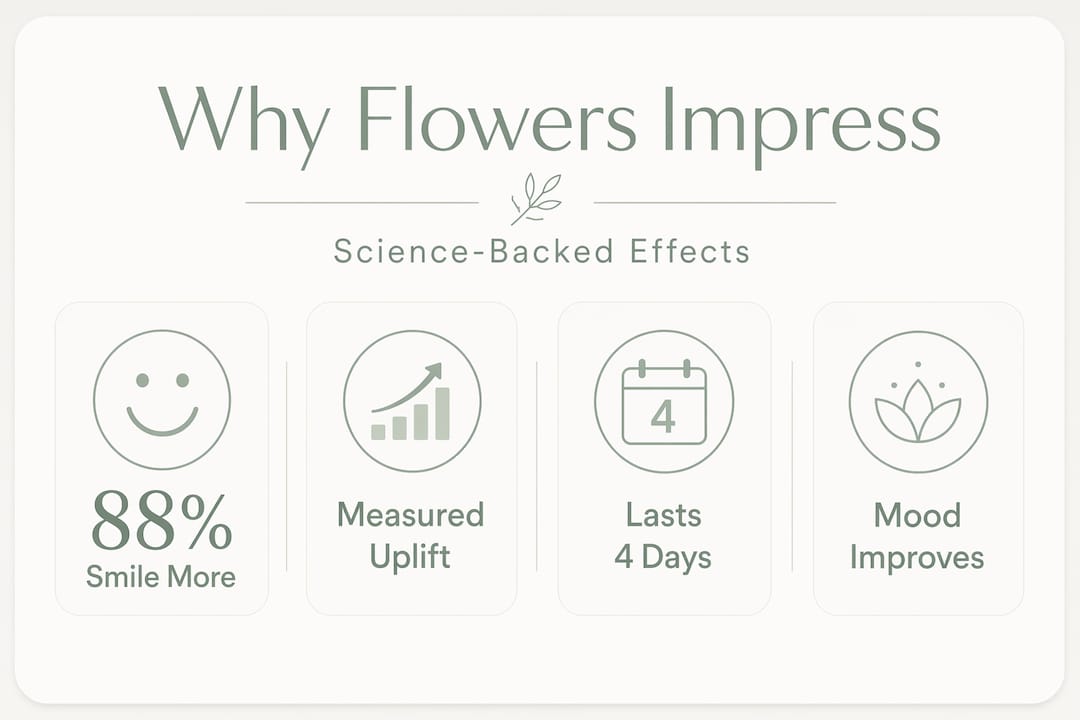
The benefits of floral gifts are not just anecdotal. They are measurable. A widely cited study involving 147 women found that flowers triggered genuine smiles in 100% of recipients. Not polite, social smiles. True Duchenne smiles, the kind that involve the eyes and reflect authentic positive emotion. That mood improvement lasted two to four days after receiving the bouquet, something no voucher or box of chocolates has been shown to replicate.
Men respond differently but just as positively. Recipients of floral gifts showed measurably higher levels of social engagement in the days following the gift. Flowers, it seems, do not just lift your mood in the moment. They reshape how you interact with the people around you.
More recent research adds physiological weight to these findings. A 2026 study published in Scientific Reports found that viewing flower stimuli enhances parasympathetic nervous system activity, the branch of your nervous system responsible for rest and calm. Participants reported improved mood scores and showed measurable reductions in stress markers after brief exposure to floral imagery and real blooms. The significance of floral arrangements, then, is not just cultural. It is written into your biology.
A separate 2025 study from MDPI examined the restorative effects of hydrangea blooms and found that different colours and flower structures produced distinct psychological responses. Mauve lacecap varieties with double-flowered structures had the strongest calming effect. This tells us something important: the impact of flowers on emotions is not generic. It is specific, and it can be shaped by the choices you make when selecting a bouquet.
What makes this multi-sensory engagement so powerful is the combination of sight and scent working at the same time. Multi-sensory stimulation from flowers creates an immersive experience that most gifts cannot replicate. A candle is olfactory. A painting is visual. Flowers are both, simultaneously, and they carry emotional symbolism on top of all of that.
The evolutionary pull of flowers
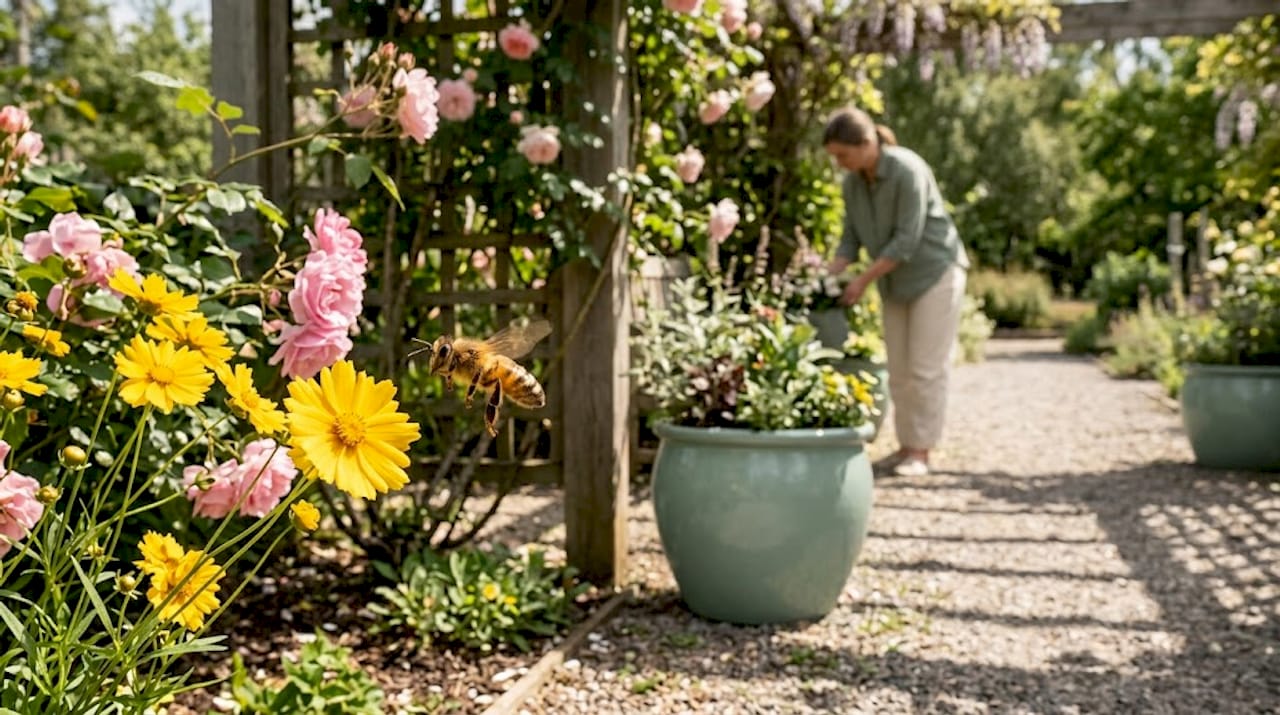
Flowers did not evolve to delight human beings. They evolved to attract pollinators. But in doing so, they developed the precise set of traits that humans find most compelling: symmetry, vivid colour, complex scent, and intricate structure. As biologists explain, flowers are powerful life architects that shaped entire ecosystems through co-evolution with animals. Humans, who share with those animals an evolved preference for these same sensory signals, respond accordingly.
This is why you do not need to explain flowers to anyone. No cultural instruction required. The attraction is instinctive.
Beyond biology, flowers carry centuries of accumulated symbolic meaning that most gifts simply cannot match. Their symbolism transcends cultures and languages, and floral associations with emotion have been built over generations. Consider what different blooms communicate without a single word:
- Red roses signal romantic love with an immediacy no other gift achieves
- White lilies convey respect, purity, and quiet sympathy
- Sunflowers carry warmth, positivity, and the feeling of celebration
- Peonies suggest abundance, good fortune, and deep affection
- Yellow tulips bring cheerfulness and the sense of a fresh beginning
This is why floral gifts for special occasions work so reliably. They carry pre-loaded emotional meaning that the recipient understands before they even read the card. Colour psychology deepens this further. Warm tones energise. Cool tones soothe. Knowing this lets you match your bouquet to exactly the emotional note you want to strike.
“Flowers speak the language of emotion more fluently than almost any other object we can give.” This is not sentimentality. It is the result of millennia of human and floral co-evolution.
How to make a bouquet genuinely impressive
Why flowers make great gifts is partly fixed in nature, but the impression your specific bouquet creates depends heavily on the choices you make. Size is not the deciding factor. A small, beautifully composed arrangement will outperform a large, chaotic one every time. Visual coherence and limited colour palettes signal intentionality and care, two qualities that make any gift feel personal rather than perfunctory.
Here is a practical framework for building a bouquet that genuinely lands:
- Choose a dominant colour that matches the emotional tone you want. Soft blush for romance. Deep burgundy for sophistication. Bright yellow for joy.
- Limit the palette to two or three colours. A restrained palette reads as considered. A rainbow of competing tones reads as an afterthought.
- Include at least one scent-forward bloom. Fragrance is a potent enhancer of memorability, and skilled florists manage bloom scent to ensure it enhances rather than overwhelms.
- Prioritise seasonal flowers. They arrive fresher, last longer, and reflect a level of attention to quality that recipients notice.
- Add a personal element. A handwritten note, a birth flower, or the recipient’s known favourite bloom transforms a bouquet from beautiful to meaningful.
The first 24 hours after delivery matter more than most people realise. Proper care during this window, including a clean vase, lukewarm water, and stems trimmed at a 45-degree angle, directly affects how long flowers stay fresh and therefore how long the positive emotional impression lasts.
| Factor | Lower impact approach | Higher impact approach |
|---|---|---|
| Colour palette | Mixed, many colours | Cohesive, two to three tones |
| Fragrance | None or overpowering | Subtle and complementary |
| Freshness | No care guidance given | Care instructions included |
| Personalisation | Generic arrangement | Tailored to recipient |
Pro Tip: Include a small printed care card with your bouquet. It tells the recipient exactly how to keep the flowers looking beautiful, and it subtly signals that you thought about their experience beyond the moment of opening.
Choosing flowers for the right occasion
The importance of giving flowers on the right occasion, in the right way, is where many people fall short. A bouquet chosen with intention feels entirely different from one grabbed hurriedly from a forecourt display. And the science supports this. Unexpected floral gifts activate a dopamine response in the recipient. The element of surprise amplifies the emotional reward, making the gesture feel even more generous than a gift of equivalent monetary value.
Here is how to match flowers to the moment:
- Birthdays: Bright, uplifting arrangements. Gerberas, sunflowers, and tulips in warm tones convey celebration and genuine affection.
- Anniversaries: Classic romance calls for roses or peonies. A monochromatic arrangement in deep reds or blush pinks carries weight and elegance.
- Sympathy: White and cream tones. Lilies, white roses, and freesias. Avoid anything too vibrant. Quiet beauty is appropriate here.
- Thank you gestures: Yellow, orange, or peach blooms. Warmth without intensity. Gerberas and ranunculus work beautifully.
- “Just because” gifts: These are often the most impactful. A surprise mid-week bouquet, with no occasion attached, feels extraordinary precisely because it is unexpected.
How flowers convey feelings depends on your attention to detail. For luxury flower gifting, presentation and timing are as significant as bloom selection. Same-day delivery to a workplace creates a different effect than a morning arrival at home. Consider which setting allows the recipient to fully enjoy the moment.
Pro Tip: For corporate gifting, consider arrangements that work visually in an office environment. Clean lines, restrained colour palettes, and scent-forward blooms that are not too heavy for a shared space. Blumeflowers offers specific options for corporate floral gifting that strike exactly this balance.
My honest take on why flowers keep winning
I have watched people receive gifts of all kinds, and the response to flowers is consistently different. Not because flowers are inherently superior to other gifts, but because they are alive. There is something about receiving something living that other presents simply cannot replicate.
What I find most interesting, having looked at this closely, is how much people underestimate the role of scent. You can describe a beautiful bouquet and people will appreciate it intellectually. But when they actually smell it, something shifts. It becomes a memory, not just a moment. Scent is the sense most directly connected to emotional memory, and flowers deliver it without any effort on your part.
I also think the science around bouquets shaping mood is genuinely underused knowledge. Most people give flowers because they feel right. Knowing that they produce measurable physiological calm and genuine smiles simply confirms what gift-givers have always sensed intuitively. The logic was always there. Now we have the data to explain it.
If there is one thing I would change about how most people approach floral gifting, it is the tendency to treat freshness as an afterthought. A stunning bouquet that wilts in two days leaves a very different impression than one that remains beautiful for a week. The first 24 hours of care are everything. Include care instructions. It makes you look thoughtful, and it genuinely extends the gift.
— Steve
Ready to give a gift that actually lands?
If you have been debating what to give and want something that creates a genuine emotional response, Blumeflowers makes it straightforward. Every arrangement is designed with the kind of visual coherence and seasonal freshness that the science actually supports.
For a classic that works across almost any occasion, the Beautifully Simple Peony Bouquet is a strong starting point. Clean, elegant, and designed to impress without being over-the-top. If you want something vibrant and fresh, the Cherry Hill Bouquet brings seasonal colour with genuine craftsmanship behind it. Blumeflowers offers same-day and next-day delivery across Birmingham and Solihull, with every bouquet arriving fresh and ready to make the right impression.
FAQ
Why do flowers create such a strong emotional reaction?
Flowers engage sight and scent simultaneously, and flower stimuli enhance parasympathetic activity, triggering immediate relaxation and mood improvement. This multi-sensory combination is unique among common gift types.
Do all flowers have the same emotional impact?
No. Research shows that flower colour and structure produce distinct psychological responses, with some varieties having significantly stronger calming or restorative effects than others.
How long does the positive effect of a floral gift last?
Studies show mood improvement from flowers lasting two to four days after receipt. Proper care after delivery extends both the physical lifespan of the bouquet and its ongoing emotional benefit.
Are floral gifts suitable for professional or corporate occasions?
Yes. Flowers work well in professional settings when selected with care. Restrained colour palettes and subtle fragrance make arrangements appropriate for shared spaces and formal relationships.
What makes a floral gift feel personal rather than generic?
Including the recipient’s favourite bloom, a birth flower, or a handwritten note transforms a bouquet from beautiful to meaningful. Thoughtful selection based on the occasion and the person signals genuine care.