


Why choose pastel bouquets: wedding and home styling guide
Pastel bouquets are the right choice when you want flowers that feel calm, timeless and quietly expressive without competing with everything else in the room. A palette of blush pink, pale lavender and cream works at a summer wedding, on a kitchen windowsill, or wrapped as a gift, because the softness of the tones adapts rather than dictates. Three reasons stand out immediately: aesthetically, pastels read as light and airy in photographs and in person; symbolically, they carry nuanced meanings around tenderness, grace and new beginnings; and practically, they pair with almost any setting, fabric or colour scheme without clashing.
Pro Tip: If you are choosing a pastel palette for a wedding, pick one dominant hue (say, blush) and let cream and a single accent tone (pale sage or dusty lavender) do the supporting work. Three tones are almost always enough.
Table of Contents
- Why do pastel palettes work so well aesthetically?
- What do pastel hues actually symbolise?
- Which pastel flowers work best in the UK?
- How do you choose a pastel bouquet for your occasion?
- How do you style pastel bouquets with dresses, venues and interiors?
- What should you expect for longevity and care?
- What pastel bouquet styles are worth considering?
- How do you customise a pastel bouquet for your wedding theme or home?
- Should you source pastel flowers locally or imported in the UK?
- Key takeaways
- A stylist’s perspective on what makes a pastel bouquet distinctive
- Blumeflowers: curated pastel bouquets for weddings and homes
- Useful sources and further reading
Why do pastel palettes work so well aesthetically?
Pastels reduce what designers call cognitive load. Because the tones are desaturated, the eye moves across them without effort, which is why a pastel arrangement tends to feel restful rather than demanding. Pastel flowers are psychologically associated with serenity, calmness and nostalgia, and florists increasingly use them to create what the interiors world calls a “quiet luxury” atmosphere.
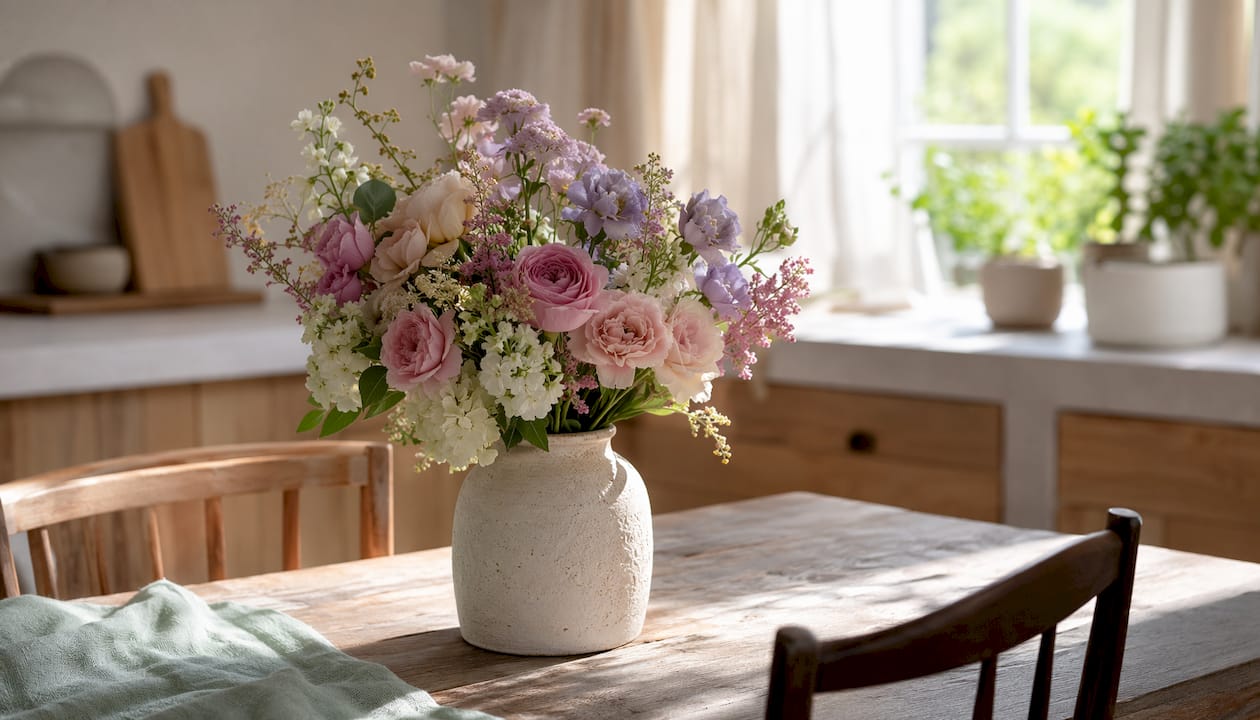
The distinction between cool and warm pastels matters more than most people realise. Cool-toned pastels such as pale blue and mauve are linked to relaxation and reduced mental effort, while warmer tones like cream and pale peach carry optimistic warmth. That is why a bouquet of blush ranunculus and cream roses reads differently from one built around pale lavender sweet peas and dusty blue hydrangeas, even when both are technically “pastel.”
Pastels also photograph exceptionally well. Saturated colours can blow out or compete with a bride’s dress in bright light; soft tones hold their detail. For bouquets that shape mood and interior atmosphere, the same principle applies: a pastel arrangement on a sideboard lifts a neutral room without overwhelming it.
What do pastel hues actually symbolise?
Symbolism in flowers draws heavily on Victorian floriography, and those meanings still shape pastel choices today, particularly for weddings and anniversaries. Here is a quick-reference guide:
- Blush pink: Gratitude, gentle romance, admiration. Pink roses have historically symbolised happiness and remain the most requested shade for bridal bouquets.
- Cream / ivory: Purity, elegance, new beginnings. A neutral that reads as sophisticated rather than stark.
- Pale lavender: Enchantment, first love, quiet devotion. Often chosen for spring and early summer weddings.
- Soft blue: Serenity, loyalty, trust. Less common in British floristry but striking when used with white or cream.
- Mint green: Renewal, freshness, youthful energy. Works as a foliage tone as much as a bloom colour.
- Peach: Sincerity, warmth, gratitude. Bridges pink and cream palettes beautifully.
One caveat: symbolism is culturally variable. White carries mourning associations in some East Asian traditions, and lavender reads as spiritual in others. Personal preference and cultural context should always take precedence over any fixed meaning.
Which pastel flowers work best in the UK?
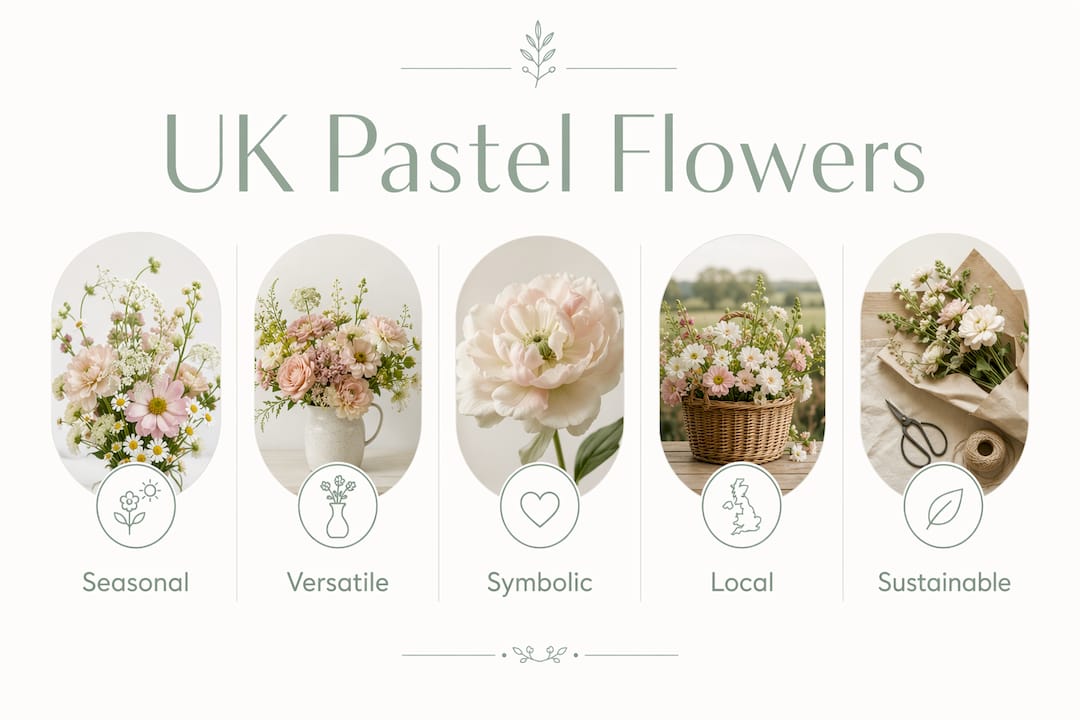
The eight flowers below are the backbone of British pastel floristry. Seasons are approximate and vary by year and supplier; always confirm availability with your florist.
| Flower | UK peak season | Scent | Visual effect | Best bouquet use | Vase life |
|---|---|---|---|---|---|
| Roses | May–October | Light to moderate | Full, romantic, structured | Bridal posy, centrepiece | 7 days |
| Peonies | Late May–June | Strong, sweet | Lush, voluminous, soft | Statement bride posy, table centre | 5 days |
| Hydrangeas | July–September | None | Airy, cloud-like, fills space | Filler, backdrop bloom | 7 days |
| Sweet peas | June–August | Intense, delicate | Wispy, movement-heavy | Trailing accent, posy | 4–5 days |
| Ranunculus | March–May | Faint | Layered, peony-like | Compact posy, mixed bouquet | 7 days |
| Tulips | February–April | Faint | Clean, graphic, elegant | Hand-tied, monochrome posy | 5 days |
| Stock | May–July | Strong, clove-like | Vertical, textural | Filler, fragrance anchor | 7 days |
| Astilbe | June–August | None | Feathery, delicate | Texture filler, cascade | 5 days |
UK florists consistently cite roses, peonies, hydrangeas and sweet peas as the staple pastel blooms for weddings and gifts. A few notes worth knowing:
- Peonies are a short window. Late May through June is the British season; outside it, expect imported stems at a higher price.
- Sweet peas add movement that prevents a bouquet looking flat or supermarket-bought. Incorporating delicate botanicals like sweet peas and scabiosa is the florist’s shortcut to a high-end, garden-inspired result.
- Lacecap hydrangeas read lighter and create less visual clutter than mophead varieties, a subtle distinction that matters in a refined pastel arrangement.
- Stock is underused. Its clove-like scent does the work of several scentless blooms and it holds well in warm venues.
How do you choose a pastel bouquet for your occasion?
Match mood, season and setting first, then work through the details. Here is a practical sequence:
- Define the occasion. A bridal bouquet needs to last a full day and photograph well. A home arrangement needs longevity in a vase. A gift needs to travel safely.
- Pick your dominant hue. One colour leads; two support. Blush with cream and sage is a classic; pale lavender with white and dusty green reads more romantic.
- Choose supporting textures. Pair a full bloom (peony, rose) with a wispy filler (sweet pea, astilbe) and a structural element (stock, eucalyptus). This is the basis of the 3:5:8 proportion rule: three focal blooms, five secondary stems, eight filler or foliage pieces. It works for posies and centrepieces alike.
- Consider scent and longevity. Sweet peas and stock are fragrant but shorter-lived. Roses and hydrangeas last longer but are quieter on scent. For a wedding ceremony in a warm church, heavy fragrance can be overwhelming.
- Set a realistic budget. Peonies and garden roses cost more than tulips or stock. Seasonal flowers are almost always cheaper and fresher than imported out-of-season stems.
Pro Tip: Ask your florist three questions before you confirm an order: “What seasonal swaps would you suggest if my first choice isn’t available?” “How should I condition these stems on arrival?” and “What’s the latest delivery time that still gives the flowers time to open?” A florist who answers all three confidently is one worth trusting.
For more structured planning guidance, the floral arrangements guide at Blumeflowers covers occasion-by-occasion advice in detail.
How do you style pastel bouquets with dresses, venues and interiors?
The best pairing strategy is either tonal harmony or soft contrast. Tonal harmony means staying within the same colour family (blush bouquet with a blush or ivory gown); soft contrast means introducing one complementary tone that sits opposite on the colour wheel but at the same low saturation (pale lavender against a warm champagne dress).
A few practical pairing rules:
- Ivory and champagne gowns: Almost any pastel works. Blush and peach are the warmest pairings; pale blue or mint create a cooler, more editorial look.
- White dresses: Cream blooms can read yellow against pure white. Stick to blush, pale lavender or soft blue for clean contrast.
- Rustic or barn venues: Peach, blush and sage with loose, garden-style foliage. Avoid overly structured arrangements, which look stiff against exposed brick or timber.
- Grand or formal venues: Structured roses and hydrangeas in cream and pale pink. More volume, less trailing.
- Table linens: Pastel bouquets pop against white or ivory linen. Against a coloured cloth, match the bouquet’s dominant tone to the linen’s undertone rather than its exact shade.
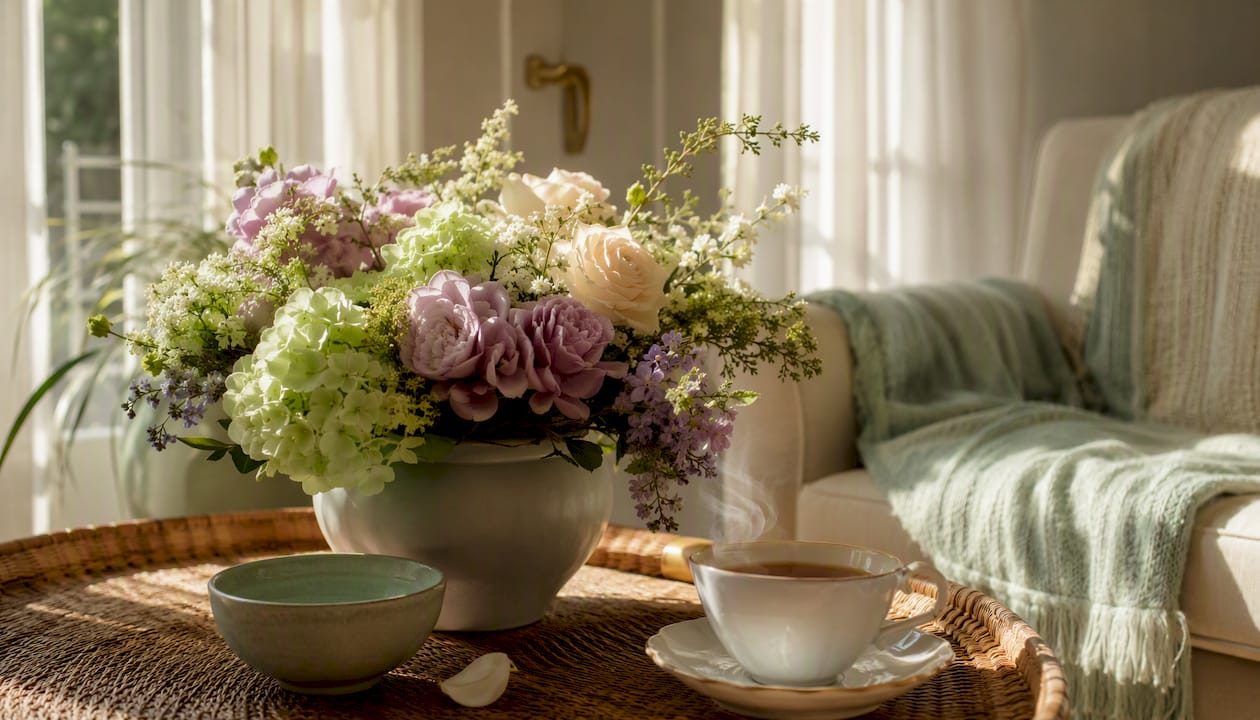
For interiors, pastel colours in home décor promote calm, creativity and clarity. Soft blue and mint green are particularly recommended for relaxation and focus. A pastel bouquet placed on a sideboard or kitchen island works best in a clear glass or matte ceramic vase that does not compete with the blooms. Keep foliage minimal indoors; too much green can tip a soft arrangement into something that reads as garden-centre rather than considered. Understanding how colour theory works in interiors helps you choose a vase and backdrop that let the flowers lead.
What should you expect for longevity and care?
Seasonality and sourcing directly affect both cost and freshness. British-grown flowers in season will almost always outlast imported stems cut days earlier and shipped across Europe. Off-season peonies in November, for example, typically come from South America or Kenya and may arrive with less vase life than a June stem from a UK grower.
Typical vase life by flower:
| Flower | Expected vase life | Notes |
|---|---|---|
| Roses | 7 days | Condition overnight before arranging |
| Hydrangeas | 7 days | Submerge heads briefly if wilting |
| Ranunculus | 7 days | Keep cool; avoid direct sun |
| Stock | 7 days | Remove lower leaves; change water every 2 days |
| Tulips | 5 days | They continue to grow in the vase |
| Peonies | 5 days | Buy in bud; they open over 2–3 days |
| Astilbe | 5 days | Mist lightly; dislikes dry air |
| Sweet peas | 4–5 days | Shortest-lived; worth the scent |
Care steps that genuinely extend freshness:
- Cut stems at a 45-degree angle under water before placing in a clean vase.
- Change the water every two days and re-cut stems each time.
- Keep arrangements away from direct sunlight, radiators and fruit bowls (ethylene from ripening fruit accelerates petal drop).
- For fragile stems like sweet peas, handle as little as possible and keep the room cool.
On cost: peak-season British flowers are typically more affordable than imported out-of-season equivalents. A peony posy in June costs noticeably less than the same arrangement in December. If your wedding or event falls outside the natural season of your preferred flower, ask your florist about visually similar alternatives that are in season.
What pastel bouquet styles are worth considering?
- Garden-harvest hand-tied: Loose, abundant, slightly wild. Roses, sweet peas, astilbe and trailing foliage. Suits outdoor and countryside weddings; photographs beautifully in natural light.
- Compact posy: Tight, rounded, structured. Ranunculus or tulips in a single tone. Clean and modern; works for bridesmaids or as a gift.
- Cascading bridal bouquet: Trailing sweet peas, roses and ivy or jasmine. Formal and dramatic; best for grand venues and fitted gowns.
- Monochrome blush: Every bloom in a single shade of pink, from palest blush to soft rose. Sophisticated and cohesive; particularly strong in photographs.
- Tonal ombré: Blooms arranged from lightest to deepest within one hue family. Requires careful stem selection but the effect is striking.
- Centrepiece column: Tall hydrangeas and roses in a footed vase. Fills a table without blocking sightlines if kept narrow.
- Low meadow centrepiece: Wide, low arrangement of mixed pastels in a shallow bowl. Intimate and conversational; suits long banquet tables.
- Dried and fresh mix: Dried pampas or lunaria alongside fresh ranunculus and roses. Extends the arrangement’s life and adds texture.
For visual references across these styles, the 2026 floral styling inspiration guide at Blumeflowers is a useful starting point.
How do you customise a pastel bouquet for your wedding theme or home?
The key is treating the bouquet as part of a wider colour story rather than a standalone object. For weddings, pull one tone from your stationery, ribbon or bridesmaid dresses and make it the bouquet’s dominant hue. If your invitations use a dusty sage green, introduce sage foliage into the arrangement so the whole day reads as considered rather than assembled from separate decisions.
For home décor, the same logic applies. A bouquet on a dining table should echo one colour already present in the room, whether that is a cushion, a piece of artwork or the wall colour. It does not need to match exactly; it needs to belong. A pale peach bouquet against a warm terracotta wall, for instance, creates a tonal relationship that feels intentional.
Texture is the other lever. A bouquet of all-round blooms (roses, ranunculus) can look flat. Adding one feathery element (astilbe, gypsophila) and one structural stem (stock, eucalyptus) gives the arrangement depth and movement. For weddings with a particular theme, such as art deco, botanical or coastal, the foliage and vessel choice often do more to signal the theme than the flowers themselves.
Elegant arrangements that work across occasions tend to follow this principle: the blooms provide the colour story, the foliage provides the character.
Should you source pastel flowers locally or imported in the UK?
Local sourcing is worth prioritising where you can. British-grown flowers travel shorter distances, arrive fresher, and carry a lower carbon footprint than stems flown from the Netherlands, Kenya or Colombia. The British Florist Association actively encourages consumers to ask florists about the provenance of their stems, and an increasing number of UK growers now supply direct to florists or via regional flower markets.
That said, the UK growing season has real limits. Peonies, sweet peas and ranunculus have short domestic windows. Outside those windows, imported stems are often the only option. The practical approach is to build your bouquet around what is genuinely in season in Britain, then supplement with imported stems for any variety that cannot be sourced locally at that time of year.
A few sourcing questions worth asking your florist:
- Are these stems UK-grown or imported?
- If imported, where from and how recently were they cut?
- Can you source British alternatives for any of these flowers?
Sustainability-minded couples increasingly opt for seasonal-only bouquets, accepting that the palette may shift slightly depending on what is available. This approach often produces more interesting, less predictable arrangements than a rigidly pre-specified list, and it tends to cost less.
Key takeaways
Pastel bouquets succeed because they combine genuine psychological calm with visual versatility, making them the most adaptable choice across weddings, home décor and gifting.
| Point | Details |
|---|---|
| Match mood to palette | Cool pastels (blue, lavender) relax; warm pastels (peach, cream) uplift. Choose based on the feeling you want the space or occasion to carry. |
| Plan around UK seasons | Peonies tend to peak in late spring to early summer; sweet peas are popular in summer months; tulips are commonly available in early spring. Seasonal flowers are fresher and typically less expensive. |
| Use the 3:5:8 rule | Three focal blooms, five secondary stems, eight filler or foliage pieces gives any pastel bouquet natural proportion and depth. |
| Ask your florist three questions | Seasonal swaps, conditioning advice, and delivery timing are the three questions that separate a reliable order from a disappointing one. |
| Blumeflowers for ready-made or bespoke | Blumeflowers offers curated pastel bouquets and bespoke consultations with same-day delivery across Birmingham and Solihull, and next-day delivery nationwide. |
A stylist’s perspective on what makes a pastel bouquet distinctive
Most people get the colour right and miss the movement. A pastel bouquet built entirely from round, full blooms, however beautiful the individual flowers, tends to sit still in a photograph and in a room. It reads as pretty rather than alive.
The detail that lifts a pastel arrangement from competent to genuinely striking is almost always a wispy, trailing element: sweet peas that curve naturally, a stem of astilbe that catches light differently from every angle, or a length of jasmine that breaks the silhouette of the bouquet. These are not filler in the dismissive sense. They are the elements that give the arrangement breath.
At BLÜME, the approach to pastels starts with texture and movement before colour. Once the structural and trailing elements are chosen, the colour palette almost selects itself, because the flowers that provide movement in the British season tend to come in the softest, most natural tones. Dusty foliage, particularly eucalyptus or artemisia, is the other underused tool. It shifts a pastel bouquet away from the sweet and towards the sophisticated, which is where most brides and home decorators actually want to land.
If you are working with a florist and the arrangement looks flat on the table, the answer is rarely “add more flowers.” It is almost always “add something that moves.”
Blumeflowers: curated pastel bouquets for weddings and homes
Blumeflowers is the straightforward answer for anyone who wants a considered pastel bouquet without the weeks of sourcing and decision-making. The range includes ready-to-order arrangements built around the flowers covered in this guide: the Beautifully Simple Peony Bouquet for spring weddings and gifts, the Tulip Bouquet for a clean, seasonal hand-tied, and the Showstopper Pink Bouquet for occasions that call for something larger. Bespoke consultations are available for weddings and corporate events where a specific palette or theme needs to be matched precisely.
Same-day delivery runs across Birmingham, Solihull and the surrounding West Midlands; next-day delivery is available nationwide. To discuss a bespoke pastel arrangement or browse the current seasonal range, visit blumeflowers.co.uk.
Useful sources and further reading
External sources:
- British Florist Association — industry body for professional UK florists; useful for finding accredited local suppliers.
- MDPI: Colour psychology and floral effects research — peer-reviewed study on how pastel tones affect mood and perception.
- ScienceDirect: Restorative environments and design — research on balancing colour psychology with personal preference in designed spaces.
- The Rose Shed: Creating a natural floral look — florist guidance on movement, texture and high-end pastel styling.
- Polka Dot Wedding: The language of pastel flowers — practical guide to floriography and pastel symbolism for weddings.
- Redesign Daily: Colour psychology of pastels in the home — interior design perspective on using soft tones for calm and focus.
- Couch & Dumbells: Colour theory in home interiors — accessible guide to applying colour theory when pairing bouquets with rooms.
From the Blumeflowers blog:
- Modern floral trends 2026: the definitive guide — current trend context for pastel palettes and seasonal styling.
- What makes a sophisticated bouquet: a design guide — design principles for achieving a polished, refined arrangement.
- How to select art-inspired bouquets: a style guide — for readers who want to connect floral choices with broader aesthetic references.