


What is exclusive bouquet design: a complete guide
TL;DR:
- Exclusive bouquet design involves creating personalized, artistically crafted floral arrangements using rare and seasonal blooms sourced through specialist relationships. It emphasizes bespoke sourcing, artistic principles, and close client collaboration to produce unique, impactful arrangements that enhance spaces and evoke specific moods.
Exclusive bouquet design is the practice of creating personalised, artistically crafted floral arrangements using rare and seasonal blooms sourced through specialist relationships. Unlike standard floristry, it treats each bouquet as a living expression of mood, style, and identity rather than a template to be repeated. The process combines bespoke colour palettes, direct grower sourcing, and meticulous hand-crafting to produce arrangements that are genuinely one of a kind. Blumeflowers specialises in exactly this kind of luxury floral craftsmanship, bringing together rare blooms and expert design for clients across Birmingham, Solihull, and beyond.
What is exclusive bouquet design and why does it matter?
Exclusive bouquet design is defined as bespoke floral craftsmanship that prioritises rare bloom sourcing, personalised styling, and creative collaboration between designer and client. The industry term used by professional florists and floral designers is “bespoke floristry,” though the two phrases describe the same core practice. Both terms signal a departure from assembly-line production and a commitment to treating each arrangement as an original work.
The distinction matters because standard florists generally follow pre-set templates, assembling bouquets from whatever stock is available. Exclusive designers work the other way around. They begin with the client’s vision, then source the specific blooms needed to realise it. That reversal changes everything about the final result.
Bespoke floristry also involves a creative partnership. The designer acts as a collaborator, not just a supplier. Moodboards, colour consultations, and venue visits all form part of the process. The bouquet that emerges reflects a specific person, occasion, and aesthetic rather than a generic seasonal selection.
How do exclusive bouquet designers source rare and seasonal blooms?
Sourcing is the foundation of exclusive bouquet design. Rare, seasonal hybrids unavailable in general retail are secured through direct relationships with specialist growers in the UK and internationally. That direct access is what separates a truly exclusive arrangement from a premium-looking one assembled from standard wholesale stock.
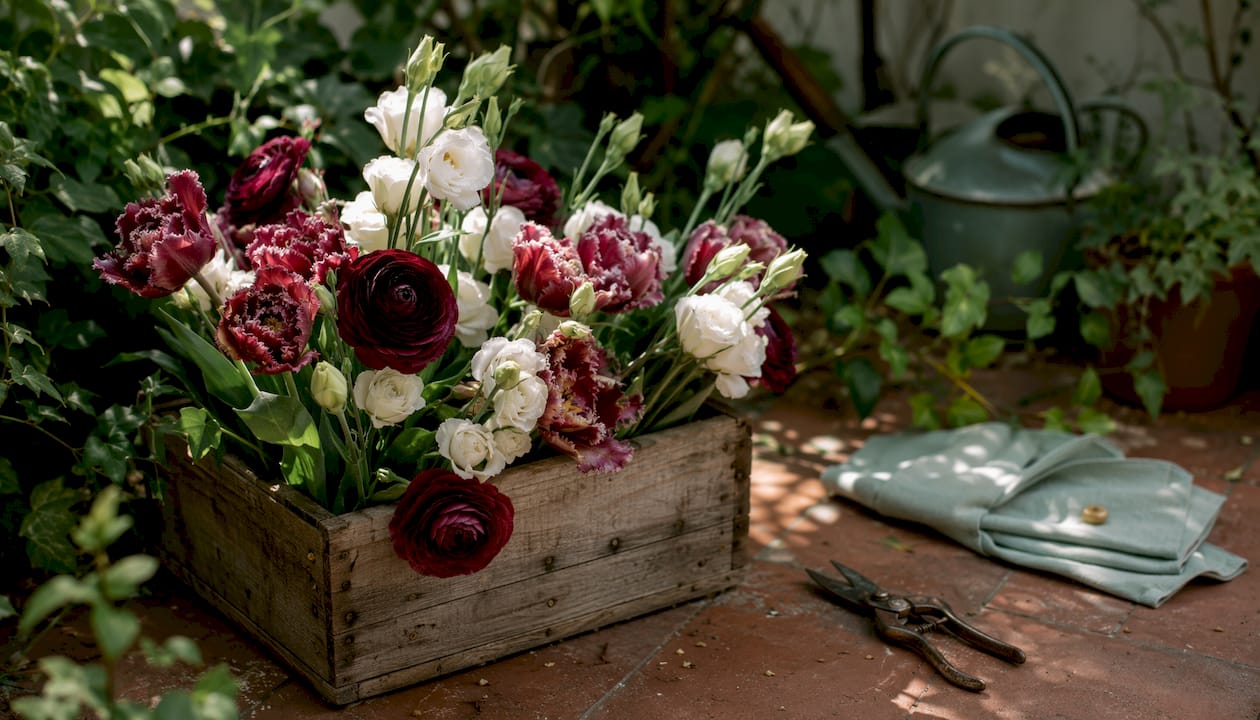
UK specialist growers cultivate varieties that never reach supermarket shelves or high-street florists. Internationally, designers work with growers in the Netherlands, Ecuador, and Kenya to access blooms at specific growth stages. The timing matters enormously. A garden rose picked two days early looks entirely different from one harvested at peak bloom.
Rare blooms commonly featured in exclusive bouquets include:
- Garden roses in heritage varieties such as David Austin cultivars, chosen for their layered petal structure and fragrance
- Peonies in coral, blush, and burgundy tones, hand-selected at optimal bloom stages for maximum visual impact
- Ranunculus in gradient colourways unavailable through standard wholesale channels
- Orchid hybrids sourced from specialist tropical growers for sculptural arrangements
- Sweet peas and hellebores from British cottage garden growers, available only in short seasonal windows
Each of these blooms requires specific handling, temperature control, and timing to arrive in perfect condition. That logistical complexity is part of what justifies the investment in exclusive arrangements.
Pro Tip: When commissioning a bespoke bouquet, ask your designer to name the specific cultivar of each bloom. A designer who can tell you the exact variety of rose or peony they are using has genuine sourcing relationships, not just a standard wholesale account.
Sourcing also shapes design possibilities. When a designer has access to a rare dusty-mauve ranunculus or a double-headed tulip in an unusual colourway, the creative palette expands dramatically. The quality of local and specialist sourcing directly determines the ceiling of what a bouquet can achieve aesthetically.
What artistic principles define exclusive floral arrangements?
Exclusive floral arrangements follow design principles drawn from fine art and interior design, not just traditional floristry. The result is a bouquet that functions as a three-dimensional composition rather than a bunch of flowers.
The core principles that distinguish exclusive design are:
- Personalised colour palettes. The designer builds a colour story specific to the client’s interior, event palette, or personal aesthetic. Colours are chosen for how they interact with each other and with the light in the intended space.
- Asymmetry and intentional negative space. Mass-market bouquets are typically symmetrical and densely packed. Exclusive designs use deliberate gaps and asymmetric placements to create visual tension and a sense of natural growth.
- Texture gradation. Smooth petals sit alongside feathery foliage, velvety blooms, and papery seed heads. The contrast in texture creates depth that reads differently from every angle.
- Bloom staging. Flowers at different stages of opening are placed deliberately. A tight bud next to a fully open bloom creates a sense of time passing within the arrangement.
- Mood and storytelling. Professional designers shape the entire spatial experience, not just the flowers. A bouquet designed for a candlelit anniversary dinner uses different tonal values and fragrance than one created for a bright corporate reception.
These principles require genuine skill to execute. Balancing stems for visual depth, colour gradation, and structural tension is a craft that takes years to develop. The price of an exclusive bouquet reflects that expertise as much as it reflects the cost of the flowers themselves.
Pro Tip: Ask your designer how the bouquet will interact with the light in your space. A good designer will adjust bloom colours and foliage choices based on whether the arrangement will sit in natural daylight, warm artificial light, or candlelight.
The contrast with assembly-line production is stark. A standard bouquet is designed to look acceptable in any setting. An exclusive arrangement is designed to look extraordinary in one specific setting, for one specific person, on one specific occasion.
What are the key characteristics of high-end bouquet styles?
High-end bouquet styles share a set of identifiable traits that you can use to evaluate any arrangement. Understanding these characteristics helps you recognise genuine exclusive design and distinguish it from premium-priced standard floristry.
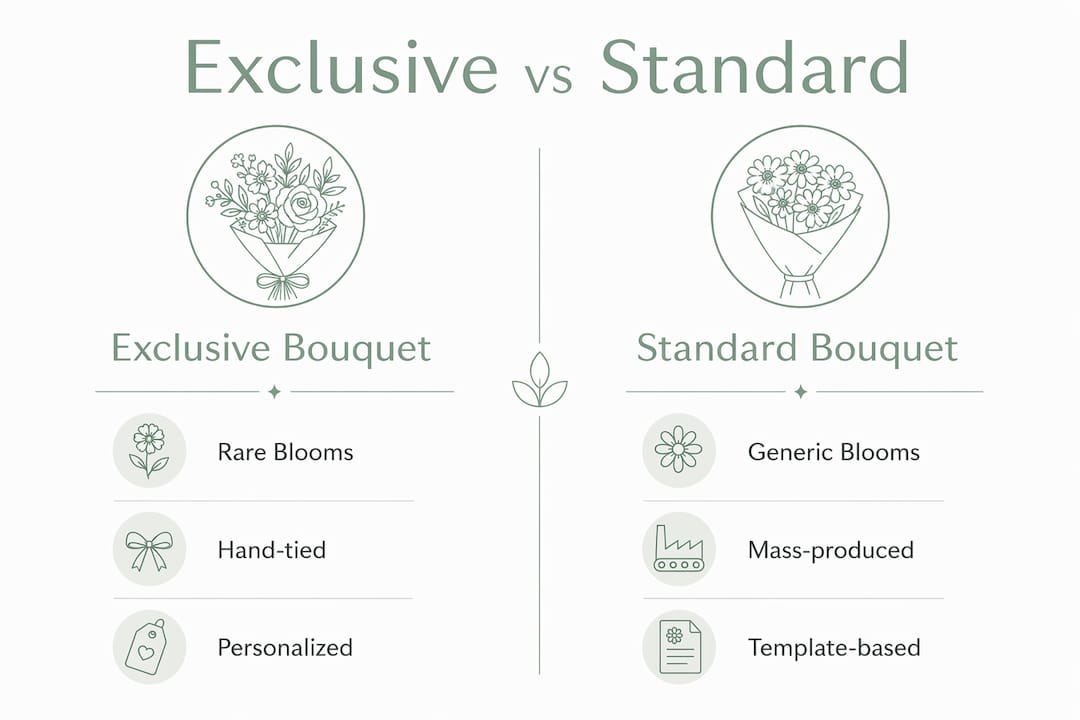
Luxury floral arrangements typically feature hand-tied methods and 360-degree designs, meaning the bouquet looks intentional and complete from every angle. Standard bouquets are often designed to face forward, with the back left sparse or unfinished.
The table below contrasts the defining traits of exclusive bouquets against standard market offerings:
| Feature | Exclusive bouquet | Standard bouquet |
|---|---|---|
| Bloom sourcing | Direct from specialist growers, rare cultivars | General wholesale, standard seasonal stock |
| Design method | Hand-tied, 360-degree, bespoke composition | Template-based, forward-facing assembly |
| Colour approach | Personalised palette, tonal gradation | Pre-set seasonal colour groups |
| Texture | Multi-layered, contrasting textures | Uniform, single-texture blooms |
| Packaging | Designer vessels, silk ribbons, premium boxes | Generic cellophane or standard wrapping |
| Design intent | Mood, storytelling, spatial interaction | Visual appeal, broad market suitability |
Popular styles within exclusive bouquet design include the luxury hand-tied, which uses a spiral stem technique to create a domed, full arrangement that holds its shape without a vase. The sculptural style prioritises architectural form over floral abundance, often using a single statement bloom surrounded by dramatic foliage. The cascading style, associated with formal events and weddings, trails downward in a waterfall of blooms and trailing greenery.
Each style suits different occasions and spaces. Blumeflowers offers a range of luxury bouquet types across these styles, designed for both personal gifting and corporate settings.
How do you commission and style an exclusive bouquet?
Commissioning a bespoke bouquet is a collaborative process. The more clearly you communicate your vision, the better the result.
- Share your aesthetic references. Bring images, fabric swatches, or interior photographs to your consultation. A designer who can see your space and style will make far better choices than one working from a verbal description alone.
- Communicate the occasion and mood. A birthday bouquet for a minimalist home calls for a different approach than a sympathy arrangement or a corporate installation. Be specific about the emotional tone you want the flowers to convey.
- Ask about the design process. Exclusive designers collaborate through moodboards, sketches, and venue visits to align the bouquet with your style. If a designer skips this step, they are not offering a truly bespoke service.
- Discuss budget openly. Expert guidance on where to invest and where to scale back while maintaining design integrity is part of what a skilled designer provides. You do not need to spend on every element equally.
- Evaluate flower quality on delivery. Petals should be firm and unblemished. Stems should be clean and straight. Any browning at the edges or wilting on arrival indicates a sourcing or handling problem.
- Care for the arrangement properly. Gently misting, avoiding direct sunlight, and using carefully placed water sources prolongs both the visual and aromatic impact of a luxury bouquet. Trim stems at an angle every two days and change the water daily.
The bouquet’s influence on mood and space is significant. Placing an exclusive arrangement in the right spot, with the right light, amplifies its impact far beyond what the flowers alone achieve.
Key takeaways
Exclusive bouquet design is bespoke floristry that combines specialist bloom sourcing, artistic design principles, and close client collaboration to produce arrangements that function as living works of art.
| Point | Details |
|---|---|
| Sourcing defines exclusivity | Direct grower relationships secure rare cultivars unavailable through standard wholesale channels. |
| Design follows art principles | Asymmetry, texture gradation, and bloom staging distinguish exclusive work from template floristry. |
| 360-degree construction | Hand-tied, fully composed bouquets look intentional from every angle, not just the front. |
| Collaboration is the process | Moodboards, sketches, and consultations ensure the bouquet reflects your specific vision and space. |
| Care extends the investment | Daily water changes, misting, and indirect light preserve both structure and fragrance. |
Why exclusive bouquets are worth more than their price tag
I have worked with enough bespoke floral arrangements to say this plainly: the price of an exclusive bouquet almost always surprises people until they see the finished piece in person. Then it makes complete sense.
The misconception I encounter most often is that you are paying for expensive flowers. You are not. You are paying for hours of design thinking, sourcing calls, and the physical skill of constructing something that holds its shape, tells a story, and changes how a room feels. The flowers are the medium. The design is the product.
What I find genuinely underappreciated is how much an exclusive arrangement transforms a space. A well-designed bouquet placed on a dining table or reception desk does not just decorate. It sets a tone that affects how people feel in that room. That is not sentiment. That is the same principle interior designers apply to furniture, lighting, and art.
My practical advice for anyone new to bespoke floristry: do not judge an exclusive bouquet by its price per stem. Judge it by what it does to the space it occupies and how long that effect lasts. A well-sourced, expertly crafted arrangement will still look extraordinary five days after delivery. A standard bouquet rarely manages three.
— Steve
Blumeflowers’ exclusive bouquet collections
Blumeflowers handcrafts each arrangement using rare seasonal blooms sourced through specialist grower relationships, with designs built around your occasion, space, and personal aesthetic.
The Beautifully Simple Peony Bouquet and the Beautifully Simple Showstopper Pink Bouquet are two of the most requested exclusive designs, each hand-tied and constructed for 360-degree impact. Same-day and next-day delivery is available across Birmingham and Solihull, with every bouquet arriving in premium packaging that reflects the quality inside. For corporate clients, Blumeflowers also offers bespoke floral installations and ongoing arrangements tailored to office and reception spaces.
FAQ
What is the difference between exclusive and standard bouquets?
Exclusive bouquets use rare blooms sourced directly from specialist growers, built around a personalised design brief. Standard bouquets follow pre-set templates using general wholesale stock.
What makes a bouquet design truly exclusive?
A bouquet is exclusive when it combines bespoke sourcing, a personalised colour palette, hand-tied construction, and a design process built around the specific client and occasion rather than a repeatable template.
How do I commission a custom bouquet design?
Begin with a consultation where you share aesthetic references, the occasion, and your space. A genuine bespoke designer will respond with moodboards or sketches before any flowers are ordered.
Are exclusive bouquets worth the higher price?
The price reflects design time, specialist sourcing, and expert craftsmanship as much as flower quality. A well-made exclusive arrangement typically lasts longer and has a greater visual impact than a standard bouquet at a lower price point.
What rare blooms are commonly used in exclusive arrangements?
Garden roses in heritage cultivars, peonies, ranunculus, orchid hybrids, and seasonal British blooms such as sweet peas and hellebores are frequently featured in exclusive bouquet design.