


What is an everlasting bouquet? Your complete guide
TL;DR:
- Everlasting bouquets are real, long-lasting floral arrangements made from dried or preserved flowers. They require minimal care, need to stay away from moisture and direct sunlight, and can last up to two years. These arrangements make thoughtful, durable gifts and versatile home decorations that retain natural beauty over time.
An everlasting bouquet is a floral arrangement made from real flowers that have been dried or preserved to retain their natural appearance for months or years. Merriam-Webster defines “everlasting” with specific reference to flowers and foliage that hold their look after drying. Unlike fresh cut flowers, which typically wilt within 7–14 days, everlasting arrangements offer lasting beauty with virtually no upkeep. The industry uses two main terms: naturally dried flowers, often called everlastings, and bio-preserved flowers, which are chemically treated to stay soft and vivid. Both are real flowers. Both are genuinely long-lasting. The difference lies in how they are made and how they feel.
What is an everlasting bouquet and what types are available?
Everlasting bouquets fall into two distinct categories, and confusing them leads to mismatched expectations. The first is the naturally dried flower, the classic everlasting. The second is the bio-preserved flower, a more recent development in floristry that uses chemical stabilisation to maintain a fresh appearance.
Naturally dried flowers
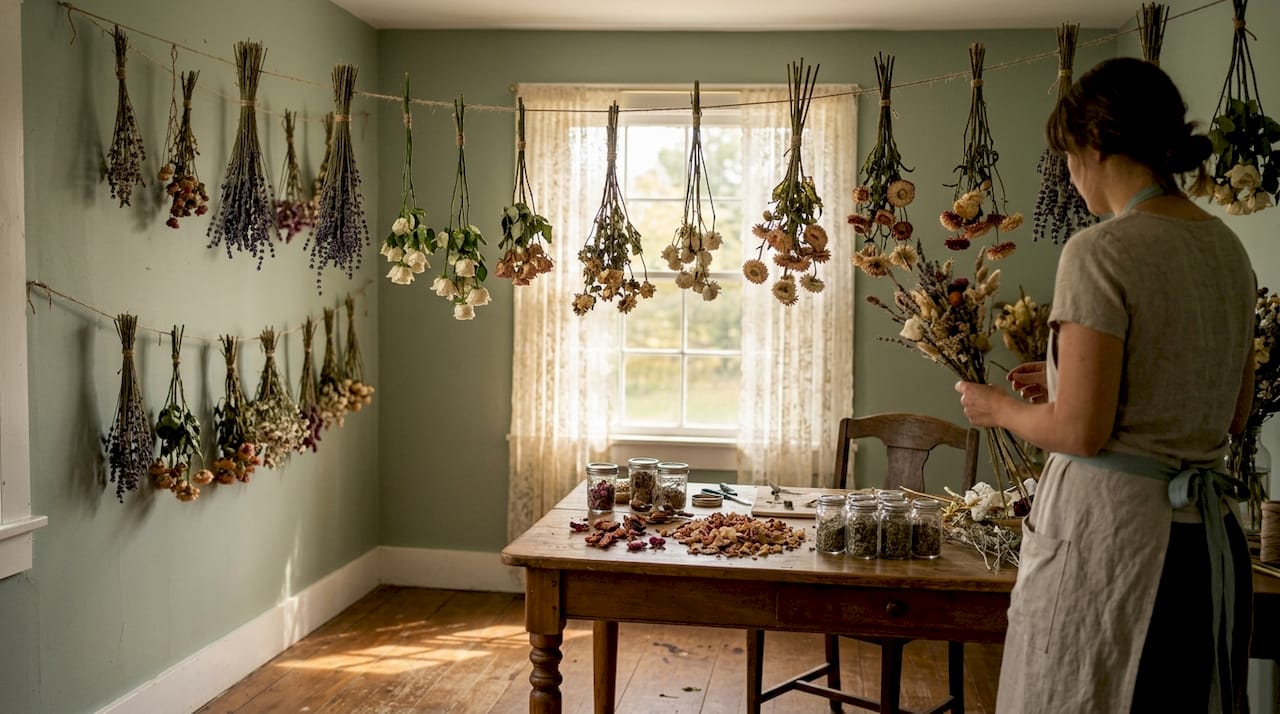
Naturally dried flowers are harvested at peak bloom and dried by hanging them upside down in small bunches. The Royal Horticultural Society advises drying in a dark, well-ventilated space for two to three weeks. The result is a flower that holds its shape and colour for a couple of years. Dried flowers feel papery and slightly fragile. Popular varieties for drying include statice, strawflowers, lavender, pampas grass, and dried roses.
Bio-preserved flowers
Bio-preserved flowers are real blooms treated with a glycerine-based solution that replaces the plant’s natural moisture. This process keeps petals soft, pliable, and vivid without any water. Preserved bouquets can last over a year without water or maintenance, provided they are kept away from sunlight and humidity. Preserved roses and hydrangeas are the most common choices for this method, as their dense petals hold the solution well.
Dried vs. preserved: a quick comparison
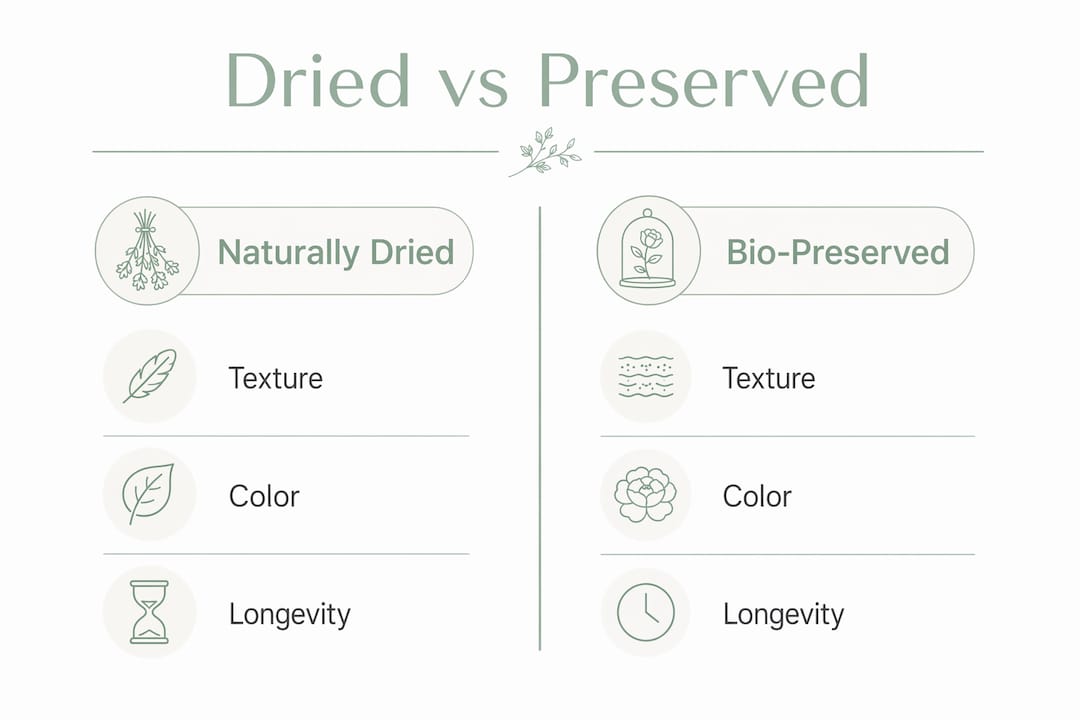
| Feature | Naturally dried | Bio-preserved |
|---|---|---|
| Texture | Papery, fragile | Soft, fresh-feeling |
| Longevity | 1–2 years | 1 year or more |
| Colour vibrancy | Muted, earthy tones | Bright, close to fresh |
| Maintenance | Dust gently | No water, avoid humidity |
| Cost | Lower | Higher |
Pro Tip: If you want a bouquet that looks freshly cut but never needs water, choose bio-preserved over naturally dried. If you prefer a rustic, textural look, naturally dried flowers are the better fit.
How do you care for an everlasting bouquet?
Everlasting bouquets require no watering, no sunlight, and no feeding. That simplicity is their greatest practical advantage. However, the wrong environment will shorten their life significantly.
The three main threats are moisture, direct sunlight, and physical handling. UV light fades colour in both dried and preserved flowers. Humidity causes dried flowers to reabsorb moisture and droop, and it triggers mould in preserved arrangements. Avoiding water, direct sunlight, and humidity is the single most consistent piece of care advice across all preserved flower brands.
Follow these steps to keep your arrangement looking its best:
- Place the bouquet away from windows with direct sun exposure.
- Keep it out of bathrooms, kitchens, and any room with high humidity.
- Dust gently with a soft, dry brush or a cool hairdryer on the lowest setting.
- Never mist or spray preserved flowers with water. Preserved flowers are chemically stabilised and water damages the preservation, risking mould or degradation.
- Avoid placing the arrangement near heating vents or open windows where temperature swings are frequent.
Pro Tip: A bedroom shelf or a dining room sideboard away from south-facing windows is the ideal spot for most everlasting arrangements in a British home.
For more general advice on keeping floral displays looking their best, the flower care tips guide at Blumeflowers covers practical maintenance for a range of arrangements.
What are the benefits of choosing an everlasting bouquet?
Everlasting bouquets offer advantages that fresh flowers simply cannot match. Their combination of natural beauty and long-lasting charm makes them well suited for both gifting and permanent home decoration.
The key benefits are:
- Longevity. A quality everlasting arrangement lasts months to years. Fresh flowers last 7–14 days. The difference in value over time is significant.
- Low maintenance. No watering schedules, no wilting petals to remove, no vase water to change.
- Gifting impact. A preserved bouquet stays beautiful long after the occasion. Recipients keep them as décor rather than discarding them within a fortnight.
- Aesthetic versatility. Everlasting arrangements suit artful home spaces as permanent features. They work in offices, bedrooms, and reception areas without any upkeep.
- Reduced waste. One everlasting bouquet replaces multiple rounds of fresh flowers, reducing the frequency of disposal and packaging waste.
The gifting case is particularly strong. When you give someone a preserved bouquet, you are giving them something they will look at every day for the next year or more. That kind of lasting presence is something a bunch of tulips, however beautiful, cannot offer.
Fresh, everlasting, or artificial: which should you choose?
The three main floral options each serve a different purpose. Understanding the differences helps you choose the right one for the right occasion.
| Feature | Fresh flowers | Everlasting bouquet | Artificial flowers |
|---|---|---|---|
| Lifespan | 7–14 days | 1–2+ years | Indefinite |
| Material | Real, natural | Real, preserved or dried | Synthetic |
| Maintenance | Daily watering | Minimal | Occasional dusting |
| Appearance | Vivid, fragrant | Natural, close to fresh | Variable quality |
| Best occasion | Birthdays, events | Gifts, home décor, weddings | Permanent installations |
| Cost over time | Recurring | One-off investment | One-off, lower quality |
Fresh flowers win on fragrance and immediate visual impact. They are the right choice for a birthday delivery or a dinner table centrepiece. Artificial flowers last indefinitely but lack the texture, scent, and authenticity of real blooms. Everlasting bouquets sit between the two. They are real flowers with real texture, but they behave more like décor objects than living plants.
The RHS notes that everlastings do not truly last forever, correcting a common misconception. Expecting a two-year lifespan is realistic. Expecting a decade is not.
For occasions like weddings, corporate receptions, or sympathy tributes, everlasting arrangements offer a practical and elegant solution. They look polished on the day and continue to serve as a memento long after.
How to make your own everlasting bouquet
Creating a dried flower bouquet at home is straightforward, but the process requires patience and attention to airflow. The results are rewarding when done correctly.
- Harvest or buy flowers at peak bloom. Flowers picked just before full bloom dry with better colour retention than those already fully open.
- Remove excess foliage. Strip leaves from the lower two thirds of each stem to reduce moisture and speed drying.
- Bundle stems in small groups. The RHS recommends no more than ten stems per bunch to prevent moisture trapping and ensure even drying.
- Hang upside down in a dark, well-ventilated space. A dry cupboard, garage, or shed works well. Avoid damp rooms entirely.
- Wait two to three weeks. Check stems regularly. Flowers are ready when they feel dry and papery throughout.
- Arrange and display. Once dried, handle gently. Dried stems are brittle and snap more easily than fresh ones.
The best flowers for home drying include lavender, strawflowers, statice, roses, and achillea. Hydrangeas dry beautifully but need very low humidity during the process.
Pro Tip: Tie bunches with a rubber band rather than string. As stems shrink during drying, a rubber band contracts with them and keeps the bunch tight.
The main limitation of DIY drying is colour. Home-dried flowers tend toward muted, earthy tones. Professionally bio-preserved flowers retain far brighter colours because the preservation process actively replaces moisture with colour-stabilising solution.
Key takeaways
Everlasting bouquets are real flowers, either naturally dried or bio-preserved, that last months to years with minimal care and no water.
| Point | Details |
|---|---|
| Two main types | Naturally dried flowers are papery and rustic; bio-preserved flowers are soft and vivid. |
| Core care rule | Keep away from direct sunlight, humidity, and water to maximise lifespan. |
| Gifting advantage | Everlasting bouquets outlast fresh flowers by months, making them more memorable gifts. |
| DIY is achievable | Bunch no more than ten stems, hang upside down in a dark space, and wait two to three weeks. |
| Realistic lifespan | A well-maintained everlasting arrangement looks good for one to two years, not indefinitely. |
Why I think everlasting bouquets deserve more credit than they get
Most people still reach for fresh flowers by default. I understand the instinct. There is something immediate and alive about a fresh bouquet that no dried arrangement can fully replicate. But I have come to believe that everlasting bouquets are genuinely underrated, and the reason is almost always a misconception.
The biggest one I encounter is that people assume preserved flowers are artificial. They are not. They are real blooms, treated with care to hold their form. When you pick up a well-made preserved rose, it feels like a flower, not a prop. That distinction matters enormously when you are choosing a gift for someone who values quality.
The second misconception is around longevity. People expect them to last forever, then feel let down when they fade after eighteen months. Set the expectation correctly and the reaction is entirely different. A bouquet that looks beautiful for a year and a half is extraordinary value compared to fresh flowers replaced every fortnight.
My honest advice: if you are buying a gift for someone who appreciates beautiful things in their home, a preserved bouquet is a stronger choice than fresh flowers in almost every scenario. It stays. It reminds them of you every time they walk past it. That is a quality that wilted petals in a bin cannot offer.
— Steve
Everlasting bouquets from Blumeflowers
Blumeflowers offers a curated selection of preserved and dried arrangements designed for gifting and home decoration across Birmingham, Solihull, and the surrounding regions.
The Beautifully Simple Peony Bouquet is a standout choice for anyone wanting an elegant, low-maintenance arrangement that works equally well as a gift or a permanent feature in a living space. For those looking for something with a bolder presence, the Showstopper Pink Bouquet delivers vivid colour and lasting impact. Every arrangement is crafted with the same attention to detail that defines the Blumeflowers approach to luxury floristry.
FAQ
What is the difference between dried and preserved flowers?
Dried flowers are naturally dehydrated by hanging upside down, resulting in a papery texture and muted tones. Preserved flowers are treated with a glycerine-based solution that keeps them soft, pliable, and closer in appearance to fresh blooms.
Are everlasting bouquets made from real flowers?
Yes. Both naturally dried and bio-preserved everlasting bouquets are made from real flowers. The preservation process retains the natural structure and appearance of the original bloom.
How long does an everlasting bouquet last?
A well-maintained everlasting arrangement typically looks good for one to two years. The RHS confirms that everlastings retain their appearance for a couple of years when kept in the right conditions.
Can you water an everlasting bouquet?
No. Preserved flowers must never be watered or misted. Water damages the chemical preservation and can cause mould or rapid deterioration.
Are everlasting bouquets a good gift?
Everlasting bouquets make excellent gifts because they last far longer than fresh flowers and serve as a lasting decorative reminder of the occasion. They suit birthdays, anniversaries, and sympathy tributes equally well.