


What is a hand-tied bouquet? Your 2026 guide
TL;DR:
- A hand-tied bouquet is a floral arrangement built with stems placed in a spiral technique and secured at a single point. This construction creates a natural, self-supporting shape that maintains stability, volume, and flexibility without foam or vases. It offers practical advantages such as better transport stability, extended freshness in water packs, and ease of re-vasing, making it ideal for gifting and special occasions.
A hand-tied bouquet is defined as a floral arrangement built by placing stems one by one into the florist’s hand using a spiral technique, then securing them at a single binding point to create a balanced, natural, and self-supporting structure. The term “hand-tied” is the recognised industry standard in British floristry, distinguishing this method from foam-based or vase-arranged designs. Unlike a generic wrapped bunch, a true hand-tied bouquet relies entirely on the spiral stem architecture for its shape, stability, and visual character. Florists at studios like Fiore Designs and retailers such as Blumeflowers use this construction as the foundation for everything from birthday gifts to wedding bouquets.
What is a hand-tied bouquet and how is it constructed?
The spiral technique is the defining feature of a hand-tied bouquet, not its shape or flower choice. A florist begins with a single central stem held upright, then adds each subsequent stem at a consistent diagonal angle while rotating the bunch. This rotation creates a spiral below the binding point, which acts as a hidden internal framework. The result is a bouquet that holds its form without foam, wire, or a vase.
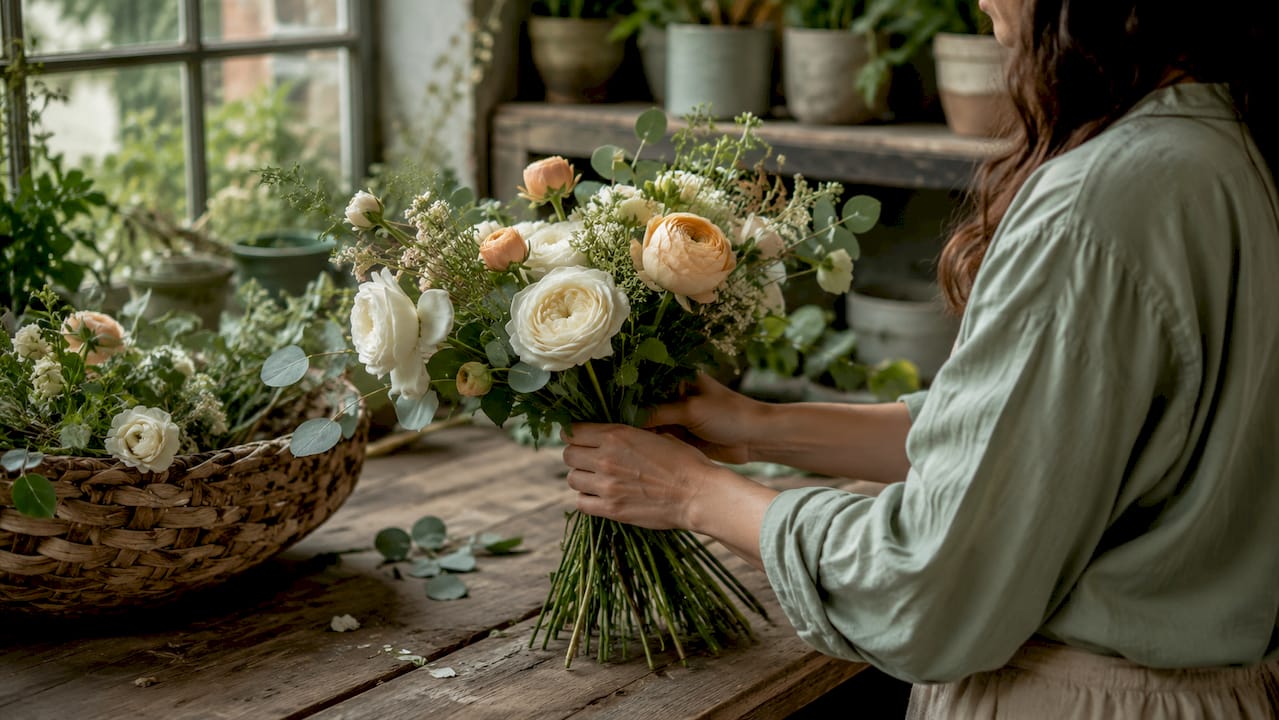
According to Rinlong Flower’s 2026 guide, the build flow starts from a central stem and adds each new stem at a diagonal angle while rotating to form the spiral. This matters because the angle of each stem determines how much air and volume the finished bouquet carries. Tight angles produce a compact, dome-shaped arrangement. Wider angles create a loose, garden-style silhouette.
Once all stems are placed, the florist ties them firmly at the binding point using twine, ribbon, or floral tape. The stems below the tie remain exposed and parallel, which is what makes re-vasing straightforward. The spiral adds shape, volume, and stability, allowing flowers to move naturally without crushing one another. This is fundamentally different from foam arrangements, where stems are pushed into a fixed medium and cannot be repositioned.
Pro Tip: When examining a bouquet to check whether it is genuinely hand-tied, look at the stems below the binding. They should fan outward in a spiral pattern rather than sitting in a flat, parallel bundle.
- Hold a central stem upright between thumb and forefinger.
- Add each new stem at a 45-degree diagonal angle, rotating the bunch slightly after each addition.
- Continue until all flowers and foliage are placed, maintaining consistent stem angles throughout.
- Bind tightly at the natural tie point where the stems converge.
- Trim the stems to an even length below the tie.
Why choose a hand-tied bouquet for gifting or special occasions?
Hand-tied bouquets are popular for weddings and gifting because their construction produces a natural, effortless appearance that photographs well from every angle. The exposed stems and visible binding give the arrangement an honest, artisanal quality that foam-based designs rarely achieve. For the recipient, the bouquet arrives as a complete, self-contained object rather than something that needs immediate assembly or a specialist container.
The practical advantages are considerable:
- Transport stability. The spiral structure prevents stems from shifting during delivery, reducing the risk of crushed blooms or a collapsed arrangement on arrival.
- Aqua pack hydration. Many hand-tied bouquets are delivered in an in-water aqua pack, providing up to 48 hours of hydration without a vase. This gives the recipient time to find the right container without compromising flower freshness.
- Foam-free design. Hand-tied bouquets are no-vase-required when delivered in water packs, making them a cleaner, more sustainable gifting option compared with foam-based arrangements.
- Easy re-vasing. Because stems are trimmed to a consistent length and held in a spiral, the bouquet drops naturally into most standard vases without rearranging.
- Photography. The rounded or garden silhouette created by spiral construction settles naturally and presents well in both formal and candid photography, which is why hand-tied designs dominate wedding bouquet choices.
“The ‘effortless’ look of hand-tied bouquets comes from precise stem angle control rather than casual placement.” — Fiore Designs
This distinction matters when choosing a gift. A bouquet that looks relaxed and natural has been engineered to appear that way. The gifting impact of flowers is well documented, and the hand-tied format maximises that impact by combining visual quality with practical convenience.
What types of hand-tied bouquets are there?
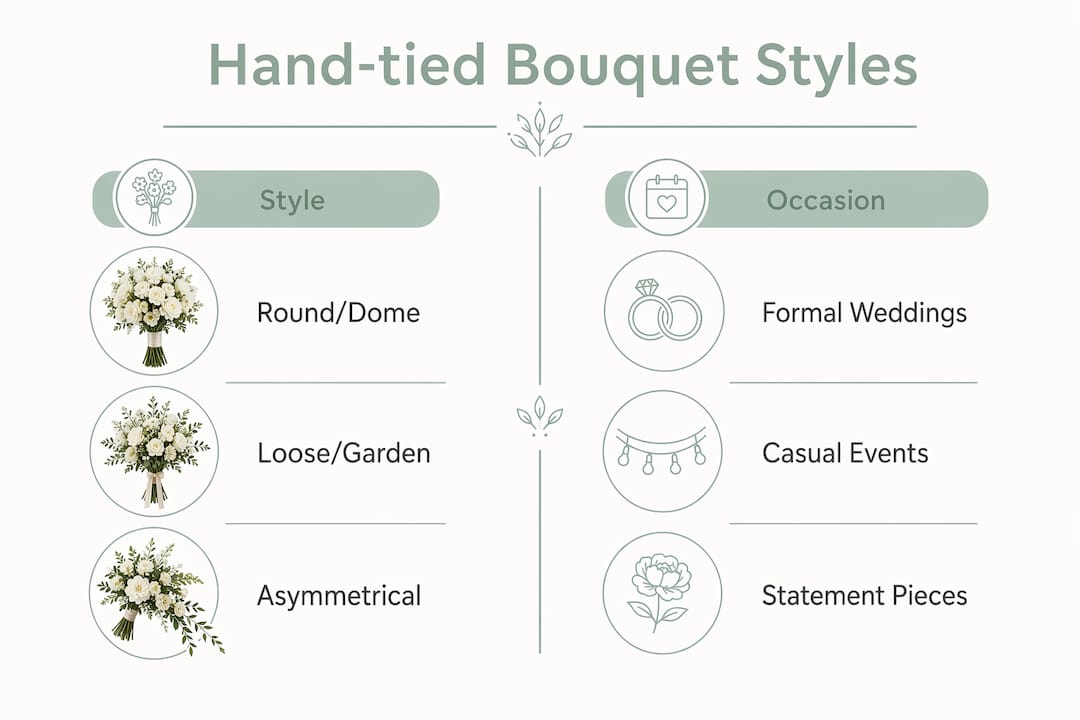
The hand-tied construction method supports a wide range of visual styles, which is one reason it has become the default format across British floristry. The spiral technique is equally effective whether a florist is building a tight posy or a sprawling asymmetrical arrangement. Style is determined by stem angle, flower selection, and the density of the build, not by switching to a different construction method.
| Style | Visual character | Best occasion |
|---|---|---|
| Round/dome | Compact, symmetrical, full-headed blooms | Weddings, formal gifting |
| Loose/garden | Open, airy, mixed textures and heights | Birthdays, informal celebrations |
| Asymmetrical | Uneven silhouette, one-sided focal point | Contemporary gifting, editorial events |
| Cascading | Trailing stems below the binding | Bridal, formal ceremonies |
| Oversized | Large-scale, statement proportions | Corporate gifting, grand occasions |
Flower selection reinforces the style. Peonies, garden roses, and ranunculus suit loose or round styles because their full heads fill space naturally. Tulips and anemones work well in compact or contemporary arrangements. Foliage choices such as eucalyptus, ruscus, or fern add texture and support the spiral structure by filling gaps between flower heads.
Colour also plays a role in how the style reads. Monochromatic schemes in white or blush read as formal and refined, making them well suited to elegant gifting occasions. Mixed jewel tones or seasonal palettes read as celebratory and personal. The bouquet’s mood and aesthetic impact are directly shaped by these choices.
Pro Tip: If you are ordering a hand-tied bouquet for a wedding, ask your florist to specify the stem count and binding material. A higher stem count with a natural twine binding photographs better than a low-count bunch with synthetic ribbon.
How should you care for a hand-tied bouquet?
Proper care begins the moment the bouquet arrives, not when you first notice the flowers drooping. The spiral stem technique is both a structural and aesthetic choice, and preserving that structure through correct handling extends the life of the arrangement considerably.
- Leave the bouquet in its aqua pack for up to 48 hours after arrival. Removing it too early exposes the stems to air before they have fully hydrated. Keeping flowers in water packs beyond 48 hours, however, may compromise freshness and arrangement stability.
- Trim 5 cm from the stem ends at an angle before transferring to a vase. Cutting at an angle increases the surface area available for water uptake. Use clean, sharp scissors or secateurs rather than a blunt knife, which crushes the stem tissue.
- Keep the tie intact. Removing the tie risks the bouquet falling apart or losing its balanced shape. The binding holds the spiral structure in place inside the vase, which is why the arrangement looks intentional rather than randomly placed.
- Fill the vase with cool, clean water and add the flower food sachet if one was provided. Warm water accelerates bacterial growth, which shortens vase life.
- Position the vase away from direct sunlight, draughts, and radiators. Heat and air movement accelerate dehydration. A cool, bright spot away from fruit bowls is ideal, as ripening fruit releases ethylene gas that shortens flower life.
- Change the water every two days and re-trim the stems each time. This removes bacterial build-up and keeps the water channels in the stems open.
A wide-necked vase suits hand-tied bouquets best because it accommodates the spread of stems below the binding without forcing them into an unnatural position. Tall, narrow vases compress the spiral and can cause stems to snap at the tie point.
Key takeaways
A hand-tied bouquet is defined by its spiral stem construction, which creates shape, stability, and longevity that no other binding method replicates.
| Point | Details |
|---|---|
| Spiral construction is the defining feature | Every stem is placed at a diagonal angle in the hand, creating a hidden framework that supports the bouquet’s shape. |
| Aqua packs extend gifting convenience | Bouquets can remain fresh for up to 48 hours in an in-water pack before needing a vase. |
| Keep the tie intact when re-vasing | Removing the binding destroys the spiral structure and causes the arrangement to collapse. |
| Style varies but method stays the same | Round, loose, cascading, and asymmetrical styles all use the same spiral technique with different stem angles and flower choices. |
| Care determines longevity | Trimming stems at an angle, using cool water, and avoiding heat sources significantly extends vase life. |
Why hand-tied bouquets are worth understanding properly
I have spent years watching people receive beautiful hand-tied bouquets and immediately undo the florist’s work by cutting the tie, cramming the stems into a too-narrow vase, or leaving the aqua pack on for four days. The bouquet wilts, and the flowers get the blame. The construction gets none of the credit and none of the care it deserves.
What strikes me most about the hand-tied format is how much skill is concealed inside something that looks casual. The effortless appearance is the product of precise angle control, consistent rotation, and a florist’s trained eye for balance. When Blumeflowers builds a hand-tied arrangement, the goal is a bouquet that looks as though it was gathered from a garden that morning. Achieving that takes considerably more technical discipline than it appears.
The gifting dimension is also underrated. A hand-tied bouquet is one of the few gifts that works across almost every occasion, from birthdays and anniversaries to sympathy and corporate gestures, because the format itself communicates thoughtfulness. It is not a bunch of flowers dropped into a box. It is a constructed object with a clear point of view. Understanding floral presentation and its impact changes how you choose, give, and receive flowers entirely.
My honest recommendation: when you next order a bouquet, ask specifically for hand-tied construction and specify the style. You will receive something that holds its shape, photographs beautifully, and lasts longer than a standard wrapped bunch. That is not a coincidence. It is the result of a technique that has been refined over decades of British floristry practice.
— Steve
Discover hand-tied bouquets from Blumeflowers
Blumeflowers designs every bouquet using the spiral hand-tied technique, with each arrangement wrapped and packed in a hydration sleeve for safe delivery across Birmingham, Solihull, and surrounding areas.
Whether you are looking for a classic peony arrangement or a seasonal statement piece, the collection covers every occasion and style. The Beautifully Simple Peony Bouquet is a strong starting point for anyone wanting a full, rounded hand-tied design with immediate visual impact. For something lighter and seasonal, The Tulip Bouquet demonstrates how the spiral technique works equally well with slender-stemmed flowers. Every bouquet arrives gift-ready with a hydration pack, so the recipient can enjoy it immediately without needing a vase to hand.
FAQ
What is the hand-tied bouquet definition in floristry?
A hand-tied bouquet is a floral arrangement constructed by placing stems one by one into the florist’s hand at diagonal angles to form a spiral, then binding them at a single tie point. The spiral structure is what distinguishes a true hand-tied bouquet from a loosely wrapped bunch.
How long does a hand-tied bouquet last in an aqua pack?
A hand-tied bouquet can remain fresh in an in-water aqua pack for up to 48 hours before it needs to be transferred to a vase. Leaving it beyond this window risks compromising both freshness and the integrity of the arrangement.
Should you remove the tie when placing a hand-tied bouquet in a vase?
No. Florists recommend keeping the tie intact when placing a hand-tied bouquet in water, as the binding holds the spiral structure in place. Removing it causes the stems to splay and the arrangement to lose its shape.
What types of hand-tied bouquets are available?
Hand-tied bouquets come in round, loose or garden-style, asymmetrical, cascading, and oversized forms. All use the same spiral stem construction; the visual difference comes from stem angles, flower selection, and the density of the build.
Are hand-tied bouquets suitable for weddings?
Hand-tied bouquets are widely used for weddings because their natural, airy appearance photographs well from multiple angles and the self-supporting structure makes them easy to carry and hand off. Both round and cascading styles are popular choices for bridal use.