


What are mixed bloom bouquets: a complete guide
TL;DR:
- Mixed bloom bouquets combine various flower types, fillers, and greenery to create layered, symbolic arrangements. They offer greater visual depth, versatility, and resilience compared to single-flower bouquets, making them suitable for most occasions. Proper care, including trimming stems and using flower food, extends their lifespan and preserves their beauty.
Mixed bloom bouquets are floral arrangements that combine multiple flower species, filler blooms, and complementary foliage into a single, cohesive display designed for visual impact and layered meaning. In the floral industry, the standard term is a “mixed arrangement” or “hand-tied mixed bouquet,” and understanding the distinction matters when you are ordering for a specific occasion. Whether you are gifting for a birthday, decorating a dining table, or marking a milestone, mixed bloom bouquets offer a versatility that single-variety arrangements simply cannot match. This guide covers everything from composition and symbolism to care and seasonal selection.
What are mixed bloom bouquets and how are they structured?
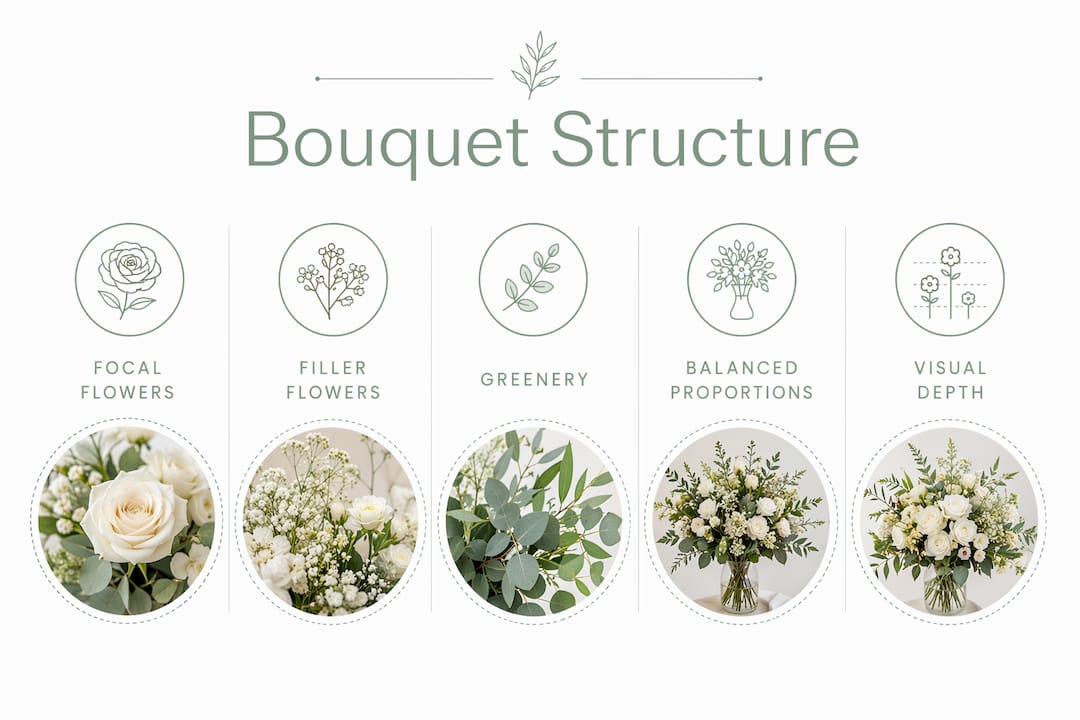
A mixed bloom bouquet is built around three distinct layers: focal flowers, filler flowers, and greenery. Each layer serves a specific purpose, and the balance between them determines both the visual impact and the longevity of the finished arrangement. Bouquet composition relies on focal flowers for drama, filler flowers for texture and volume, and greenery for structure and contrast. Getting this ratio right is what separates a professional arrangement from a handful of stems bundled together.
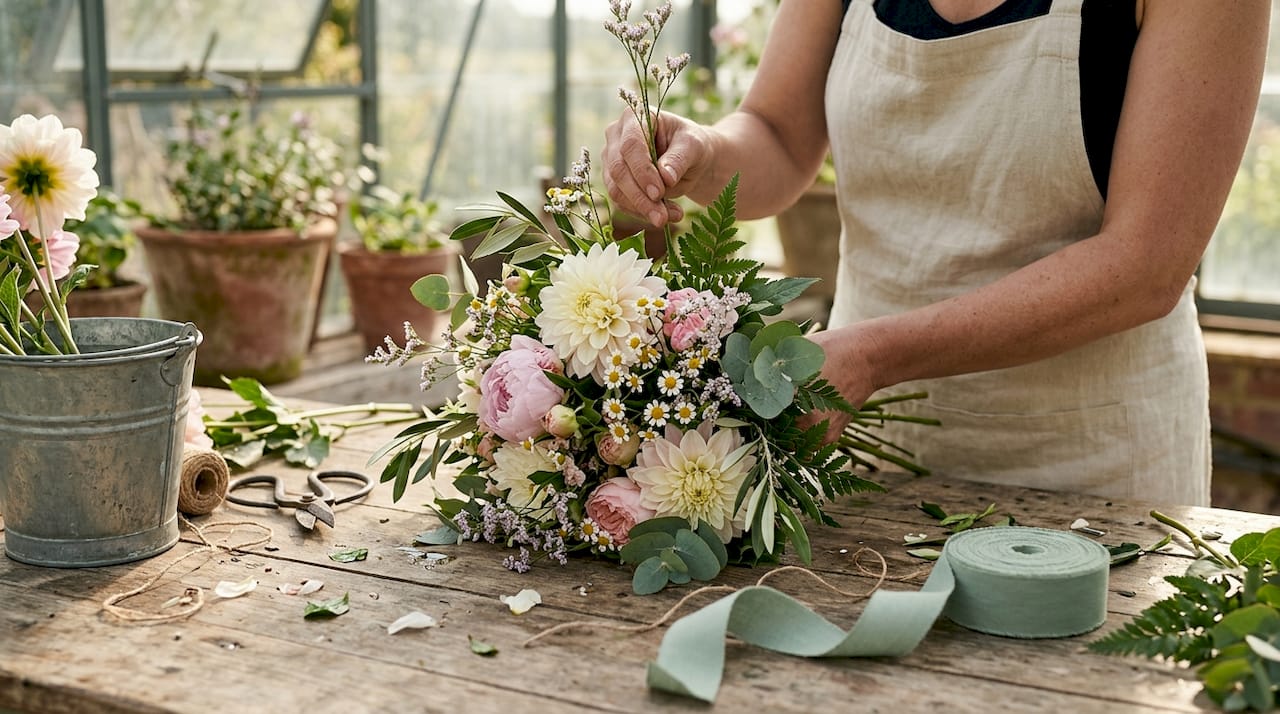
Focal flowers are the stars of the bouquet. Roses, peonies, and lilies are the most common choices because their large, open blooms draw the eye immediately. Filler flowers such as baby’s breath and waxflower sit around and between the focal blooms, softening hard edges and adding a sense of fullness without competing for attention. Greenery, including eucalyptus and ferns, provides the structural backbone that holds everything in place and introduces colour contrast through varying shades of green.
The proportions matter enormously. A bouquet weighted too heavily toward focal flowers looks sparse and expensive in the wrong way. Too much filler and the arrangement loses its focal point entirely. A skilled florist will typically aim for roughly 60% focal blooms, 20% filler, and 20% greenery, though this shifts depending on the occasion and the flowers available.
What flowers and foliage commonly appear in mixed arrangements?
The choice of flowers within a mixed arrangement reflects the occasion, the season, and the message you want to send. Here is a breakdown of the most commonly used components and their roles:
Focal flowers
- Rosa (roses): the most universally recognised focal flower, available year-round in dozens of colours
- Paeonia (peonies): a spring and early summer bloom prized for its full, layered petals and soft fragrance
- Lilium (lilies): tall, architectural stems that add height and a strong fragrance to any arrangement
- Ranunculus: a spring favourite with tightly layered petals that photograph exceptionally well
Filler flowers
- Gypsophila (baby’s breath): the classic filler, adding an airy, romantic quality
- Chamelaucium (waxflower): a hardier filler with small, star-shaped blooms and a subtle honey scent
- Limonium (statice): adds texture and holds its colour even as it dries, extending the visual life of the bouquet
Greenery and foliage
- Eucalyptus: the most popular choice in modern arrangements, valued for its silvery-green colour and clean scent
- Ferns: add a lush, garden-fresh quality and work particularly well in asymmetrical designs
- Herbs including lavender, rosemary, and mint: fragrant foliage additions that introduce a multisensory element rarely considered in standard designs
Seasonal availability directly affects which flowers appear in mixed bouquets and at what price point. Spring arrangements lean on tulips and ranunculus; summer brings hydrangeas and garden roses; autumn favours dahlias; and winter relies on hardy lilies and evergreen foliage. Choosing in-season blooms produces fresher flowers at a lower cost, which is worth knowing before you order.
How do mixed bouquets differ from single-flower arrangements?
The difference between a mixed arrangement and a single-variety bouquet is not simply aesthetic. It is structural, symbolic, and practical.
| Property | Mixed bloom bouquet | Single-flower arrangement |
|---|---|---|
| Visual depth | High: varied textures, heights, and colours | Low to moderate: uniform appearance |
| Symbolic range | Broad: multiple meanings layered together | Focused: one clear, singular message |
| Occasion suitability | Versatile: birthdays, anniversaries, sympathy, décor | Specific: often tied to one occasion or relationship |
| Design flexibility | High: asymmetrical, garden-style, structured | Limited: relies on volume and colour variation |
| Seasonal adaptability | High: substitutions are easy within the mix | Lower: the single variety must be available |
Single-flower bouquets, such as a dozen red roses or an all-white lily arrangement, communicate with clarity and formality. They are the right choice when the message is unambiguous and the occasion is specific. Mixed bloom bouquets, by contrast, create visual interest through contrast and layering, making them the more versatile option for most gifting and decorative contexts.
The practical advantage of a mixed arrangement is resilience. When one variety fades faster than another, the bouquet retains its overall fullness. A single-variety arrangement, once it begins to decline, declines uniformly and visibly.
What meanings do mixed bloom bouquets convey?
Flower symbolism, known formally as floriography, has been used to communicate sentiment since the Victorian era. Mixed bouquets carry layered meanings, and without a thoughtful approach to composition, those meanings can contradict each other. Selecting one lead flower sets the primary emotional message, with supporting blooms refining the tone rather than competing with it.
Here is a practical approach to building a meaningful mixed bouquet:
- Write the message first. Before choosing a single stem, write down the sentiment you want to convey. “Congratulations and warmth” is different from “deep love and admiration,” and the flowers should reflect that distinction.
- Choose your lead flower. Roses signal romantic love; sunflowers communicate joy and loyalty; white lilies convey purity and sympathy. The lead flower carries the headline feeling.
- Select supporting blooms to refine the tone. Lavender adds calm and devotion. Waxflower suggests lasting affection. Daisies reset the tone in mixed bouquets, softening romantic or formal combinations into something more approachable and warm.
- Add greenery to ground the arrangement. Eucalyptus carries associations with protection and abundance, making it a thoughtful choice beyond its visual role.
- Check for contradictions. Yellow carnations traditionally signal rejection in floriography. Mixing them with red roses creates a symbolically confusing arrangement, even if the colours look attractive together.
Pro Tip: If you are gifting a mixed bouquet for a sensitive occasion such as a bereavement or a reconciliation, include a handwritten note explaining your flower choices. The gesture transforms a beautiful arrangement into a genuinely personal communication.
The best seasonal blooms for gifting in 2026 lean heavily on peonies, garden roses, and ranunculus for spring and summer occasions, all of which carry warm, celebratory associations that work across most relationships.
How to care for mixed bloom bouquets and extend their life
Mixed bouquets often arrive in bud stage with minimal water, which is standard practice for postal and courier delivery. Placing stems in fresh water with flower food immediately on receipt is the single most effective step you can take to extend their display life. Do not leave them in their packaging while you find a vase.
Follow these steps from the moment your bouquet arrives:
- Trim the stems at a 45-degree angle using sharp scissors or a clean knife. This increases the surface area for water uptake and prevents the stems from sitting flat against the vase base.
- Use a clean vase with one litre of fresh, cool water. Bacteria in a dirty vase will block the stems and accelerate wilting within 24 hours.
- Add flower food. Flower food and water quality are the two factors most consistently cited by florists and retailers for maintaining vibrancy. The sachets included with most premium bouquets contain a precise balance of sugar, acidifier, and biocide.
- Keep the bouquet away from direct sunlight, radiators, and fruit bowls. Ethylene gas from ripening fruit accelerates petal drop in roses and lilies.
- Top up the water daily and remove any wilted stems promptly. Decaying plant matter releases bacteria that shortens the life of the remaining blooms.
Pro Tip: Re-trim the stems every two to three days, not just at the start. Each cut removes the blocked section of the stem and restores water uptake, adding several days to the bouquet’s life.
The focal-to-filler ratio within the bouquet also affects longevity. Arrangements with a higher proportion of hardy filler flowers and greenery tend to look full for longer, even as individual focal blooms fade. When ordering for a long weekend or a week-long display, ask your florist to weight the arrangement toward fillers and foliage.
Seasonal considerations matter here too. Seasonal flower freshness is highest when blooms are sourced locally and in season, which reduces transit time and the stress placed on the flowers before they reach you.
Key takeaways
Mixed bloom bouquets combine focal flowers, filler blooms, and greenery in deliberate proportions to create arrangements that are visually layered, symbolically rich, and more resilient than single-variety displays.
| Point | Details |
|---|---|
| Three-layer structure | Every mixed bouquet needs focal flowers, filler blooms, and greenery in balanced proportions. |
| Symbolism requires hierarchy | Choose one lead flower to set the primary message; supporting blooms refine rather than contradict it. |
| Seasonal selection saves money | In-season blooms are fresher, less expensive, and more readily available for substitution. |
| Care starts immediately | Trim stems, use a clean vase, add flower food, and top up water daily to maximise display life. |
| Mixed beats single for versatility | Mixed arrangements suit more occasions, last longer overall, and adapt more easily to substitutions. |
Why I think most people underestimate the mixed bouquet
People often treat a mixed bouquet as the default option, the thing you order when you are not sure what else to choose. That framing does it a disservice. In my experience, a well-composed mixed arrangement is far harder to get right than a dozen roses, and when it is done well, it communicates something that a single-variety bouquet simply cannot.
The mistake I see most often is treating the filler flowers as an afterthought. Baby’s breath gets added because it is cheap and familiar, not because it contributes anything meaningful to the arrangement. When you replace generic filler with waxflower, or swap standard eucalyptus for a more textured silver brunia, the whole bouquet shifts in character. The difference is not subtle.
Colour balance is the other area where most arrangements fall short. Mixing warm and cool tones without a deliberate plan produces a bouquet that looks busy rather than rich. The fix is simple: choose a dominant colour family, then introduce one contrasting accent rather than three. A blush and ivory arrangement with a single stem of deep burgundy has far more visual authority than a bouquet trying to include every colour in the spectrum.
The emotional impact of a genuinely thoughtful mixed bouquet is also worth taking seriously. Gifting flowers creates a lasting impression precisely because the recipient understands that someone made considered choices on their behalf. A bouquet that clearly reflects the occasion and the relationship communicates care in a way that a generic arrangement does not.
My advice: treat the mixed bouquet as a composition, not a collection. Every stem should earn its place.
— Steve
Discover curated mixed bloom bouquets at Blumeflowers
Blumeflowers designs each arrangement with the three-layer structure in mind, balancing focal blooms, fillers, and foliage for both immediate impact and lasting freshness. The Beautifully Simple Peony Bouquet is one of the most popular choices for birthdays and anniversaries, pairing full peony heads with complementary greenery for a display that feels considered rather than assembled. For a bolder statement, the Showstopper Pink Bouquet layers vivid mixed blooms into a high-impact arrangement suited to celebrations and corporate gifting alike.
Same-day and next-day delivery is available across Birmingham, Solihull, and surrounding areas. Every bouquet arrives with flower food included, so the care process starts the moment it is unwrapped.
FAQ
What is a mixed bloom bouquet?
A mixed bloom bouquet is a floral arrangement that combines multiple flower varieties, filler blooms, and greenery into a single display. The three-layer structure of focal flowers, fillers, and foliage creates visual depth and symbolic range that single-variety arrangements cannot achieve.
How long do mixed bouquets typically last?
With proper care, including trimmed stems, clean water, flower food, and a cool position away from direct sunlight, most mixed bouquets last between seven and fourteen days. Hardy filler flowers and greenery often outlast the focal blooms, keeping the arrangement looking full for longer.
What is the best occasion for gifting a mixed flower arrangement?
Mixed flower arrangements suit almost any occasion because their layered composition allows for a broad symbolic range. Birthdays, anniversaries, new home celebrations, and sympathy occasions all work well, provided the lead flower is chosen to reflect the specific sentiment.
How do I choose the right flowers for a mixed bouquet?
Start with the message you want to send, then choose a lead flower that carries that primary meaning. Supporting blooms should refine the tone without contradicting it. Seasonal availability, as outlined in the 2026 selection guide, also affects which combinations are freshest and most cost-effective at any given time.
Why do mixed bouquets sometimes look different from the product photo?
Mixed bouquets are often dispatched in bud stage to extend their travel life, which means the arrangement opens and fills out over the first two to three days. Seasonal substitutions also occur when specific varieties are unavailable, though a skilled florist will maintain the overall colour palette and structure of the original design.