


The role of freshness in bouquets: a complete guide
TL;DR:
- Freshness is the key to a bouquet’s beauty, longevity, and emotional impact, with proper conditioning extending vase life significantly. Techniques like cutting stems at a 45-degree angle underwater and using commercial flower food are essential for maintaining hydration and reducing bacterial growth. Different flower types require specific handling, and post-delivery care in a cool, dark environment further preserves their freshness.
Freshness is the single most important factor determining a bouquet’s beauty, lifespan, and emotional impact. A bloom cut and conditioned correctly will outlast a neglected one by days, sometimes more than a week. The role of freshness in bouquets extends beyond aesthetics. It governs stem hydration, petal firmness, colour vibrancy, and the impression a bouquet makes the moment it is received. Whether you are a florist conditioning stock or a recipient placing flowers in a vase, understanding how freshness works gives you a measurable advantage.
How does freshness affect the lifespan and appearance of bouquets?
Freshness determines how long a bouquet holds its shape, colour, and scent. A stem cut from its water source begins losing hydration within minutes. Without intervention, air enters the xylem vessels and blocks water uptake entirely. Air embolism formation from incorrect stem cutting blocks xylem vessels within 24 hours, drastically reducing hydration and lifespan. That single biological fact explains why conditioning technique matters more than any other care step.
Bacterial growth compounds the problem. Bacteria multiply rapidly in vase water, clogging stem tissue and causing premature wilting. Bacteria in water causes early wilting, indicated by cloudy water or an unpleasant smell. Removing submerged foliage and changing water regularly are not optional extras. They are the primary defence against bacterial deterioration.
The difference between a conditioned and an unconditioned stem is significant. Proper conditioning extends vase life from 3–4 days to 10–14 days. That is a threefold improvement achievable through technique alone, before any premium product is involved. For florists managing large volumes of stock, this gap directly affects waste, cost, and customer satisfaction.
Freshness also shapes visual perception. Petal firmness signals quality to the eye before a bouquet is even touched. A bloom with turgid petals reads as luxurious. A wilting one reads as an afterthought, regardless of the variety or arrangement style. Flower freshness directly influences perceived quality and the luxury impression a bouquet delivers. This is why freshness sits at the heart of every premium floral experience.
What the numbers tell florists
| Condition | Typical vase life |
|---|---|
| Unconditioned stems, no flower food | 3–4 days |
| Conditioned stems, no flower food | 5–6 days |
| Conditioned stems with commercial flower food | 10–14 days |
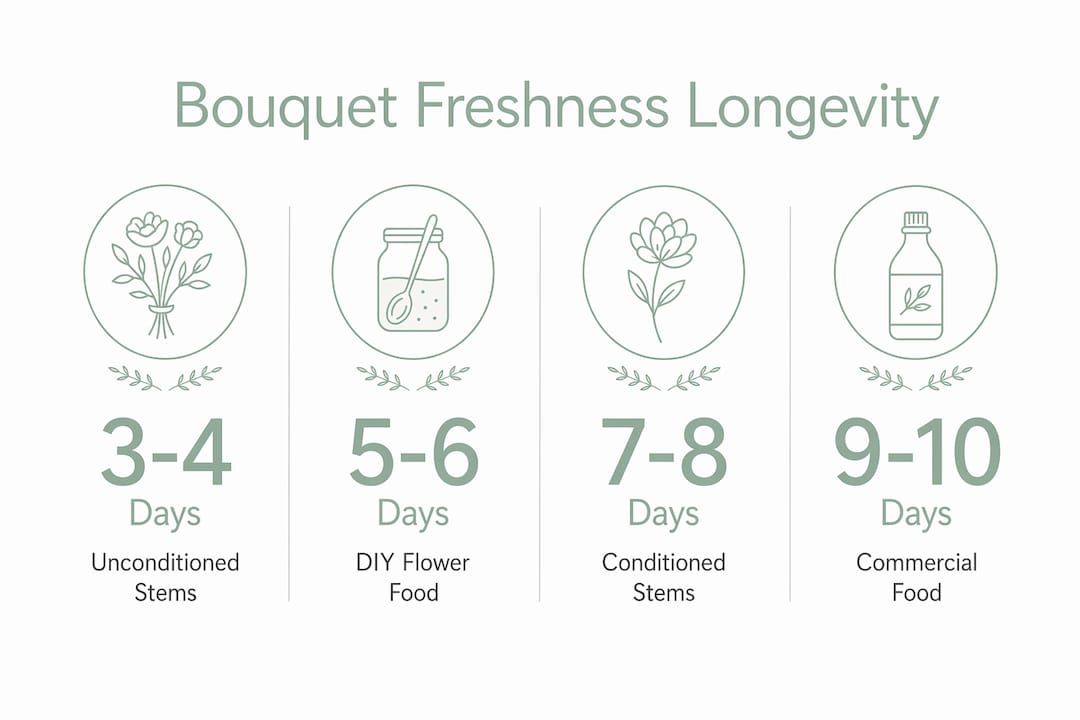
Commercial flower food outperforms DIY alternatives by 25–30% in longevity tests. Sugar and bleach mixtures approach but do not surpass the effectiveness of commercial formulations. For anyone serious about bouquet longevity, the commercial option is the clear choice.
What are industry-approved best practices for preserving freshness in bouquets?
The floral industry has settled on a set of conditioning steps that consistently extend vase life. Each step addresses a specific biological threat to freshness. Follow them in order for the best result.
-
Cut stems at a 45-degree angle underwater. The underwater 45-degree stem cut is the single most important action for hydration. It prevents air locks and extends vase life by approximately two days, even without flower food. Use clean, sharp scissors or a knife. A blunt blade crushes tissue rather than cutting it cleanly.
-
Use commercial flower food. Add the correct dose to fresh water before placing stems. Flower food contains a biocide to inhibit bacteria, a carbohydrate source to feed blooms, and an acidifier to improve water uptake. DIY mixtures can help but do not match this combination.
-
Replace water and re-trim stems every 2–3 days. Freshwater replacement and stem re-cutting every 2–3 days prevents bacterial clogging and maintains hydration channels. Each re-cut removes the section of stem most likely to be blocked.
-
Remove all foliage below the waterline. Submerged leaves decompose quickly and feed bacterial colonies. Strip them before placing stems in water, not after.
-
Use warm water for most flowers. Warm water at 38–43°C moves up the xylem faster and contains less dissolved oxygen, reducing air bubbles and improving hydration. Bulb flowers such as tulips and daffodils are the exception. They prefer cold water.
-
Never bash or crush stems. Bashing or crushing stems damages tissue, boosts bacterial growth, and shortens bouquet life. This practice, sometimes suggested for woody stems, is counterproductive. A clean angled cut achieves better results.
Pro Tip: After re-cutting stems, place flowers in a cool, dark room for one to two hours before displaying them. This conditioning period, known as hardening off, allows stems to draw up water fully and significantly improves petal firmness.
How do different flower types influence freshness management?
Not every flower responds to conditioning in the same way. Variety determines the specific handling a stem needs, and getting this wrong can shorten vase life even when general care is correct.
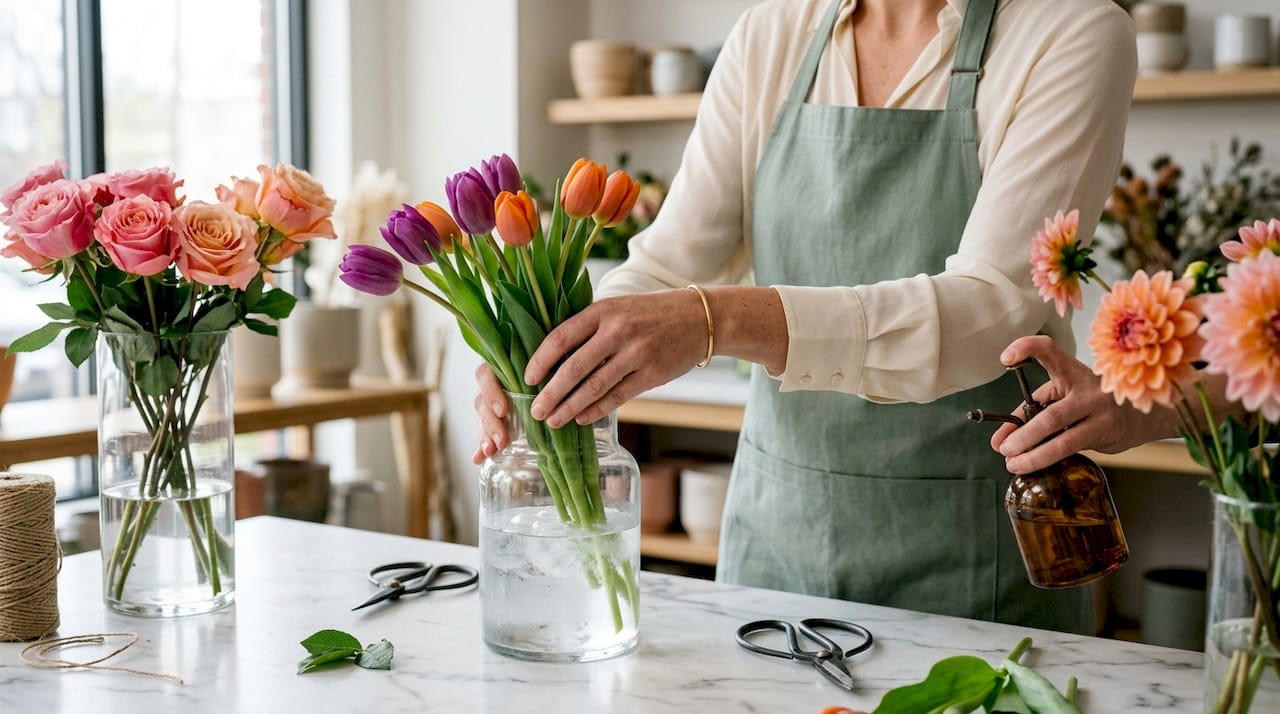
Roses require particular attention at the stem base. Roses benefit from splitting the bottom 3cm of stem and removing thorns, then conditioning in lukewarm water for 4–6 hours before arranging. This pre-treatment dramatically improves water uptake and extends display time. Skipping it is one of the most common reasons roses droop prematurely.
Tulips are a different case entirely. They continue to grow after cutting, which means their stems lengthen and their heads shift position in an arrangement. Cold water slows this process and helps maintain the intended design. Wrapping tulips tightly in paper during their initial conditioning period keeps stems straight and prevents the characteristic flopping that frustrates florists.
Dahlias have hollow or pithy stems that trap air easily. Searing the cut end briefly in boiling water or over a flame before conditioning forces air out and seals the tissue. This step is non-negotiable for dahlias if you want them to last more than two days in a vase.
Woody-stemmed flowers such as lilac and viburnum need the bark scraped from the bottom few centimetres of stem before cutting. This exposes the xylem directly to water and improves uptake significantly.
Freshness also shapes design decisions. Firm, vibrant petals allow a florist to use open-faced blooms as focal points. Slightly past-peak flowers work better as supporting texture, where their condition is less visible. A well-conditioned bouquet delivers greater consumer satisfaction by maintaining colour vibrancy and petal firmness throughout its display life. For luxury floral occasions, freshness is not a background consideration. It is the foundation of the entire design.
What practical care tips keep bouquets fresh for different occasions?
The care a bouquet receives after leaving the florist determines much of its lifespan. These steps apply whether the flowers are for a birthday, a corporate reception, a wedding, or a sympathy arrangement.
- Keep bouquets away from heat and direct sunlight. Warmth accelerates respiration and water loss in petals. A bouquet placed on a sunny windowsill will deteriorate in hours rather than days.
- Store away from ethylene sources. Ripening fruit releases ethylene gas, which triggers premature ageing in cut flowers. Keep bouquets out of kitchens where fruit bowls are present.
- Choose the right vase. A vase that supports stems without crowding allows water to circulate freely. Overcrowded stems create pockets of stagnant water that breed bacteria.
- Handle with care during transport. Stems should remain in water or wrapped in damp paper for as long as possible during transit. Exposure to dry air for even 20–30 minutes can cause air embolisms that are difficult to reverse.
- Revive drooping flowers with a deep water soak. Place wilting stems in a bucket of cool water up to the flower head for one to two hours. This rehydrates petals and often restores firmness.
Storing flowers in cool, dark conditions and maintaining high hygiene standards significantly improves bouquet longevity after delivery. For corporate settings, where flowers may sit in a reception area for a week or more, this discipline is the difference between a display that impresses and one that embarrasses.
Pro Tip: For occasion-specific bouquets such as wedding flowers or funeral tributes, condition stems for a full 24 hours before the event. This gives blooms maximum hydration and ensures they perform at their best during the hours that matter most.
For florists managing premium flower delivery, the care chain begins at the point of cutting and does not end until the flowers are in the recipient’s hands. Every link in that chain affects the final impression.
Key takeaways
Freshness is the primary determinant of bouquet quality, and proper conditioning using the 45-degree underwater cut, commercial flower food, and regular water changes can extend vase life from 3–4 days to 10–14 days.
| Point | Details |
|---|---|
| Conditioning transforms vase life | Proper technique extends bouquet life from 3–4 days to 10–14 days. |
| The 45-degree cut is non-negotiable | Cutting stems underwater at 45 degrees prevents air embolisms and improves hydration immediately. |
| Flower type dictates handling | Roses, tulips, and dahlias each require specific pre-treatment to achieve maximum freshness. |
| Bacteria is the hidden enemy | Cloudy water and submerged foliage accelerate wilting. Change water every 2–3 days. |
| Environment matters post-delivery | Cool, dark storage away from heat, sunlight, and ethylene sources preserves freshness after the bouquet leaves the florist. |
What I have learned about freshness after years in floral design
The most common mistake I see is treating freshness as a finishing touch rather than a foundation. Florists spend hours on colour palettes and structural design, then place stems in a bucket of stale water with no flower food. The arrangement looks perfect for a day and then collapses. All that craft, undone by one overlooked step.
The second mistake is assuming the recipient will know what to do. Most people receive flowers, put them in a vase, and walk away. They do not know about the 45-degree cut. They do not know about ethylene from the fruit bowl on the counter. They do not know that the foliage sitting below the waterline is quietly poisoning the water. Florists who include a simple care card with every bouquet see measurably better feedback. Customers remember that their flowers lasted, and they come back.
What surprises people most is how much the conditioning temperature matters. Using cold water for roses, when warm water is correct, can cost you two or three days of vase life. Using warm water for tulips causes them to grow and flop within 48 hours. These are not minor details. They are the difference between a bouquet that earns a compliment and one that earns a complaint.
Freshness also carries emotional weight that is easy to underestimate. A bouquet received in peak condition feels like a considered, generous gift. The same flowers received wilting feel like an afterthought, even if the sender spent considerably more. The condition of the bloom at the moment of receipt shapes the entire emotional experience of the gift. That is a responsibility florists carry, and one worth taking seriously.
— Steve
Blumeflowers: freshness built into every bouquet
At Blumeflowers, every arrangement leaves our Birmingham studio fully conditioned and ready to perform. Our florists apply the same techniques described here, from the 45-degree underwater cut to commercial flower food, before any bouquet is packed for delivery.
Whether you are ordering the Cherry Hill Bouquet for a special occasion or arranging corporate office flowers for a Birmingham reception, freshness is built into the process from the start. Every bouquet comes with care guidance so the blooms continue to perform long after delivery. Browse our full collection and find a bouquet that makes the right impression, in the best possible condition.
FAQ
How long do fresh flowers last in a bouquet?
Properly conditioned fresh flowers last 10–14 days in a vase. Without conditioning, the same stems typically last only 3–4 days.
What is the best way to cut flower stems for a bouquet?
Cut stems at a 45-degree angle while submerged in water. This prevents air from entering the xylem and extends vase life by approximately two days compared to a straight dry cut.
Why does vase water go cloudy so quickly?
Cloudy water indicates bacterial growth, usually caused by submerged foliage or infrequent water changes. Replace water and re-trim stems every 2–3 days to prevent this.
Do different flowers need different care for freshness?
Yes. Roses condition best in lukewarm water, tulips prefer cold water, and dahlias need their stem ends seared before conditioning. Matching the care method to the flower type significantly extends freshness.
Does commercial flower food really make a difference?
Commercial flower food outperforms DIY alternatives by 25–30% in longevity tests. It combines a biocide, a carbohydrate source, and an acidifier, a combination that home remedies cannot fully replicate.