


The role of fragrance in luxury bouquets
TL;DR:
- Fragrance is the most intimate and emotionally impactful element in luxury bouquets, facilitating memory and mood. Skilled florists layer scent notes deliberately, creating evolving olfactory experiences that enhance event design and gifting. Sourcing seasonal, heritage blooms and asking about scent profiles ensures a truly sensory, high-quality floral arrangement.
Fragrance is the defining sensory dimension that separates a luxury bouquet from a decorative arrangement. Where visual beauty catches the eye, scent reaches directly into memory and emotion, making it the most intimate detail in any premium floral gift. The role of fragrance in luxury bouquets has moved from happy accident to deliberate craft, with leading florists now treating scent as invisible architecture. Understanding how olfactory design works, which blooms carry the most expressive fragrance profiles, and how to match scent to occasion gives you a genuine advantage when choosing or commissioning flowers that truly resonate.
How does fragrance influence emotion and memory in luxury bouquets?
Scent has a direct neurological connection to the limbic system, the brain’s emotional and memory centre, making it the only sense that bypasses the cognitive filter entirely. This means a single breath of damask rose or tuberose can trigger a vivid emotional response before you have consciously registered the flower’s colour or form. No other sensory element in floral design operates with that speed or depth.
“Scent is the only sense that travels directly to the brain’s emotional core, making fragrant flowers uniquely powerful tools for memory anchoring and mood shaping.”
The practical consequence for luxury gifting is significant. A bouquet of visually perfect but scentless blooms communicates beauty. A bouquet of fragrant garden roses, jasmine, or gardenias communicates care, vitality, and emotional investment. Research confirms that fragrant blooms act as living messengers, signalling a deeper level of thought and attention than purely visual arrangements can achieve.
Specific fragrance families also carry mood associations that skilled florists exploit deliberately. Rose suggests romance, jasmine communicates warmth and welcome, orchid conveys polish and restraint, and frangipani evokes relaxed tropical ease. These are not vague poetic ideas. They are consistent psychological responses that luxury floral designers use to shape the atmosphere of events, from intimate anniversary dinners to large-scale corporate receptions. The emotional impact of bouquets is measurable, and fragrance is its most direct lever.
What is olfactory floral architecture and why does it matter?
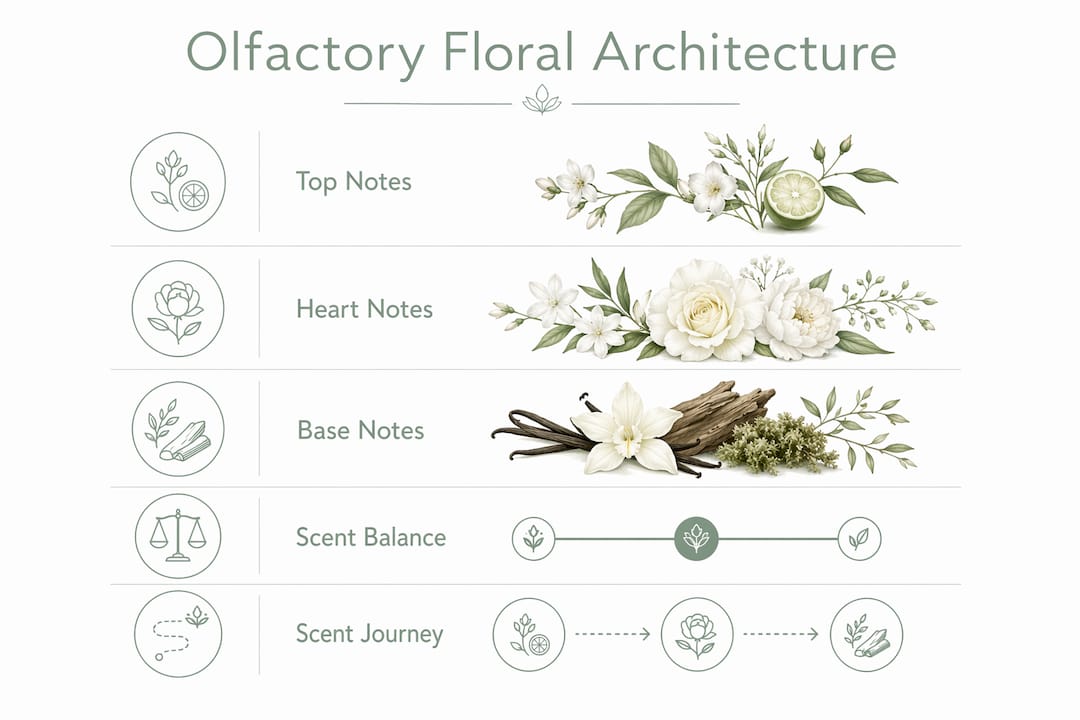
Olfactory floral architecture is the practice of layering scent notes in a bouquet the way a perfumer layers top, middle, and base notes in a fine fragrance. The term is now used by leading luxury florists to describe intentional scent design rather than the accidental combination of whatever blooms happen to be in season.
The structure works as follows:
- Top notes are the first impression. Light, volatile scents like freesia, sweet pea, or citrus blossom open the olfactory experience and create immediate appeal.
- Middle notes form the heart of the arrangement. Garden roses, peonies, and jasmine carry warmth and complexity, sustaining the fragrance as the top notes fade.
- Base notes provide depth and longevity. Tuberose, gardenia, and certain lily varieties anchor the composition, releasing their scent slowly over hours or days.
When these layers are balanced correctly, the bouquet evolves over time, much like a well-constructed perfume. The experience of receiving it on day one differs from the experience of living with it on day three. That evolution is part of what makes a luxury arrangement feel alive rather than static. Luxury florists treat scent as invisible architecture by selecting blooms with evolving scent profiles suited to different phases of an event or gifting experience.
The risk of ignoring this structure is olfactory dissonance. Combining strongly competing scents, such as oriental lilies with heavily perfumed hyacinths, can produce an overwhelming or discordant result that undermines the entire arrangement. Failure to balance scent layers is one of the most common errors in amateur floral design, and one of the clearest markers separating a luxury florist from a standard one.
Pro Tip: When commissioning a luxury bouquet, ask your florist to describe the scent journey of the arrangement, not just the visual palette. If they cannot articulate top, middle, and base notes, the fragrance has not been designed intentionally.
Which fragrant flowers work best for luxury gifting and special occasions?
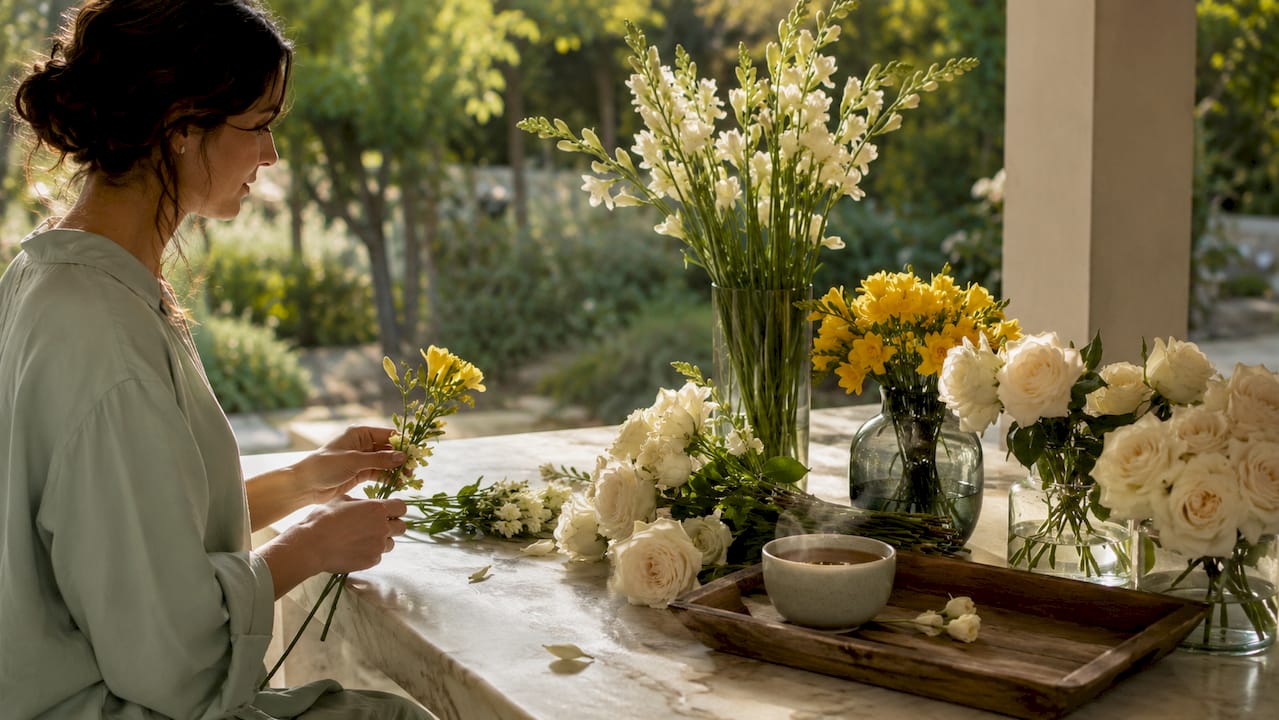
Selecting blooms for a luxury gift requires weighing fragrance intensity, compatibility, and the sensory context of the recipient. The most expressive fragrant flowers used in premium arrangements each bring a distinct character.
- Damask and garden roses offer a rich, layered scent that reads as romantic and timeless. Old-fashioned varieties carry far more fragrance than modern hybrid tea roses bred primarily for visual uniformity.
- Jasmine delivers warmth and sweetness at low intensity, making it ideal for intimate gifts where subtlety is valued.
- Tuberose is one of the most intensely fragrant blooms available, with a creamy, narcotic quality suited to statement arrangements and evening events.
- Gardenia carries a clean, white floral scent with a waxy depth that photographs beautifully and performs well in enclosed spaces.
- Peonies combine a soft, powdery rose-adjacent scent with exceptional visual impact, making them a consistent favourite in luxury gifting.
- Aromatic greenery such as eucalyptus, rosemary, and mint adds herbal freshness that lifts heavier floral scents and prevents the arrangement from feeling cloying.
Fragrance intensity must be matched to the setting. Subtle scents like freesia suit smaller or poorly ventilated spaces, while strong scents like oriental lilies perform better in large, well-ventilated venues. Sending a heavily scented tuberose arrangement to a small office or a bedroom with limited airflow can overwhelm rather than delight.
Allergies are a genuine consideration. Highly fragrant flowers can cause sneezing, headaches, and respiratory irritation in sensitive recipients. When gifting to someone whose sensitivities you are unsure of, choosing mid-intensity blooms such as peonies, sweet peas, or garden roses reduces risk without sacrificing the olfactory experience.
| Bloom | Scent intensity | Best occasion |
|---|---|---|
| Damask rose | Medium to high | Anniversaries, romance |
| Jasmine | Low to medium | Intimate gifts, sympathy |
| Tuberose | Very high | Statement events, evenings |
| Gardenia | Medium | Corporate gifting, weddings |
| Peony | Low to medium | Birthdays, luxury gifting |
| Freesia | Low | Small spaces, allergies |
Pro Tip: Seasonal provenance matters for scent quality. Roses grown outdoors in summer carry significantly more fragrance than those grown under glass in winter. Ask Blumeflowers about seasonal availability to get the most expressive blooms for your occasion.
How fragrance shapes the luxury experience beyond the gift itself
The role of fragrance in luxury bouquets extends well beyond the moment of gifting. In event design, scent functions as what leading florists now call invisible architecture shaping emotional transitions across a venue. A ceremony space might open with light citrus blossom to energise guests on arrival, transition to damask rose during the reception for warmth and intimacy, and close with deeper gardenia or tuberose notes as the evening settles.
This approach to scent zoning treats fragrance as a timeline, not a static backdrop. The practical tools include placing high-intensity blooms near entrances where guests first encounter the space, using lower-intensity arrangements at dining tables to avoid competing with food aromas, and positioning the most complex fragrant compositions in areas where guests linger longest.
Fragrance also creates cohesion across the full sensory experience of an event. Fragrance planning can unify décor with catering when the same floral notes appear in cocktail syrups, cake infusions, or table candles. A wedding where the rose in the centrepiece also appears in the signature drink and the dessert garnish creates a sensory memory that guests carry long after the visual details have faded.
One emerging development in luxury floristry is the use of heritage and genealogical blooms. Scent from heritage blooms grown from ancestral gardens acts as a biometric key to personal history, connecting recipients to specific places, people, or periods in their lives. For personal gifting, this represents the most intimate possible use of fragrance. A bloom grown from a cutting of a grandmother’s garden rose carries a scent memory that no commercially bred variety can replicate.
For personal enjoyment at home, the principles are simpler but equally rewarding. Placing a fragrant arrangement in a room where you spend time in the morning, such as a kitchen or study, means the scent becomes associated with the mood and focus of that time. The science behind floral gifts confirms that this kind of daily sensory engagement with flowers has measurable effects on mood and cognitive clarity.
Key takeaways
Fragrance is the most intimate and emotionally direct element of a luxury bouquet, and intentional scent design is what separates a premium arrangement from a decorative one.
| Point | Details |
|---|---|
| Scent reaches emotion first | Fragrance connects directly to the limbic system, triggering memory and mood before visual details register. |
| Olfactory architecture requires layering | Top, middle, and base scent notes must be balanced deliberately to create a cohesive, evolving fragrance experience. |
| Intensity must match the setting | Strong blooms like tuberose suit large venues; subtle scents like freesia work better in small or enclosed spaces. |
| Fragrance extends beyond gifting | In event design, scent zones shape emotional transitions across a venue and can unify décor with catering. |
| Provenance affects scent quality | Seasonally grown, outdoor blooms carry richer fragrance than glass-grown equivalents, making sourcing a genuine luxury differentiator. |
Why scent is the detail most people overlook and why that matters
After years of working with luxury floristry, the pattern I see most consistently is this: people spend considerable thought on colour, stem count, and wrapping, then leave fragrance entirely to chance. They order a bouquet that looks beautiful in a photograph and are mildly surprised when it arrives with little or no scent. That surprise is the gap between visual floristry and genuinely sensory floristry.
The misconception driving this is that fragrance is a bonus rather than a design decision. It is not. A luxury bouquet without intentional scent is like a fine dining dish without seasoning. The visual presentation may be impeccable, but something essential is absent. The importance of aroma in luxury bouquets is something I would argue most consumers only fully appreciate after experiencing a truly fragrant arrangement for the first time.
My practical recommendation is straightforward. When you next order flowers for a significant occasion, ask specifically about the fragrance profile of the arrangement. Ask which blooms carry the strongest scent, how they will evolve over the first few days, and whether the combination has been designed with scent layering in mind. A florist who can answer those questions confidently is one who treats fragrance as craft rather than coincidence.
The future of luxury floristry is moving firmly in this direction. Heritage blooms, scent zoning, and olfactory architecture are no longer niche concepts reserved for high-budget weddings. They are becoming the standard expectation for anyone who takes premium floral experiences seriously.
— Steve
Discover fragrant luxury bouquets at Blumeflowers
Blumeflowers designs every arrangement with both visual elegance and fragrance in mind. The beautifully simple peony bouquet is a standout choice for anyone who wants a genuinely scented luxury gift, combining soft powdery fragrance with exceptional visual presence. For corporate clients seeking arrangements that make a lasting impression in reception spaces or boardrooms, the corporate flowers collection offers curated options where scent and aesthetics are balanced for professional environments. Same-day and next-day delivery across Birmingham and Solihull means a fragrant, thoughtfully designed arrangement can reach your recipient at exactly the right moment.
FAQ
What makes a bouquet a luxury floral arrangement?
A luxury bouquet combines premium, often seasonal blooms with intentional design across both visual and olfactory dimensions. Fragrance selection, scent layering, and provenance of blooms are key markers that distinguish luxury arrangements from standard ones.
Which flowers have the strongest fragrance in a bouquet?
Tuberose, gardenia, and oriental lilies carry the most intense scent profiles among commonly used luxury blooms. Damask roses and jasmine offer rich fragrance at a more moderate intensity, making them versatile choices for gifting.
Can fragrant flowers cause allergic reactions?
Yes. Highly fragrant flowers can trigger sneezing, headaches, and respiratory irritation in sensitive individuals. Choosing mid-intensity blooms such as peonies, freesia, or sweet peas reduces this risk while maintaining a meaningful scent experience.
How does fragrance intensity affect event and venue design?
Fragrance intensity should be calibrated to venue size and ventilation. Subtle scents suit intimate or enclosed spaces, while stronger blooms perform best in large, open venues where their fragrance can diffuse without overwhelming guests.
Why do some bouquets lose their scent quickly?
Scent longevity depends on bloom variety, growing conditions, and how recently the flowers were cut. Outdoor, seasonally grown roses and peonies retain fragrance longer than glass-grown equivalents. Keeping arrangements away from direct heat and sunlight also preserves scent intensity significantly.