


Sympathy bouquet presentation guide: do it right
TL;DR:
- Presenting sympathy flowers with care communicates respect and compassion during a difficult time.
- Choosing appropriate flowers, timing delivery thoughtfully, and including a sincere message ensure your tribute offers genuine comfort.
Knowing how to present sympathy flowers can feel overwhelming when you are already carrying grief of your own. You want the gesture to mean something, but you are unsure of the timing, the flowers, the message, or the etiquette. This sympathy bouquet presentation guide covers everything you need, from selecting the right blooms and writing a sincere card to coordinating delivery with funeral homes and adding personal touches that genuinely comfort. The goal is simple: to help you give with confidence and care, so your tribute lands exactly as intended.
Table of Contents
- Key takeaways
- Understanding sympathy bouquet etiquette
- Selecting flowers and writing your message
- Timing, delivery logistics, and personal touches
- Common mistakes to avoid
- What I have learned from years of sympathy arrangements
- Sympathy flowers from Blumeflowers, done with care
- FAQ
Key takeaways
| Point | Details |
|---|---|
| Respect family wishes first | Always check for ‘in lieu of flowers’ requests before ordering any arrangement. |
| Timing the delivery matters | Arrange delivery to the funeral venue at least two hours before the service begins. |
| Simplicity carries more weight | Quiet, restrained bouquets in soft palettes convey respect far better than elaborate displays. |
| Label arrangements clearly | Include the deceased’s full name and service date so funeral staff can place flowers correctly. |
| Post-funeral flowers are powerful | Sending to the family home one to two weeks after the service offers comfort when support fades. |
Understanding sympathy bouquet etiquette
Sympathy flowers serve a specific purpose. Flowers signal presence and care without imposing emotional demands on a grieving family. They are not recovery gifts, and they are not celebratory. That distinction shapes every decision in this guide.
The most widely recognised sympathy flowers carry clear symbolic meaning. White lilies represent the soul returning to peace. Chrysanthemums, common across European mourning traditions, signal grief and honour. Roses in white or pale cream communicate reverence and sincerity. Freesias and stocks offer gentle fragrance without overpowering a quiet space. Understanding these meanings helps you choose flowers that feel fitting rather than accidental.
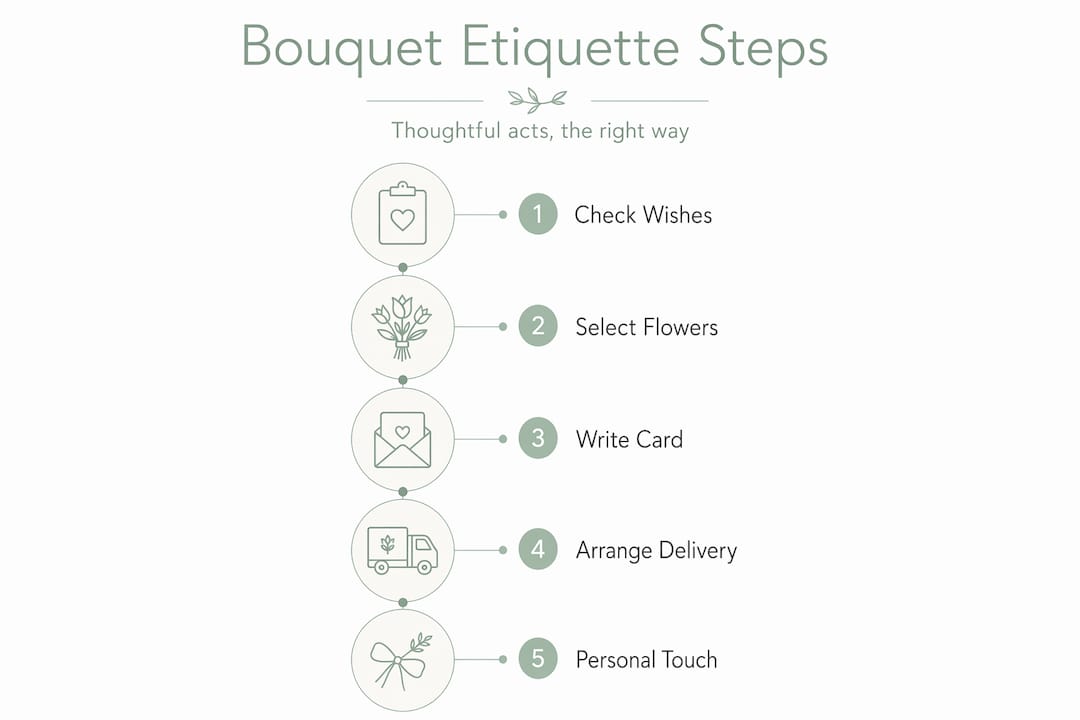
Etiquette around when to send matters as much as what you send. Wreaths and standing sprays are typically sent to the funeral venue. Personal bouquets and hand-tied arrangements work better for the family home. If you are unsure which is appropriate, a simple hand-tied bouquet is rarely wrong.
Critically, respecting ‘in lieu of flowers’ requests is the most respectful thing you can do. Some families prefer donations to a charity connected to the deceased. If the obituary specifies this, follow it without question.
A few core etiquette points worth knowing:
- Always check the obituary or funeral notice for any floral instructions before ordering.
- Be mindful of cultural and religious contexts. Some traditions do not include flowers at all.
- Card tone should be warm and brief. Avoid religious references unless you know the family shares that faith.
- Never send anything that requires assembly or special care from already overwhelmed family members.
Pro Tip: If you are unsure about a family’s cultural or religious customs, a simple enquiry to a close mutual friend will save you from an unintentional misstep.
Selecting flowers and writing your message
The selection process starts with your relationship to the bereaved. A close friend or family member can personalise more freely, perhaps incorporating the deceased’s favourite flowers. A colleague or acquaintance should lean toward classic, neutral arrangements that speak broadly of condolence.
For colour, err toward restraint. White, cream, soft pinks and blues are the safest choices and the most universally appropriate. Bright yellows, oranges, and bold reds read as celebratory in many Western mourning contexts and can feel jarring. You can find thoughtful guidance on combinations in this elegant sympathy flowers resource that covers expert choices in detail.
Composing the floral arrangement itself follows a straightforward logic:
- Choose a clear focal flower such as a white rose, lily, or peony as the centrepiece.
- Layer in secondary flowers for texture. Gypsophila, waxflower, or veronica work beautifully without competing.
- Use foliage like eucalyptus or ruscus to fill gracefully and add a subtle, calming fragrance.
- Ask your florist to keep the arrangement compact and self-contained. It should need no additional care.
- Select neutral or natural wrapping: kraft paper, white tissue, or simple hessian ribbon rather than bright cellophane.
The message deserves as much attention as the flowers. Sympathy card notes should be three to five sentences at most and should feel personal rather than scripted. Avoid phrases like “everything happens for a reason” or “they are in a better place” unless you know the family holds those beliefs.
“I don’t know what to say, but I am thinking of you and your family with so much warmth.”
That kind of honesty, acknowledging uncertainty while expressing genuine care, is often more comforting than something more polished. Admitting you lack the right words is frequently the most human and welcomed response a grieving family can receive.
Pro Tip: Always sign your card with your full name, not just a first name. Families receive many flowers and may not immediately place who “Sarah” is during a period of overwhelm.
Timing, delivery logistics, and personal touches
Execution is where many well-intentioned gestures fall apart. The following table outlines the most common delivery scenarios and the best approach for each.
| Delivery scenario | Recommended timing | Key consideration |
|---|---|---|
| Funeral venue (chapel or hall) | At least 2 hours before service | Call ahead to confirm acceptance and placement |
| Family home before funeral | Day before or morning of | Ensure someone is home to receive |
| Family home after funeral | 1 to 2 weeks post service | Often the most meaningful timing |
| Late condolence (learned of death late) | As soon as possible | A modest arrangement at the home is always appropriate |
Arrange delivery at least two hours before the service to avoid disrupting the setting process. Funeral homes manage multiple arrangements simultaneously, and late arrivals create unnecessary complications for staff and families alike.
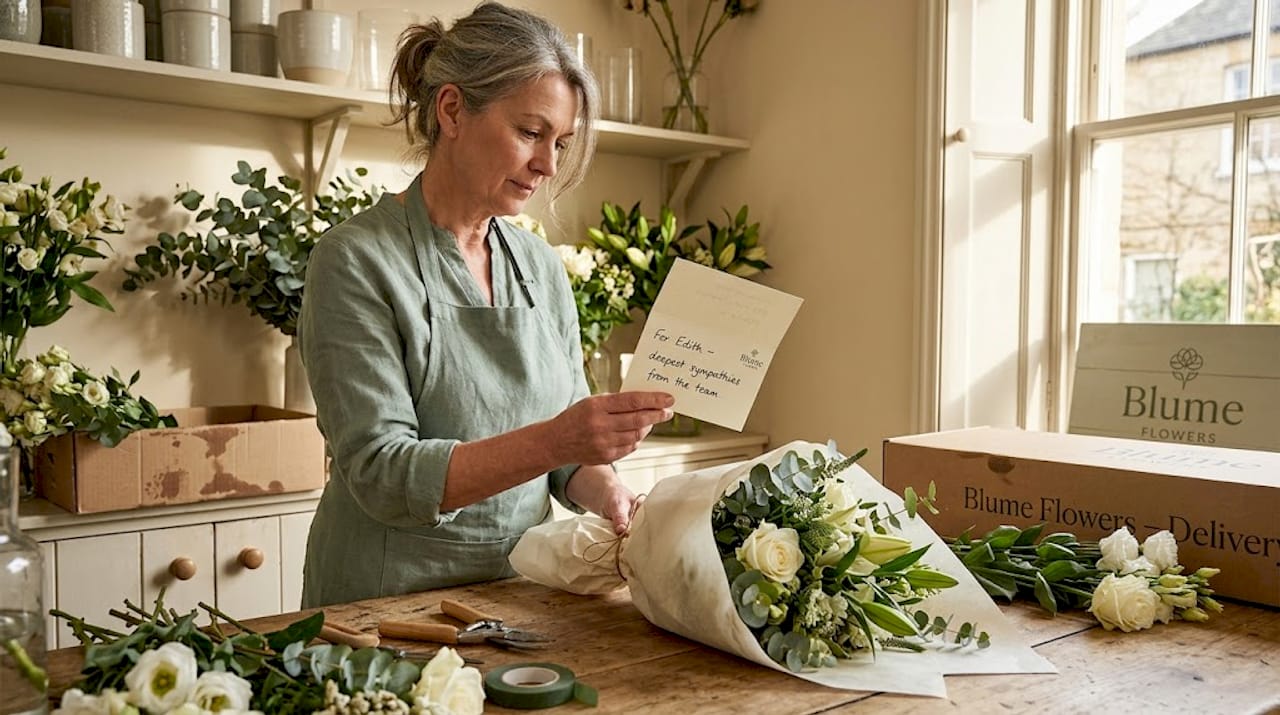
One of the most overlooked but important steps is calling the funeral home directly. Confirming delivery details by phone ensures your arrangement is accepted, placed correctly, and timed appropriately. Most funeral directors welcome this call because it saves them having to problem-solve last minute.
Always include the deceased’s full name and the date and time of the service on the card envelope, as well as the sender’s name. Funeral homes receive dozens of arrangements and clear labelling prevents your tribute from being misplaced.
For personal touches, keep them considered rather than showy. A small handwritten note tucked into the bouquet. A sprig of a flower the deceased loved added to the arrangement. A short, shared memory referenced in the card. These details cost nothing but land deeply.
One of the most meaningful aspects of this sympathy gift presentation guide is the timing insight that often surprises people. Sending flowers one to two weeks after the funeral can be far more impactful than sending on the day. The service itself is filled with people. The weeks following are often when families feel most isolated and forgotten.
Never send floral tributes directly to cemeteries unless specifically directed. Most cemeteries have no system for receiving individual deliveries, and arrangements can be lost, moved, or disposed of without the family ever knowing they arrived.
- Order through a local florist who can communicate directly with the funeral home.
- Confirm your florist has the correct venue address including postcode.
- For remote condolences, choose a trusted florist who delivers to the family’s location.
- If budget is a concern, a smaller, well-chosen bouquet shows more thought than an oversized, generic arrangement.
Common mistakes to avoid
Even the most well-meaning tribute can go wrong. Awareness of these common errors will help you navigate the process with more confidence.
-
Ignoring ‘in lieu of flowers’ notices. This is the single most frequent mistake. The family has made a specific request. Disregarding it, however kindly intended, places extra work on grieving people.
-
Choosing arrangements that are too large for the setting. A towering standing spray designed for a large chapel will feel overwhelming in a family living room. Consider the context.
-
Selecting bright or celebratory colours. Overly vivid arrangements can feel discordant with the mood of mourning. Stick to muted, gentle palettes unless the family has indicated a preference for colour.
-
Using clichés in the card message. Generic sentiments like “they lived a good life” or “time heals all wounds” can feel hollow. Write something true and specific to your relationship instead.
-
Poor timing that disrupts the service. Flowers arriving mid-ceremony cause real difficulties for staff and distress for families. Plan delivery early.
-
Sending flowers without any identification. Families may never know the arrangement was from you, and funeral staff cannot follow up without sender details.
When you learn of a bereavement late, do not let guilt stop you from acting. Late condolences through flowers are entirely appropriate and often deeply appreciated. A modest hand-tied bouquet sent to the home with a genuine, personal note can comfort a family weeks after others have moved on.
If you are navigating unfamiliar religious or cultural norms, a brief look at specific traditions goes a long way. Jewish mourning customs (shiva), for example, do welcome flowers at the home. Some Buddhist and Hindu services may not use flowers in the same way as Western funerals. When in doubt, a phone call to a mutual friend or family member always resolves uncertainty better than guessing.
What I have learned from years of sympathy arrangements
Working alongside grieving families teaches you very quickly that the gesture matters far more than the scale of it. I have seen enormous, expensive floral tributes receive little attention, and a simple posy with a handwritten note reduce a grown adult to grateful tears.
In my experience, the biggest misconception people carry is that more flowers demonstrate more care. That is not what I have observed. A bouquet chosen with thought, arriving at the right time, with a sincere and personal message, does more than any grand display. The quiet beauty of a well-composed arrangement speaks plainly without demanding attention.
What I find genuinely moving to witness is when someone sends flowers after the funeral. Two weeks later, when the house has emptied out and the calls have slowed. That is when flowers feel like a lifeline.
My advice is always the same: trust your genuine feeling over any urge toward perfection. A heartfelt, considered bouquet that arrives with a real message will always outlast a more elaborate tribute with nothing personal attached. Kindness never needs to be perfect. It just needs to be present.
— Steve
Sympathy flowers from Blumeflowers, done with care

When you need to send a sympathy bouquet with confidence, Blumeflowers takes the uncertainty out of the process. The funeral flowers collection offers elegantly composed arrangements designed specifically for condolence occasions, from understated hand-tied bouquets to classic white tributes. Each arrangement is crafted with the restraint and sincerity that sympathy occasions deserve.
The showstopper white bouquet is a particularly well-suited choice: clean, classic, and appropriate for both funeral venues and home delivery. Blumeflowers offers same-day and next-day delivery across Birmingham, Solihull, and surrounding areas, with direct support available to coordinate timing and messaging. If you want your tribute to feel personal and arrive correctly, the team at Blumeflowers handles the details that matter.
FAQ
When should I send a sympathy bouquet?
You can send sympathy flowers to the funeral venue or the family home. Sending to the family home one to two weeks after the service is often more comforting, as it reaches the family during a quieter, lonelier period of grief.
What flowers are most appropriate for a sympathy bouquet?
White lilies, roses, chrysanthemums, and freesias are classic choices. Stick to soft palettes of white, cream, pale pink, or muted blue and avoid bright, celebratory colours unless the family has specifically requested them.
What should I write in a sympathy card?
Keep it to three to five sentences and write something personal. A simple, honest message such as “I am thinking of you and your family” is more comforting than a long, generic note. Avoid clichés.
Is it appropriate to send flowers if I heard about the death late?
Yes. Late condolences are entirely appropriate and welcomed. Send a modest bouquet to the family home with a sincere card acknowledging the delay without over-apologising for it.
Should I send flowers directly to the cemetery?
No. Do not send floral tributes to a cemetery unless the family has specifically asked you to. Most cemeteries cannot receive individual arrangements, and your tribute may be lost or removed without the family’s knowledge.