


Step by step sympathy arrangements: a complete guide
TL;DR:
- A sympathy arrangement is a floral tribute sent to express condolences and support to someone grieving. Choosing the correct type and timing of flowers, and writing a sincere message, can provide meaningful comfort during loss.
A sympathy arrangement is a carefully designed floral tribute sent to express condolences and support to someone who is grieving. Getting the details right matters. The wrong arrangement type, poor timing, or a clumsy message can unintentionally add to a family’s burden rather than ease it. This guide walks you through step by step sympathy arrangements from choosing the right style and gathering your materials, to building the arrangement, timing delivery, and writing a message that genuinely comforts. Whether you are creating something yourself or ordering from a florist, these steps apply equally.
What types of sympathy arrangements exist and how do you choose?
The four main types of sympathy arrangements are basket arrangements, vase arrangements, standing sprays, and casket sprays. Each serves a different purpose and suits a different setting. Choosing the wrong type is one of the most common etiquette mistakes people make when sending condolence flowers.
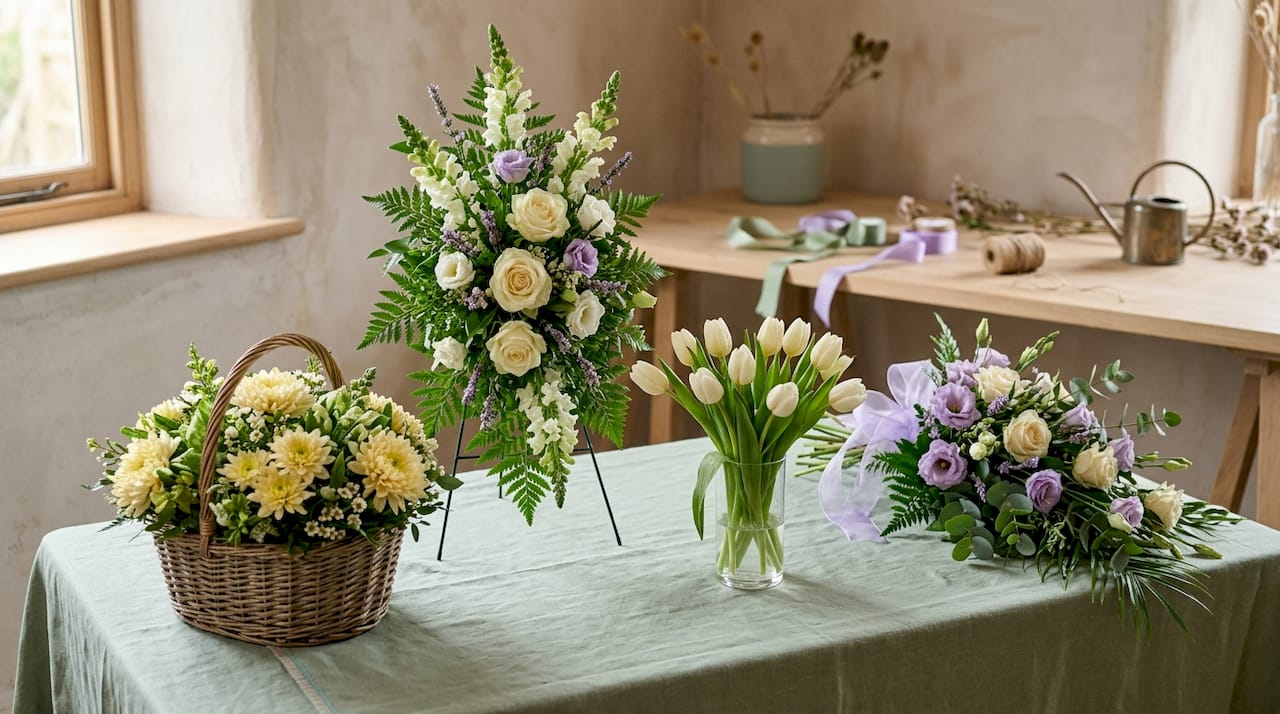
Basket and vase arrangements are the most versatile options. They suit home delivery because they are portable, easy to care for, and do not require a specific venue. A family can keep them on a dining table or windowsill for days after the funeral, providing ongoing comfort long after the service has ended. Smaller, home-friendly arrangements are a safe choice when you are unsure of family preferences or venue rules, as they minimise practical burden and avoid fragrance or space issues.
Standing sprays are formal tributes designed for funeral homes, churches, or crematoriums. They stand upright on an easel and are displayed near the coffin or at the front of the service. They make a strong visual statement and are appropriate for close friends, colleagues, or extended family sending a tribute to the venue.
Casket sprays are the most formal arrangement of all. Casket sprays must be reserved for immediate family only, as improper ordering can cause confusion and breach etiquette. If you are not a spouse, parent, child, or sibling of the deceased, a standing spray or basket arrangement is the appropriate choice.
| Arrangement type | Best setting | Who should order |
|---|---|---|
| Basket arrangement | Home delivery | Anyone |
| Vase arrangement | Home delivery | Anyone |
| Standing spray | Funeral venue | Close friends, colleagues |
| Casket spray | Funeral venue | Immediate family only |
Key considerations when choosing:
- Your relationship to the deceased guides the formality of the arrangement.
- Venue constraints (space, fragrance policies) affect size and flower choice.
- When in doubt, a thoughtful home delivery arrangement is always appropriate.
- Smaller arrangements are often appreciated more over time than large venue pieces, because they provide lasting comfort at home.
What tools and materials do you need for a DIY sympathy arrangement?
The right materials make the difference between an arrangement that lasts three days and one that holds its beauty for a week. Gathering everything before you start saves time and reduces stress during an already difficult moment.
Flowers with traditional sympathy symbolism
- White lilies: The most recognised sympathy flower in the UK, symbolising restored innocence and peace.
- Roses: White roses convey reverence and remembrance; cream roses suggest warmth and sympathy.
- Carnations: Long-lasting and affordable, carnations represent love and admiration.
- Chrysanthemums: A traditional funeral flower across Europe, symbolising grief and honour.
- Freesia: Adds delicate fragrance and a sense of gentle comfort.
Supporting materials
- Greenery: eucalyptus, ruscus, or pittosporum to frame the arrangement.
- Filler flowers: gypsophila (baby’s breath) or waxflower to add texture.
- Floral foam: soak thoroughly before use to provide a stable water source.
- Container: a basket, ceramic vase, or wooden box suited to the occasion.
Tools required
- Sharp floral scissors or secateurs.
- Floral tape and waterproof stem tape.
- Twine or ribbon for finishing.
- A bucket of clean, cool water for conditioning stems.
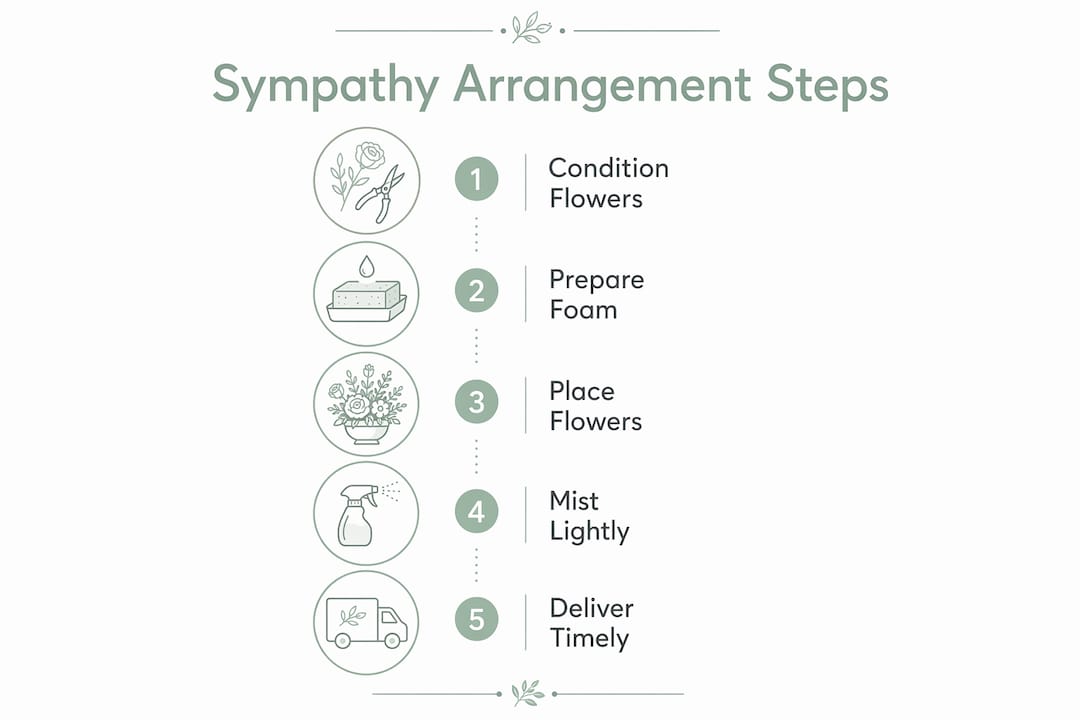
Pro Tip: Condition your flowers by placing them in a bucket of cool water for at least two hours before arranging. This firms the stems and extends the life of the finished piece significantly.
| Tool | Purpose | Arrangement type |
|---|---|---|
| Floral foam | Holds stems and provides hydration | Basket, standing spray |
| Vase or urn | Container for water-based arrangements | Vase arrangement |
| Floral tape | Secures stems and mechanics | All types |
| Secateurs | Clean stem cuts | All types |
| Easel | Supports standing sprays | Standing spray |
How do you arrange sympathy flowers step by step?
Building a sympathy arrangement follows a clear sequence. Skipping steps produces an unbalanced result that wilts faster and looks less considered.
-
Prepare your container. If using floral foam, soak it in cool water until it sinks naturally. Do not force it under. Place it securely in your basket or container so it sits just above the rim.
-
Establish your shape with line flowers. Insert tall, structural stems such as snapdragons, gladioli, or tall roses at the back and sides first. These define the height and overall silhouette of the arrangement.
-
Place your focal flowers. Focal flowers are your largest, most visually prominent blooms, typically white lilies or open roses. Position them at the centre and slightly lower than your line flowers. These draw the eye and anchor the design.
-
Add filler flowers. Gypsophila, waxflower, or small spray carnations fill the gaps between focal and line flowers. They add texture and soften the overall look without competing with the focal blooms.
-
Insert greenery last. Adding greenery at the end preserves flower prominence and ensures a cleaner finish while using less foliage. Tuck eucalyptus or ruscus around the base and edges to frame the flowers naturally.
-
Check balance from all angles. Rotate the arrangement and view it from the front, sides, and above. Adjust any stems that create gaps or visual imbalance.
-
Cut stems and hydrate. Cutting flower stems at a 45-degree angle before placing them in water significantly increases hydration and longevity. This maximises the surface area for water uptake, which is critical for keeping the arrangement fresh during delivery and display.
If you are making two matching arrangements for a service, florists build them simultaneously for balance and efficiency. Work on both pieces at the same stage rather than completing one before starting the other. This produces mirrored placement of focal flowers and textures rather than identical copies, which looks more natural and harmonious.
Pro Tip: Mist the finished arrangement lightly with cool water and keep it in a cool room away from direct sunlight until delivery. Heat is the fastest way to shorten a flower’s life.
How and when should you order or deliver sympathy arrangements?
Timing is one of the most overlooked aspects of a condolence arrangement. Getting it wrong means flowers arrive when no one is there to receive them, or too late to be displayed at the service.
Sympathy arrangements for funeral venues should be delivered 2 to 4 hours before the service begins. This gives the funeral home or venue staff time to set up and arrange tributes properly. Arriving too close to the service creates unnecessary pressure on staff and risks your arrangement not being displayed.
Home deliveries carry far more flexibility. You can send flowers on the day of the funeral, the day after, or even weeks later. A thoughtful arrangement arriving a week after the service can provide comfort precisely when the initial wave of support has faded and the family is left alone with their grief.
Practical delivery checklist:
- Order at least 24 hours in advance to ensure reliable delivery and reduce stress. Same-day funeral flower delivery carries risk, particularly for venue arrangements.
- Confirm the venue’s delivery address and any access restrictions before placing your order.
- Check whether the funeral home or church has a policy on flower size or fragrance.
- For home deliveries, confirm someone will be present to receive the arrangement.
- Include a clear card with your name and a brief message so the family knows who sent the flowers.
When ordering through a florist, provide the full name of the deceased, the service date and time, and the venue address. A professional florist will co-ordinate timing on your behalf, but providing complete information removes any risk of error.
How do you write a meaningful message and present the arrangement well?
The note accompanying your arrangement carries as much weight as the flowers themselves. A sincere, brief, personal note accompanying sympathy flowers is far more effective than a lengthy or clichéd message. Focus on heartfelt expression rather than formality.
Avoid phrases such as “they are in a better place” or “everything happens for a reason.” These can feel dismissive of grief rather than supportive. Instead, acknowledge the loss directly and offer your presence.
“We are so sorry for your loss. [Name] was a wonderful person and we feel privileged to have known them. We are thinking of you.”
This kind of message is specific, warm, and free of hollow reassurance. It does not try to explain the loss. It simply acknowledges it.
Presentation tips:
- Wrap basket arrangements in tissue paper and secure with a ribbon in a muted tone such as ivory, sage, or pale grey.
- Avoid heavily scented wrapping materials that compete with the flowers.
- Keep the card visible but tucked neatly into the arrangement rather than taped to the outside of the wrapping.
- For home deliveries, include care instructions so the family can keep the flowers fresh.
- Consider fragrance sensitivities. Lilies are beautiful but intensely fragrant. If you know the recipient is sensitive, opt for roses or carnations instead.
For further guidance on presentation etiquette, the sympathy bouquet presentation guide from Blumeflowers covers the visual and stylistic details in depth.
Key takeaways
A well-executed sympathy arrangement combines the right arrangement type, properly prepared flowers, correct delivery timing, and a sincere personal message to offer genuine comfort.
| Point | Details |
|---|---|
| Choose the right type | Match the arrangement to your relationship and the venue; casket sprays are for immediate family only. |
| Prepare materials properly | Condition stems, soak floral foam, and gather tools before you begin arranging. |
| Follow the layering sequence | Build from line flowers to focal blooms to fillers, then add greenery last for a clean finish. |
| Time your delivery correctly | Deliver to venues 2 to 4 hours before the service; home deliveries can arrive days or weeks later. |
| Keep messages brief and sincere | A short, personal note outperforms a long, formal message every time. |
What I have learned from years of sympathy floral design
The most common mistake I see is people overcomplicating the arrangement out of a desire to do enough. Grief is not measured in stem count. A single, beautifully conditioned white lily in a clean vase says more than a cluttered basket of twenty varieties competing for attention.
The second mistake is leaving the message as an afterthought. People spend an hour choosing flowers and thirty seconds writing the card. Reverse that ratio. The flowers will fade. The words stay.
Timing catches people out more than anything else. I have seen arrangements arrive at an empty house because no one confirmed someone would be home, and venue flowers delivered forty minutes before a service with no time to set them up properly. Both situations are avoidable with one phone call.
My honest advice is this: do not let the fear of getting it wrong stop you from sending anything at all. A simple, well-timed arrangement with a genuine note is always the right choice. Sincerity matters far more than perfection in floral design.
— Steve
Sympathy flowers from Blumeflowers, delivered with care
When you want the arrangement handled by professionals who understand both the aesthetic and the occasion, Blumeflowers offers a considered range of sympathy flowers suited to home delivery and funeral tributes alike.
The Beautifully Simple Showstopper White Bouquet and the Beautifully Simple Peony Bouquet are both designed with the occasion in mind, combining elegance with restraint. Blumeflowers provides same-day and next-day delivery across Birmingham, Solihull, and surrounding areas, with expert florists ensuring every arrangement is prepared and timed correctly. For a full view of available tribute options, the funeral flowers collection brings together the most appropriate choices for every type of service and home delivery.
FAQ
What is the most appropriate sympathy arrangement for home delivery?
Basket and vase arrangements are the best choice for home delivery. They are portable, easy to care for, and provide ongoing comfort to the family in the days and weeks following a funeral.
Can I send sympathy flowers after the funeral has taken place?
Sending flowers after the funeral is entirely appropriate and often more meaningful. Home deliveries can arrive days or even weeks later, offering comfort when the initial support from others has subsided.
How far in advance should I order sympathy flowers?
Order at least 24 hours before the required delivery time. For venue arrangements, aim for delivery 2 to 4 hours before the service to allow proper setup.
Who should order a casket spray?
Casket sprays are reserved for immediate family members only. Close friends, colleagues, and extended family should choose standing sprays, basket arrangements, or vase arrangements instead.
What should I write on a sympathy card?
Keep the message brief, personal, and free of clichés. Acknowledge the loss directly, mention the deceased by name if possible, and offer your presence or support without trying to explain or minimise the grief.