


Premium vs budget bouquets: how to choose wisely
TL;DR:
- Premium bouquets last longer, with proper conditioning extending vase life up to 14 days.
- They rely on top-grade stems, immersive conditioning, and meticulous craftsmanship, unlike budget options.
For a milestone occasion, choose a premium bouquet. For everyday cheer or a bulk event, a budget bunch does the job perfectly well. The difference comes down to three things: how long the flowers last, how much craft went into the arrangement, and how it looks when it lands in someone’s hands. If you want a statement gift that holds its beauty for nearly a fortnight, BLÜME by Urban Design Flowers is the premium option to consider. If you are filling a table with colour for a casual gathering, a well-chosen budget bunch is entirely sensible.
Table of Contents
- What actually differs between premium and budget bouquets
- UK price ranges: what each band actually buys you
- Do premium bouquets last longer? What to expect by tier
- Pros, cons, and which to choose for your occasion
- How to spot a quality bouquet when you are shopping
- How to get a premium look on a tighter budget
- What BLÜME prioritises when crafting premium bouquets
- Key takeaways
- The question that decides everything
- BLÜME: premium bouquets for the occasions that count
- Useful sources
What actually differs between premium and budget bouquets
The gap between a £12 supermarket bunch and a £75 hand-tied luxury arrangement is not simply price. It is a chain of decisions made before the flowers reach you.
Stem grade and materials
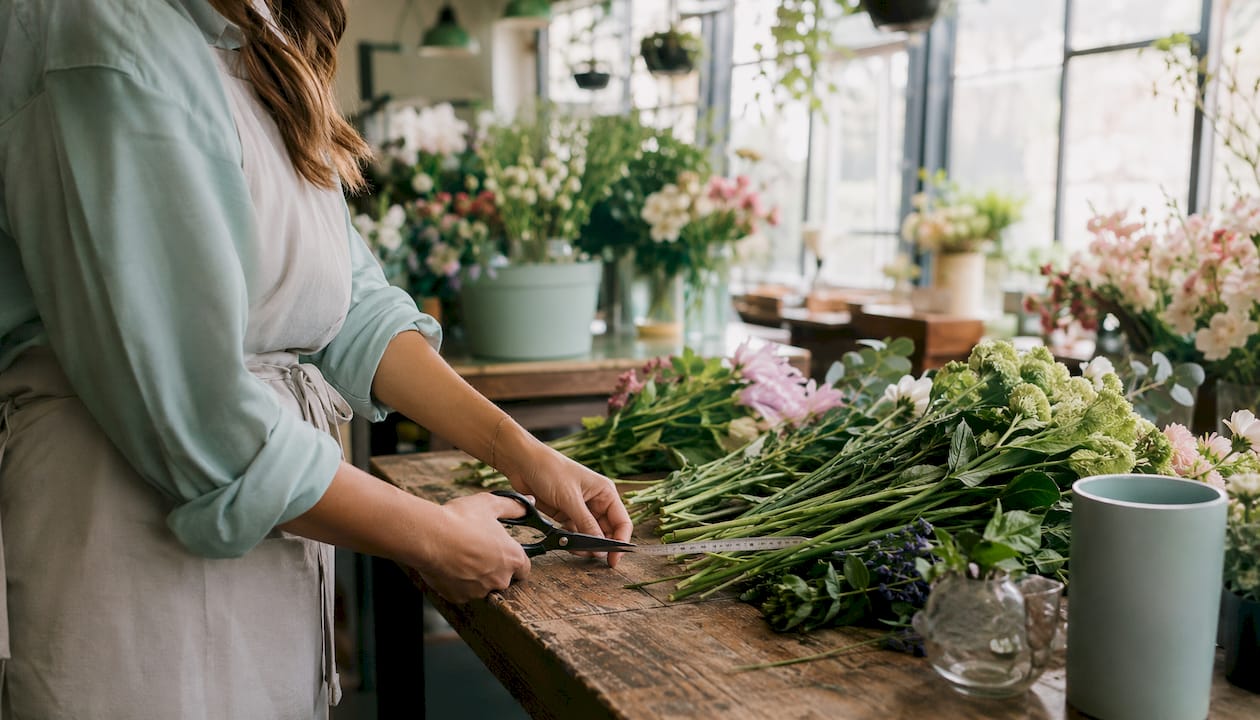
Florists and growers classify cut stems by length, head size, and structural strength. The Institute of Flowers describes how higher grades carry longer stems, stronger structure, and larger flower heads, while lower grades may still be usable but are shorter and less consistent. A premium bouquet uses top-tier stems because they hold their shape, open evenly, and last longer. A supermarket bunch typically uses shorter, lower-grade stems that were graded out of the premium supply chain.
Conditioning and the cold chain
This is the part most buyers never see, yet it determines almost everything about vase life. Premium florists receive stems, cut the bases at an angle, strip lower foliage, and hold the flowers in temperature-controlled water for hours before they are arranged. Retailers that hand-tie on the day report higher freshness because stock is conditioned and graded immediately before dispatch. A supermarket bunch, by contrast, may have sat in ambient temperature at a distribution centre, then on a shelf, before you pick it up.
Workmanship and finishing
The UK Floristry Judges Guild defines bouquet value in terms of condition of materials, meticulous workmanship, and physical stability. In practice, that means clean stem spiralling, balanced weight distribution, no crushed or bruised petals, and a secure binding that does not loosen in transit. Budget bunches are often machine-assembled or loosely hand-tied with minimal attention to mechanics. A bespoke luxury hand-tied bouquet is built with deliberate structure so it sits correctly in a vase without splaying.
Packaging and extras
Premium bouquets typically arrive in tissue, kraft paper, or a branded box, often with a water source to keep stems hydrated in transit. Some include a bud vase, a personalised card, or a small gift such as chocolates or a candle. A supermarket bunch comes in cellophane. Neither is wrong for its purpose, but packaging is part of the emotional experience of receiving flowers as a gift.
UK price ranges: what each band actually buys you
Price bands in the UK floristry market are fairly consistent across independent florists, and understanding what sits inside each band stops you overpaying or being disappointed.
| Price band | Typical UK range | What to expect |
|---|---|---|
| Budget | £12–£30 | Supermarket or petrol-station bunch; seasonal mixed stems; minimal conditioning; basic cellophane wrap |
| Mid-range | £35–£60 | Independent florist hand-tied; better stem grade; some conditioning; gift wrap and card |
| Premium | £60–£120+ | Specialist florist; top-grade stems; full conditioning; branded packaging; same-day or timed delivery |
| Bespoke / event | £120–£200+ | Fully custom design; rare or imported stems; event-scale quantities; consultation included |
These ranges align with UK florist pricing data, which places small hand-tied bouquets at £20–£35, medium at £35–£60, and large or statement arrangements at £60–£120 or above. Wedding bridal bouquets typically run £80–£200+, and funeral tributes £50–£180+ depending on scale and flower choice.
What drives the cost inside a premium bouquet
Floristry Trade Club analysis makes clear that premium pricing reflects cold-chain management and curated sourcing, not just expensive stems. A rough breakdown for a £75 premium hand-tied arrangement might look like this:
- Wholesale stems: approximately 35–40% of retail price
- Labour (conditioning, design, finishing): approximately 30–35%
- Packaging, ribbon, card: approximately 10%
- Delivery and overheads (refrigeration, utilities, waste): approximately 15–20%
Seasonality and peak-date surcharges
Seasonal flowers can cost 20–30% less than imported or out-of-season stems. Buying peonies in May rather than December, or tulips in spring rather than autumn, makes a material difference to what you get for your money. Valentine’s Day, Mother’s Day, and Christmas all carry surcharges across the industry because wholesale prices spike and florists work longer hours. If your occasion is flexible, avoiding those dates by even a few days can save £10–£20 on a mid-range order.
Pro Tip: Avoid the lowest quote. Industry guidance warns that the cheapest option often hides reduced stem quality, less conditioning time, or lower labour input — all of which show up in how the bouquet looks and lasts.
Do premium bouquets last longer? What to expect by tier
Yes, meaningfully so. A supermarket or petrol-station bunch typically lasts 4–6 days; a luxury bouquet from a specialist florist can last 10–14 days with proper care. That difference is almost entirely down to conditioning, not the flower variety itself.
Why conditioning is the decisive factor
Professional conditioning — cutting stems under water, hydrating in temperature-controlled conditions, rotating stock — is what separates a four-day bunch from a fourteen-day arrangement. Buying buds alone does not guarantee longevity. A bud that was stressed in transit or sat in warm water at a distribution centre will open fast and drop quickly regardless of how tight it looked in the shop.
The true indicator of future vase life sits at the stem base and in the water. A clean, pale cut and clear water signal a healthy vascular system. Cloudy or smelly water means bacterial decay has already begun, and no amount of home care reverses that.
Expected vase life by tier
| Tier | Typical vase life | Notes |
|---|---|---|
| Budget (supermarket) | 4–6 days | Minimal conditioning; ambient storage |
| Mid-range (independent florist) | 10–14 days | Some conditioning; better stem grade |
| Premium (specialist florist) | 10–14 days | Full cold-chain conditioning; top-grade stems |
At-home care that genuinely extends longevity
- Cut 2–3 cm from each stem at a 45-degree angle before placing in water
- Use clean, cool water and change it every two days
- Keep the bouquet away from direct sunlight, radiators, and ripening fruit (ethylene gas accelerates petal drop)
- Remove any foliage sitting below the waterline immediately
- Add flower food if supplied; it is not just marketing — it contains biocides and sugars that slow bacterial growth
A premium bouquet given this care will typically outlast a budget bunch by at least a week. Over that period, the cost-per-day calculation often favours the premium option.
Pros, cons, and which to choose for your occasion
Premium bouquets
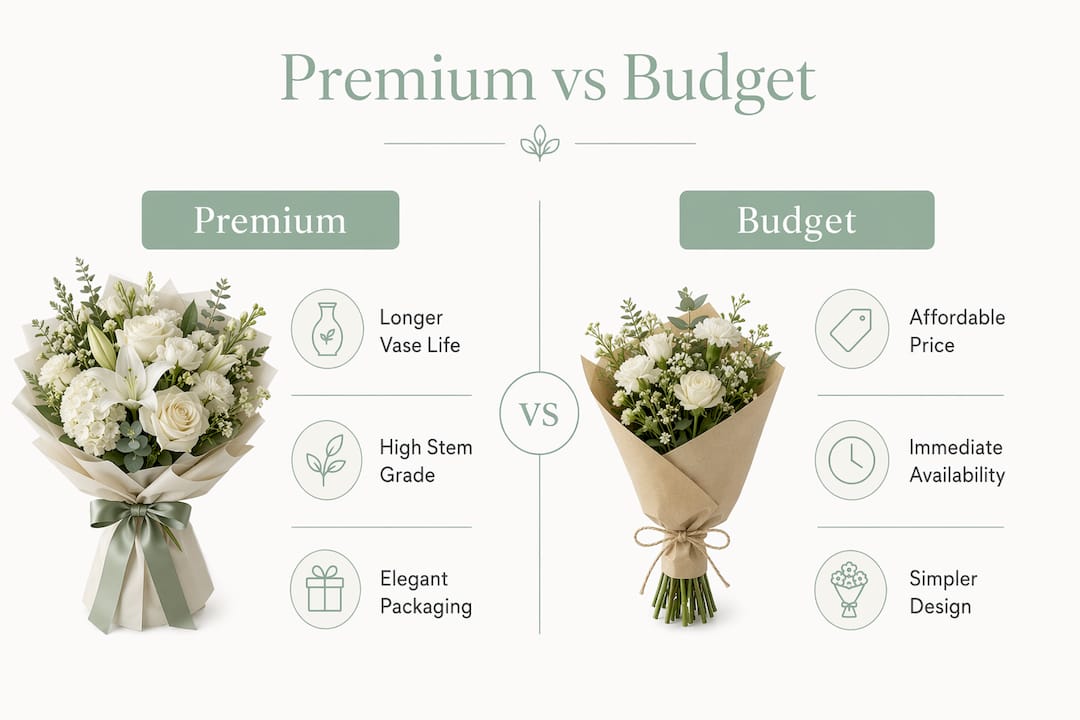
Pros: longer vase life, stronger fragrance (particularly with garden roses, peonies, and freesias), higher visual impact, better packaging for gifting, rare or seasonal stem access, and a consistent result from a skilled florist.
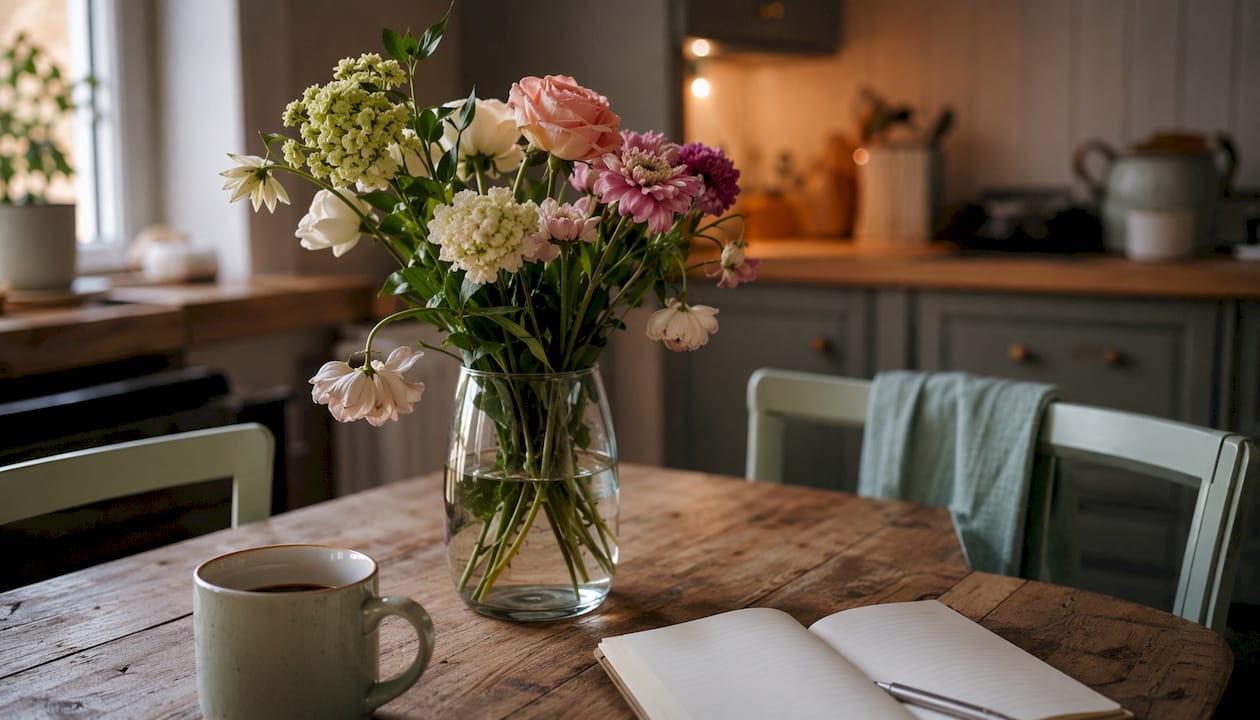
Cons: higher upfront cost, usually requires advance ordering for bespoke work, and the premium is wasted if the recipient does not care for the flowers properly.
Budget bouquets
Pros: accessible price point, available immediately, perfectly adequate for casual gifting or filling a space with colour, and sensible for high-volume events where per-unit cost matters.
Cons: shorter vase life, less design control, limited stem variety, and packaging that rarely suits a formal gift.
Occasion guide
| Occasion | Recommended tier | Reason |
|---|---|---|
| Anniversary or milestone birthday | Premium | Longevity and presentation matter; the gift is the statement |
| Sympathy / funeral tribute | Premium | Dignity and lasting presence are expected; see funeral flowers |
| Weekly home vase | Budget or mid-range | Frequency matters more than longevity here |
| Corporate reception or office | Premium | Brand image and consistency require reliable quality; see corporate flowers |
| Casual birthday or thank-you | Mid-range | Good balance of quality and cost |
| Large event (table centrepieces, bulk) | Budget or mid-range | Volume makes per-unit cost the priority |
| Wedding bridal bouquet | Premium / bespoke | Once-in-a-lifetime; no compromise on workmanship |
Where luxury floral trends are relevant — corporate events, prestige gifting, or weddings — the premium tier is not optional. For a weekly vase refresh or a casual thank-you, a well-chosen mid-range bunch from a local florist is entirely appropriate.
How to spot a quality bouquet when you are shopping
Whether you are buying in person, on the phone, or online, a short checklist separates genuine quality from a polished photograph.
Questions to ask a florist
- Were the stems conditioned before assembly, and for how long?
- Where do your stems come from, and are these varieties in season?
- Can you confirm the delivery time window, and will the bouquet include a water source?
- Is a vase, flower food, or care card included?
Visual and tactile signs of quality
- Stem bases: pale, clean cuts with no browning or sliminess
- Water in any display bucket: clear, not cloudy or malodorous
- Flower heads: firm to a gentle touch, petals intact, no bruising at the edges
- Foliage: green and turgid, not yellowing or wilting
- Mechanics: stems spiral neatly, the bouquet sits balanced without splaying
What premium packaging looks like
A properly finished premium bouquet arrives in tissue or kraft paper with a secure outer wrap, a ribbon or twine binding, and a personalised card holder. If it is delivered, the stem ends should be in a water capsule or damp cotton. Cellophane alone is not a premium finish.
Pro Tip: Ask whether the florist grades stems by length and head size before building the arrangement. A florist who can answer that question confidently — and explain their conditioning process — is working to a professional standard. One who cannot is likely assembling from whatever arrived that morning.
How to get a premium look on a tighter budget
A smaller spend does not have to mean a visually weak result. The tactics below make the most of a limited budget without sacrificing the impression the bouquet makes.
- Choose a single variety. A tight, well-presented single-variety bouquet reads as deliberate and considered. Under £30, a single-variety arrangement looks more intentional than a mixed budget bunch of the same price.
- Limit the colour palette. Two colours, or a tonal range of one colour, always looks more considered than five competing shades. It also makes stem selection easier and cheaper.
- Ask for seasonal stems. Seasonal flowers can cost 20–30% less than imported varieties, and they are usually fresher because they have not travelled as far.
- Increase the foliage ratio. Eucalyptus, ruscus, and fern add volume and texture at a fraction of the cost of additional flower heads. A skilled florist can make a ten-stem bouquet look like twenty with the right foliage.
- Prioritise stem quality over stem count. Six perfectly conditioned, top-grade roses outperform twelve tired, short-stemmed ones every time.
Budget examples
- £15–£30: Single-variety seasonal stems (tulips in spring, sunflowers in summer), minimal foliage, simple kraft wrap. Looks clean and intentional.
- £30–£60: Mid-range independent florist, two-variety mix, eucalyptus foliage, gift wrap and card. Suitable for most casual gifting occasions.
- When to upgrade: If the occasion is a milestone, a corporate setting, or a sympathy tribute, the emotional and presentational stakes justify moving to the premium tier. The cost-per-day calculation often makes the upgrade reasonable.
Timing saves money. Avoid Valentine’s Day, Mother’s Day, and Christmas for non-occasion purchases. Buying the same arrangement a week before or after a peak date can reduce the price noticeably.
What BLÜME prioritises when crafting premium bouquets
At BLÜME, the starting point for every arrangement is conditioning. Stems arrive, are cut and stripped, and go straight into temperature-controlled water. Nothing is assembled from stock that has not been properly hydrated. That single discipline is what separates a bouquet that opens beautifully over ten days from one that droops by Thursday.
Stem grading is the next priority. Premium florists spend 45 minutes or more conditioning and designing a bespoke arrangement, and that labour is where the 25–50% price difference with mass-market options comes from. At BLÜME, that time is spent selecting stems by length, head size, and structural integrity, then building the arrangement with deliberate mechanics so it holds its shape from the moment it leaves the studio to the moment it is unwrapped.
The outcome is measurable: consistent vase life in the 10–14 day range, packaging that presents well as a gift, and a design that reflects the occasion rather than a generic template. For prestige arrangements and corporate work, BLÜME also applies the same conditioning standards to larger-scale event floristry, where consistency across multiple arrangements matters as much as the quality of any single one.
Pro Tip: The UK Floristry Judges Guild identifies condition, workmanship, and physical stability as the three primary value facets of any bouquet. Ask your florist how they address each one before you order.
Key takeaways
Premium bouquets justify their cost through conditioning, stem grade, and workmanship — not just flower variety — and typically last 10–14 days versus 4–6 days for a budget bunch.
| Point | Details |
|---|---|
| Vase life gap is significant | Budget bouquets last 4–6 days; mid-range bouquets last 4–6 days; premium specialist arrangements last 10–14 days with proper care. |
| Conditioning drives longevity | Professional stem conditioning, not flower variety alone, is the decisive factor in how long a bouquet lasts. |
| Price reflects labour, not just flowers | Labour, cold-chain conditioning, and packaging account for roughly 60–65% of a premium bouquet’s retail price. |
| Seasonal stems save 20–30% | Choosing in-season varieties cuts wholesale cost and usually means fresher flowers with less transit time. |
| Blumeflowers for premium occasions | BLÜME by Urban Design Flowers offers fully conditioned, hand-tied premium bouquets with same-day delivery across Birmingham and the West Midlands. |
The question that decides everything
Most people frame this as a budget decision. It is actually an occasion decision. The question is not “how much do I want to spend?” but “how much does this moment matter, and how long do I want the flowers to be there for it?”
The clients who come to me having bought a budget bunch for a significant occasion almost always say the same thing: the flowers were gone before the feeling was. A sympathy tribute that wilts in four days, or an anniversary bouquet that drops its petals by the weekend, does not serve the moment it was bought for. Conversely, I have seen people spend £80 on flowers for a casual Friday thank-you when a £35 mid-range bunch would have been entirely right.
The one question I ask every client: is this bouquet the gift, or is it part of the gift? If it is the gift, spend on premium. If it is accompanying something else, mid-range is usually the sensible call.
BLÜME: premium bouquets for the occasions that count
When the occasion genuinely matters, the flowers should match it. BLÜME by Urban Design Flowers offers fully conditioned, hand-tied luxury bouquets built to the standards this article describes: top-grade stems, cold-chain conditioning, and packaging that presents beautifully from the moment it is unwrapped. Same-day and next-day delivery covers Birmingham, Solihull, and the wider West Midlands, with nationwide next-day options available.
Whether you are marking an anniversary, sending sympathy flowers, or setting up a corporate reception, BLÜME’s range covers the full premium spectrum. The Cherry Hill Bouquet suits birthdays and anniversaries with high visual impact; the Beautifully Simple Peony Bouquet is a perennial choice for milestone gifting. For corporate and event enquiries, the corporate flowers page outlines service options and consultation availability. Browse the full collection and place your order at blumeflowers.co.uk.
Useful sources
- UK Floristry Judges Guild — Judges Criteria & Facets: The industry standard reference for bouquet quality assessment in the UK, covering condition, workmanship, and physical stability.
- Floristry Trade Club — Understanding Costings and Retail Pricing: Trade-level analysis of what drives floristry pricing, including cold-chain, labour, and overhead components.
- FloristsBook — How Much Does a Florist Cost in the UK?: Detailed UK pricing guide covering stem grading, labour time, and cost-per-arrangement breakdowns.
- Are We — Florist Costs in the UK: Price tables for common bouquet types and event work across the UK market.
- Institute of Flowers — Understanding Flower Quality, Grades and Varieties: Explains stem grading systems and how grade affects design flexibility and longevity.
- Flowers Online 24 — Cheap vs Luxury Flower Bouquets: Comparative vase-life data and cost-per-day analysis for budget versus luxury arrangements.
- Flowers By Post UK — How to Choose the Right Florist: Practical guidance on questions to ask a florist and red flags to watch for when comparing quotes.