


Modern floral trends 2026: the definitive guide
TL;DR:
- In 2026, floral trends emphasize intentional luxury with sculptural, impactful arrangements that focus on emotional storytelling. The dominant flower is Amaranthus, and warm earth tones like Mocha Mousse shape sophisticated palettes. Hero installations and vaseless centrepieces take precedence over volume-driven designs, reflecting a shift towards quality and purpose.
Modern floral trends 2026 are defined by intentional luxury, where fewer, more artistically composed flowers replace volume-driven arrangements. This shift, documented across leading floral design studios and industry events, marks a move from “pretty” to purposeful. Colour, texture, and emotional storytelling now sit at the heart of every arrangement, whether you are commissioning a wedding centrepiece, a corporate display, or a luxury gift bouquet. If you are planning an event or simply want to understand what defines modern bouquet artistry this year, this guide covers the ten trends shaping floral design in 2026.
1. What is intentional luxury in floral design?
Intentional luxury is the dominant philosophy driving floral design in 2026. It prioritises curated, structured arrangements that balance blooms with negative space and asymmetry, rather than filling every inch of a vase. The result is a composition that reads as art rather than decoration.
This approach draws directly from sculpture and architecture. A single oversized Amaranthus stem arching over a low ceramic vessel carries more visual weight than a dense mixed bouquet twice its size. Florists working in this style treat each stem as a deliberate mark on a canvas, not a filler.
- Asymmetrical bouquets with deliberate negative space
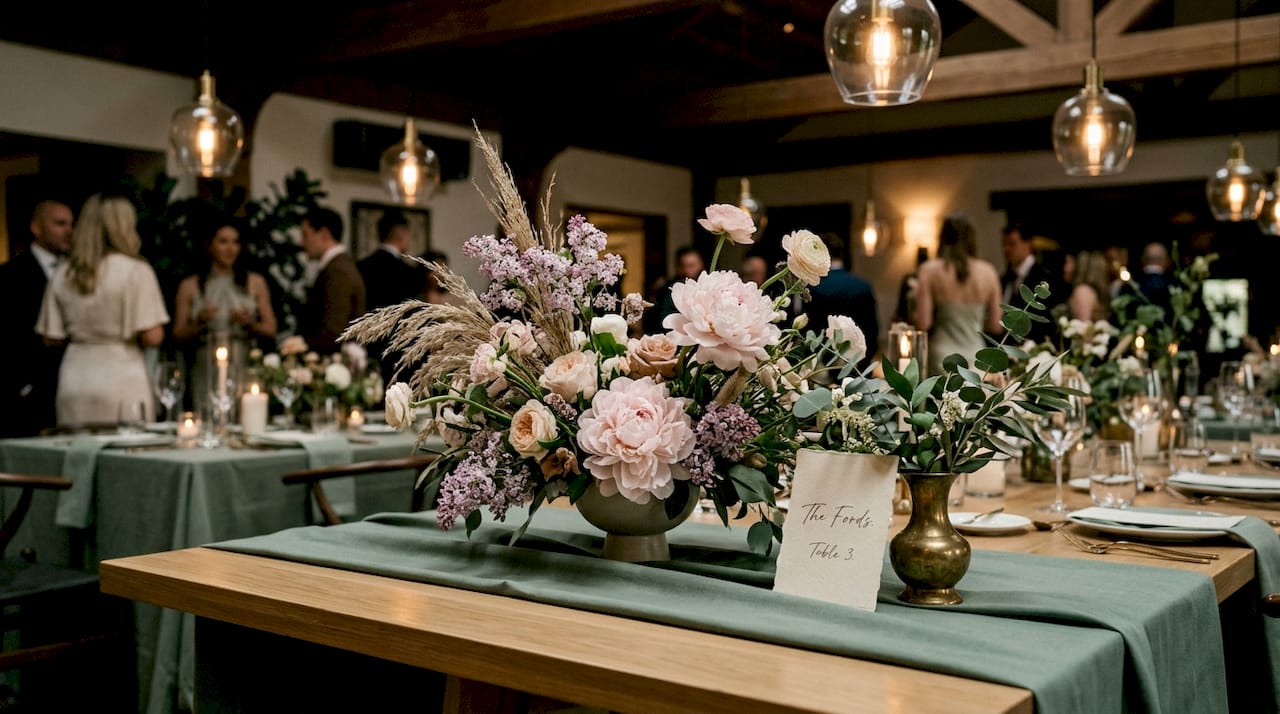
- Vaseless or vessel-free centrepieces placed directly on tables
- Sculptural single-variety arrangements using texture over volume
- Architectural forms inspired by Japanese Ikebana principles
Pro Tip: When briefing a florist for an event, ask specifically for a “hero piece” budget allocation. Concentrating spend on one or two statement arrangements delivers stronger visual impact than spreading the same budget across ten smaller pieces.
2. Which flowers define modern bouquet trends in 2026?
Amaranthus is the breakout stem of 2026, recording a 285% increase in bridal requests compared to the previous year. Its dramatic, cascading form suits the sculptural aesthetic that defines this year’s floral design direction. That figure signals a genuine shift in consumer taste, not a passing moment.
Beyond Amaranthus, several other species are gaining significant ground in modern bouquet trends for 2026. Gerbera daisies are being reframed as bold, graphic statement flowers rather than filler blooms. Sweet peas bring delicate texture and scent, adding sensory dimension to arrangements. Scabiosa, with its pin-cushion form, introduces architectural interest without bulk. You can explore the full range of trending seasonal stems to plan arrangements around what is genuinely at its peak.
- Amaranthus: cascading, sculptural, available in deep burgundy and lime green
- Gerbera daisies: bold graphic colour, strong stems, excellent for statement pieces
- Sweet peas: soft texture, natural fragrance, ideal for romantic or garden-style designs
- Scabiosa: architectural pin-cushion form, works beautifully in tonal palettes
Pro Tip: Scent is an underused dimension in modern floral design. Pairing sweet peas or garden roses with a visually dominant stem like Amaranthus creates an arrangement that engages two senses simultaneously, which is particularly effective for intimate event spaces.
3. How are colour palettes evolving in 2026?
The clearest shift in trends in floral design 2026 is the move away from stark white and blush palettes towards layered, warm, and natural tones. Pantone’s Mocha Mousse (PANTONE 17-1230) anchors this direction, bringing a rich, earthy warmth that pairs naturally with apricot, terracotta, and dusty lavender. This palette feels simultaneously grounded and sophisticated, which is precisely why it resonates with luxury floral clients.
Monochrome and tonal layering are the techniques florists use to build depth within these palettes. Rather than mixing contrasting colours, the approach layers three or four shades of the same hue, from pale peach through to deep burnt orange, creating arrangements with genuine visual complexity. Joyful, saturated colours are also appearing in more contemporary designs, particularly for corporate gifting and retail displays where emotional impact matters.
| Colour | Mood | Best paired with |
|---|---|---|
| Mocha Mousse (PANTONE 17-1230) | Warm, grounded, luxurious | Cream roses, dried grasses, terracotta vessels |
| Apricot and peach | Soft, romantic, optimistic | Sweet peas, garden roses, ranunculus |
| Dusty lavender | Calm, elegant, modern | Scabiosa, eucalyptus, white lisianthus |
| Deep burgundy | Dramatic, rich, editorial | Amaranthus, dark dahlias, black foliage |
Pro Tip: Avoid mixing more than four colours in a single arrangement if you are working with warm earth tones. The palette reads as muddy rather than layered beyond that point. Three tones with one accent is the most reliable formula.
4. What are the top styling and presentation trends for events?
Vaseless centrepieces that sit directly on tables are one of the most significant event floral trends for 2026. Championed by designers including Michelle Edgemont of Poppy Flowers, these low-profile arrangements encourage guest interaction and create an architectural or meadow-like aesthetic that photographs beautifully. They also remove the visual barrier that tall vases create between guests seated opposite each other.
The sunken meadow concept takes this further. Sunken meadow designs place florals at or below table level, creating an immersive, ground-proximate display. These require careful coordination with venues to address guest flow, clearance, and practical interaction, but the effect is genuinely unlike anything a traditional centrepiece achieves.
“Floral styling now supports visual storytelling and emotional connection, not just decoration. The story behind the stems is what engages younger audiences and creates lasting impressions.” — Floral Marketing Fund, Floriexpo 2026
Emotional storytelling through florals is a theme the Floral Marketing Fund has identified as critical for connecting with Generation Z and Millennial consumers. Texture, movement, and layered palettes are the visual tools florists use to build that narrative. Packaging and presentation at the retail level are also evolving, with social-media-first styling influencing how bouquets are wrapped, displayed, and photographed before they even reach the recipient.
5. Bold statement installations: the defining event floral trend
Suspended floral clouds and oversized ceremony arches are the standout installations defining modern event floral trends in 2026. The principle is straightforward: one or two hero pieces create more guest impression and better photographic opportunities than a dozen smaller arrangements spread across a venue. This is a meaningful shift in how event budgets are allocated.
Asymmetry and negative space are as important in large-scale installations as they are in hand-tied bouquets. An arch that fills only two thirds of its frame, with trailing Amaranthus extending beyond its boundary, reads as intentional and artistic. A perfectly symmetrical arch filled to capacity reads as traditional, regardless of the flowers used. Understanding this distinction is what separates modern event floral design from conventional wedding floristry.
| Installation type | Best venue | Budget consideration |
|---|---|---|
| Suspended floral cloud | High-ceilinged ballrooms, barns | High: requires rigging and structural support |
| Oversized ceremony arch | Outdoor gardens, chapels, marquees | Medium to high: scales with flower choice |
| Vaseless table meadow | Any reception space | Medium: labour-intensive but no vessel cost |
| Sculptural entrance piece | Hotel lobbies, gallery spaces | Medium: single focal point, high impact |
Pro Tip: Before commissioning a suspended installation, confirm with the venue that rigging points exist and that the ceiling height is sufficient. Many historic venues have restrictions that rule out overhead florals entirely. Raise this in the first venue walkthrough, not the week before the event.
6. What defines modern bouquet wrapping and packaging in 2026?
What is modern bouquet wrapping in 2026? It is the deliberate use of natural, tactile materials that complement the arrangement rather than compete with it. Kraft paper, linen ribbon, and dried grass wrapping have replaced cellophane and synthetic bows as the preferred finishing materials for luxury bouquets. The wrapping is now considered part of the design, not an afterthought.
Colour-coordinated wrapping that echoes the palette of the bouquet itself is a specific technique gaining traction. A deep burgundy Amaranthus arrangement wrapped in unbleached linen with a terracotta wax seal reads as a considered, complete object. This matters particularly for gifting occasions, where the unwrapping experience contributes directly to the emotional impact. Blumeflowers applies exactly this thinking to its premium gift bouquets, treating presentation as an extension of the floral design itself.
7. How sustainability shapes floral design choices in 2026
Sustainability is no longer a niche consideration in floral design. It is now a mainstream expectation, particularly among the Millennial and Generation Z consumers who are driving the emotional storytelling trend identified at Floriexpo 2026. Locally grown, seasonal stems reduce air miles and support the warm, natural palette direction that defines this year’s aesthetic.
Dried and preserved florals are gaining ground as a complement to fresh arrangements rather than a replacement. A sculptural piece that combines fresh garden roses with preserved pampas grass and dried Amaranthus has a longer display life and a lower environmental footprint. For corporate clients in particular, this is a practical advantage. The principles of modern floral design address how sustainability and aesthetic quality reinforce each other rather than trade off.
8. Texture and movement as design principles
Texture is the most underrated element in modern floral design, and 2026 is the year it moves to the foreground. The combination of smooth petals, rough dried grasses, soft feathery foliage, and structured seed heads within a single arrangement creates visual complexity that a single-texture bouquet cannot achieve. This is what separates a genuinely contemporary arrangement from one that simply uses trending flowers.
Movement is the companion principle. Stems that arc, trail, or extend beyond the expected boundary of an arrangement create a sense of life and energy. Amaranthus is the obvious example, but trailing sweet peas, arching branches of blossom, and cascading ivy all serve the same purpose. Bouquets that shape mood through texture and movement are consistently the arrangements that generate the strongest emotional responses from recipients.
9. Corporate and gifting florals: applying 2026 trends
Corporate floral design in 2026 follows the same intentional luxury principles as wedding and event florals, but with a sharper focus on brand alignment and longevity. A reception desk arrangement that uses the Mocha Mousse palette with architectural foliage and a single statement bloom communicates sophistication without ostentation. It also photographs well for social media, which matters to corporate clients managing their visual identity.
For gifting, the shift towards fewer, more considered stems means that a three-stem luxury bouquet in a coordinated palette now outperforms a large mixed arrangement in perceived value. The quality of each individual stem, the wrapping, and the presentation together create a premium experience. This is the direction Blumeflowers has taken with its curated gift range, prioritising luxury floral gifting over volume.
10. What to avoid: trends losing momentum in 2026
Not every trend from recent years carries forward. Pearl-heavy arrangements are losing popularity, with designer Michelle Edgemont noting that detailed pearl pinning rarely translates beyond close-up photography. The labour cost is high and the visual impact in a real event space is limited. This is a useful reminder that not all visually beautiful trends scale effectively to live environments.
Dense, symmetrical bouquets in all-white or all-blush palettes are also receding. They remain appropriate for certain traditional contexts, but they no longer represent the direction of modern bouquet trends for 2026. The shift is towards arrangements that have a point of view, a palette with depth, and a form that feels considered rather than conventional.
Key takeaways
Modern floral trends 2026 are defined by intentional luxury, sculptural forms, warm earth-toned palettes, and emotional storytelling, with Amaranthus, vaseless centrepieces, and hero installations leading the direction.
| Point | Details |
|---|---|
| Intentional luxury leads | Fewer, more impactful stems outperform volume-driven arrangements in both aesthetics and budget efficiency. |
| Amaranthus is the stem of 2026 | A 285% rise in bridal requests confirms its position as the defining flower of the year. |
| Warm palettes replace stark whites | Mocha Mousse, apricot, and deep burgundy are the palette anchors for modern floral design this year. |
| Hero installations over many small pieces | One suspended cloud or oversized arch creates stronger guest impressions than multiple table arrangements. |
| Storytelling drives purchase decisions | Emotional connection and social-media-first presentation now shape how consumers choose and respond to florals. |
Why I think 2026 is the most exciting year for floral design in a decade
The shift towards intentional luxury is not a trend in the conventional sense. It is a correction. For years, floral design rewarded volume and density, and clients often equated more flowers with more value. What I find genuinely exciting about 2026 is that the industry has moved past that. A single, perfectly placed Amaranthus stem in a considered composition now commands more respect, and more budget, than a bucket arrangement three times its size.
The practical advice I give to anyone planning an event or commissioning florals this year is to resist the urge to fill every surface. Trust your florist to create one or two pieces that genuinely stop people in their tracks. The venues that work best with this approach are those with strong architectural bones, good natural light, and enough ceiling height to let suspended installations breathe. If your venue is a low-ceilinged function room, redirect that budget to a sculptural entrance piece or a vaseless table meadow instead.
The colour direction is also more forgiving than it appears. Mocha Mousse sounds specific, but the warm earth-tone palette it anchors is broad enough to accommodate almost any personal preference. If you are uncertain, start with apricot and build towards deeper terracotta tones. The result will feel current without being prescriptive.
— Steve
Discover 2026 floral trends with Blumeflowers
Blumeflowers designs every arrangement with the principles of intentional luxury and modern floral artistry at the forefront. Whether you are looking for an elegant gift bouquet that reflects the warm, sculptural direction of 2026 or a bespoke event floral installation for a wedding or corporate occasion, the Blumeflowers collection is built around exactly these trends.
Explore the Beautifully Simple Peony Bouquet for a refined, statement-led gift that embodies the intentional luxury aesthetic. For bold colour and graphic impact, the Showstopper Pink Bouquet delivers exactly the kind of hero arrangement that defines modern gifting in 2026. Blumeflowers offers same-day and next-day delivery across Birmingham and Solihull, with bespoke event consultations available for weddings and corporate clients.
FAQ
What are the key modern floral trends for 2026?
The defining trends in floral design 2026 are intentional luxury, sculptural asymmetrical arrangements, warm earth-toned palettes anchored by Mocha Mousse, vaseless centrepieces, and bold statement installations such as suspended floral clouds and oversized ceremony arches.
Which flower is most popular in 2026 bouquets?
Amaranthus is the breakout stem of 2026, with a 285% increase in bridal requests recorded by Poppy Flowers’ 2026 Floral Trend Report. Its cascading, sculptural form suits the artistic direction that defines this year’s modern bouquet trends.
What is modern bouquet wrapping in 2026?
Modern bouquet wrapping in 2026 uses natural, tactile materials such as kraft paper, linen ribbon, and dried grass to complement the arrangement. The wrapping is treated as part of the overall design, with colour coordination and considered finishing details replacing cellophane and synthetic packaging.
Are vaseless centrepieces practical for events?
Vaseless centrepieces are practical but require coordination with the venue. Sunken meadow and low-profile designs encourage guest interaction and create strong photographic results, though venue clearance and guest flow must be addressed in advance.
How should I budget for 2026 event florals?
Allocate the majority of your floral budget to one or two hero pieces rather than spreading it across many smaller arrangements. A single oversized arch or suspended installation creates a stronger guest impression and better photographic opportunities than multiple conventional table centrepieces at the same total cost.