


How to pair flowers with gifts for maximum impact
TL;DR:
- Pairing flowers with gifts enhances emotional impact by creating a harmonious and meaningful experience for the recipient. Selecting items that match the occasion, personality, and symbolism ensures each gift feels intentional and memorable. Simplicity and thoughtful presentation are key to making flowers and gifts genuinely impactful.
Pairing flowers with gifts is defined as the practice of combining a floral arrangement with a complementary present to create a unified, emotionally resonant experience for the recipient. Research confirms that material gifts like flowers produce stronger positive emotional responses than supportive conversation alone, across seven studied social support scenarios. That finding matters because it tells you flowers are not decoration. They are the emotional core of the gift. When you learn how to pair flowers with gifts thoughtfully, you move from giving something pleasant to giving something genuinely memorable.
What factors should you consider when pairing flowers with gifts?
The single most important factor is thematic harmony. The tone of your gift must match the tone of your flowers. A sophisticated bouquet paired with a novelty item creates dissonance. The recipient notices, even if they cannot articulate why.
Flower symbolism is the second factor. Roses signal romance and deep affection. Sunflowers communicate joy and warmth. White lilies convey sympathy and peace. Choosing the wrong flower for the occasion sends a confusing message, regardless of how beautiful the arrangement is. Studies show that flowers trigger genuine Duchenne smiles and reduce negative emotion consistently across all age groups, including those over 55. That effect is strongest when the flower choice feels intentional.
The recipient’s personality shapes the pairing as much as the occasion does. Gift–image congruence means matching the gift to the recipient’s self-image leads to higher satisfaction. A minimalist who values calm aesthetics will respond differently to a bold, maximalist bouquet than someone who loves colour and abundance. Think about what they would choose for themselves, then build your pairing around that.
Practical considerations also matter. Consider these key points before finalising any combination:
- Occasion tone: Celebratory, romantic, sympathy, or casual occasions each call for different pairings.
- Delivery logistics: Perishable flowers and fragile gifts need careful packaging and timing.
- Gift size: A large gift can visually overpower the flowers and shift focus away from them.
- Recipient lifestyle: A busy professional may not have space for a large vase or elaborate arrangement.
- Seasonal relevance: Seasonal blooms feel more considered than generic year-round choices.
Pro Tip: Think about what you want the recipient to feel the moment they receive the gift. That single question guides every pairing decision more reliably than any rule.
Which gifts commonly pair well with flowers and why?
The best flower and gift combinations work because each element reinforces the other’s message. Here are the most effective pairings, ranked by versatility:
-
Chocolates and gourmet treats. Chocolate suits almost every occasion and keeps the flowers as the centrepiece. Luxury chocolates pair best with romantic or celebratory bouquets, while a smaller chocolate addition works for casual gifting without competing with the arrangement.
-
Candles. Pairing flowers with candles creates a sensory experience that extends beyond the visual. Candles suit sympathy gifts particularly well, where warmth and comfort are the intended message. When you consider how to pair flowers with candles, match the scent profile to the flowers. A lavender candle alongside a soft white bouquet creates coherence. A sharp citrus candle next to heavy red roses creates conflict.
-
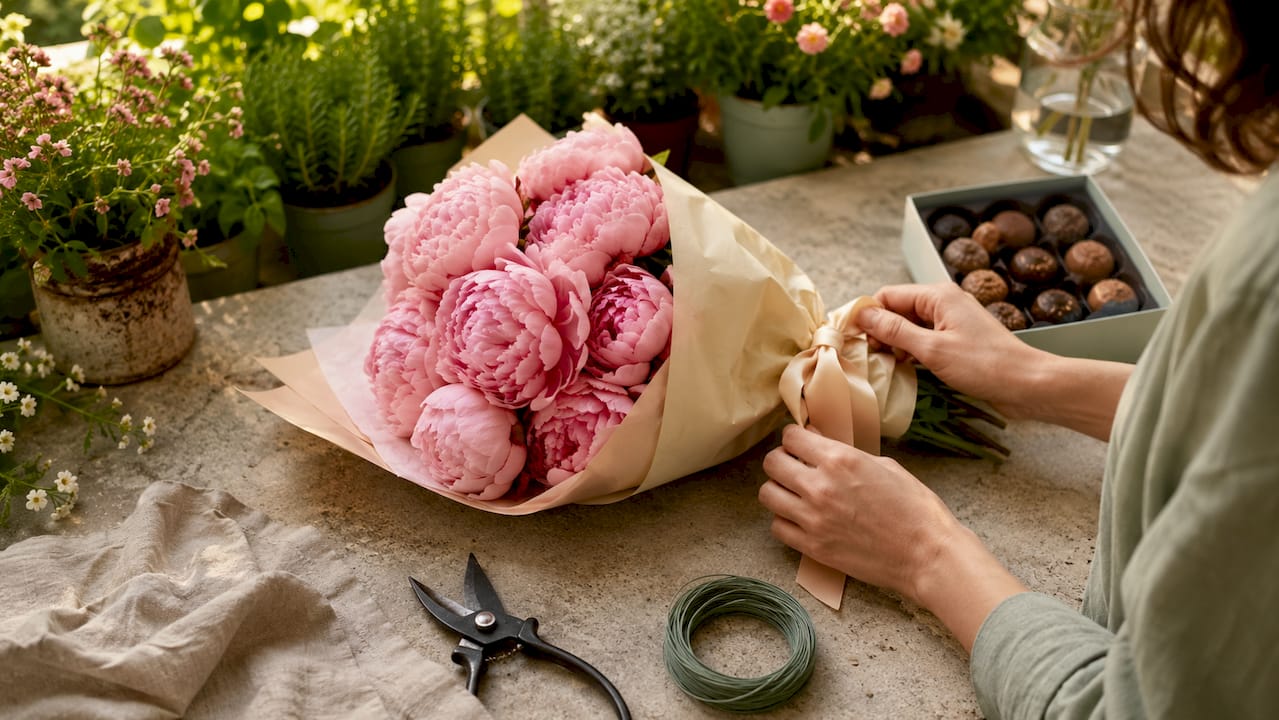
Wine and champagne. These suit celebratory and romantic occasions. A bottle of champagne alongside a peony bouquet signals celebration without requiring explanation. The pairing feels generous and considered.
-
Balloons. Effective for birthdays and casual celebrations, but balloons are not appropriate for sympathy or formal occasions. They add visible cheerfulness but can feel jarring in serious contexts.
-
Teddy bears and plush gifts. These work for romantic gestures and new baby occasions. They add warmth and affection without competing with the flowers visually.
-
Vases and practical containers. A beautiful vase extends the life of the flowers and adds lasting value to the gift. This pairing works especially well when you know the recipient does not own many vases.
-
Plants. Plants offer longevity and suit professional or long-distance gifting. They are ideal for thank-you gestures and sympathy occasions where a lasting reminder of care is appreciated.
-
Cards. A short, personalised card greatly enhances the meaning of any floral gift, particularly in sympathy or long-distance situations. Concise, specific messaging communicates intent far more effectively than a long, generic note.
Pro Tip: When combining flowers with artisanal gifts such as handmade candles or small-batch chocolates, the shared quality level signals genuine effort. Both elements should feel equally considered.
How to create harmonious flower and gift combinations step by step
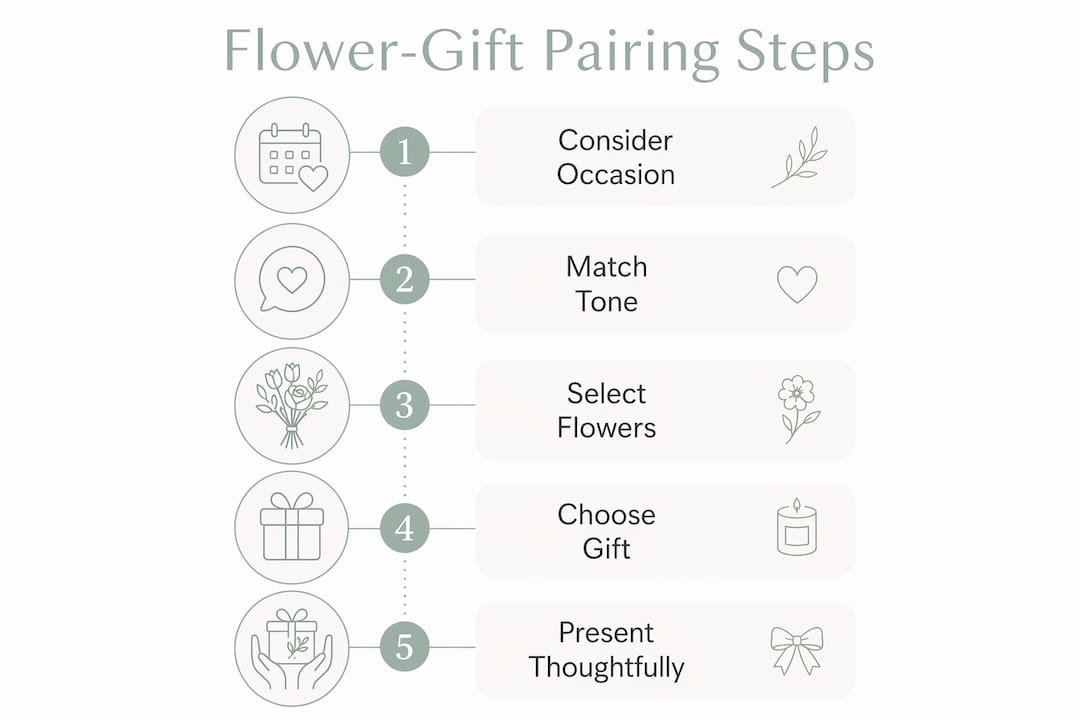
A structured approach removes guesswork and produces consistently better results. Follow these six steps:
-
Identify the occasion and desired emotional message. A birthday calls for joy and celebration. An anniversary calls for romance and appreciation. A sympathy gift calls for comfort and peace. Name the emotion first, then work backwards to the flowers and gift.
-
Choose the flower type and arrangement. Select blooms whose symbolism matches the emotion you identified. Consult modern floral trends to ensure your choice feels current and considered rather than generic.
-
Select a gift that matches the flower’s tone and the recipient’s personality. A bold, vibrant bouquet pairs with an equally expressive gift. A soft, understated arrangement pairs with something quiet and personal, such as a scented candle or a handwritten journal.
-
Consider delivery timing and presentation. Flowers and gifts arriving at different times undermine the combined effect. Order both from the same source where possible, and confirm that packaging protects both elements during transit.
-
Finalise the card message. The card ties the pairing together. Reference both the flowers and the gift if it feels natural. Even one specific sentence about why you chose these particular items makes the gift feel deeply personal.
-
Resist the urge to add more. Gift pairings work best when they feel intentional rather than assembled. Adding a third or fourth element dilutes the impact of each individual item.
The table below summarises which flower and gift combinations work best by occasion:
| Occasion | Recommended flowers | Best gift pairing |
|---|---|---|
| Birthday | Sunflowers, gerberas, mixed brights | Balloons, chocolates, champagne |
| Anniversary | Roses, peonies, ranunculus | Wine, luxury chocolates, candles |
| Sympathy | White lilies, white roses, freesia | Candles, plants, personalised card |
| New baby | Pastel tulips, soft pink roses | Teddy bear, chocolates, card |
| Thank you | Seasonal mixed bouquet | Plants, artisanal treats, vase |
| Corporate | Orchids, white arrangements | Plants, premium chocolates |
What common mistakes should you avoid when pairing flowers and gifts?
Most gifting errors come from a mismatch between intention and execution. Knowing the pitfalls saves you from undermining an otherwise generous gesture.
- Mixing playful gifts with sophisticated bouquets. A novelty balloon tied to a luxury peony arrangement sends a confused message. Elegant floral arrangements require equally premium companions to maintain the overall impression.
- Choosing gifts that overshadow the flowers. A large, elaborate gift box can visually dominate the arrangement. The flowers should remain the emotional centrepiece.
- Over-packaging. Excessive or elaborate wrapping can read as an attempt to compensate for a lack of genuine thought. Recipients respond better to sincerity and simplicity.
- Last-minute additions. A generic box of supermarket chocolates added at the last moment reduces the perceived effort of the entire gift. Every element should feel chosen, not grabbed.
- Ignoring travel conditions. Fragile gifts and perishable flowers both need appropriate packaging. A gift that arrives damaged or wilted undermines the sentiment entirely.
- Mismatching gift size to recipient lifestyle. A large vase and an oversized arrangement may delight someone with a spacious home but feel burdensome to someone in a small flat.
“The most memorable gifts are not the most expensive ones. They are the ones that show the giver paid attention. A single well-chosen flower paired with one thoughtful gift says more than a dozen mismatched items ever could.”
Key takeaways
Pairing flowers with gifts works best when every element, from the bloom choice to the accompanying present, reflects a single, clear emotional intention matched to the recipient’s personality and the occasion’s tone.
| Point | Details |
|---|---|
| Thematic harmony is non-negotiable | The gift’s tone must match the bouquet’s tone to avoid sending a confused message. |
| Flower symbolism guides the pairing | Choose blooms whose meaning aligns with the occasion before selecting any accompanying gift. |
| Recipient personality shapes the choice | Matching the gift to the recipient’s self-image produces higher satisfaction than trend-led decisions. |
| Simplicity outperforms abundance | One well-chosen gift alongside a considered bouquet creates more impact than multiple mismatched additions. |
| Presentation and timing matter | Flowers and gifts arriving together, packaged well, reinforce the sense of genuine care and effort. |
Why simplicity almost always wins in flower and gift pairing
I have seen hundreds of gift combinations over the years, and the ones that genuinely move people are rarely the most elaborate. A single peony bouquet paired with a good candle and a handwritten card will outperform a tower of gifts every time, provided the choices feel considered.
The mistake most people make is treating the gift as a safety net. They add more items because they are not confident the flowers alone will be enough. But flowers, when chosen well, carry enormous emotional weight on their own. Research confirms that material gifts produce stronger emotional responses than words of support. The flowers are already doing the heavy lifting.
What I always come back to is this: think about the recipient, not the occasion. Occasions give you a framework, but the person tells you the answer. Someone who loves calm, minimal spaces wants a soft white arrangement and a quality candle. Someone who fills their home with colour wants something bold and joyful. Get that right, and the pairing almost selects itself.
The card is the element most people underestimate. A specific, honest sentence about why you chose these particular flowers and this particular gift transforms a lovely present into a genuinely personal one. Write it last, after you have chosen everything else, and let it tie the whole experience together.
— Steve
Blumeflowers makes thoughtful pairing effortless
Choosing the right flowers and gifts together should feel considered, not complicated. Blumeflowers offers a curated selection of premium bouquets designed to pair beautifully with complementary gifts for every occasion.
The Beautifully Simple Peony Bouquet is a natural partner for luxury chocolates or a scented candle, creating a gift combination that feels genuinely complete. Browse the full range of chocolates and candles curated to accompany Blumeflowers arrangements, and take advantage of same-day and next-day delivery across Birmingham, Solihull, and surrounding areas. Every element is chosen to maximise the emotional impact of your gift, from the first bloom to the final ribbon.
FAQ
Why should you combine flowers with a gift?
Flowers paired with a complementary gift produce stronger positive emotional responses than either element alone, because the combination signals greater personal effort and intentionality from the giver.
How do you pair flowers with candles effectively?
Match the candle’s scent profile to the flower’s character. Soft, floral candles suit delicate bouquets, while warm, woody scents complement rich, deep-coloured arrangements such as burgundy roses or dahlias.
Which flowers work best for gift pairings?
Roses suit romantic and anniversary gifts, peonies work for celebrations and birthdays, white lilies are the standard choice for sympathy, and seasonal mixed bouquets suit thank-you and casual occasions.
What gifts should you avoid pairing with flowers?
Avoid novelty or playful gifts alongside sophisticated bouquets, and steer clear of oversized presents that visually overpower the arrangement. Balloons are unsuitable for sympathy or formal occasions regardless of the flower choice.
Does a card make a difference to a flower and gift pairing?
A short, personalised card significantly enhances the impact of any floral gift. Specific, sincere messaging communicates the giver’s intent far more effectively than a long, generic note.