


How to package flowers for delivery: a practical guide
TL;DR:
- Proper packaging ensures flowers arrive in pristine condition by balancing breathability and impact protection. Key practices include avoiding full plastic wraps, trimming stems at a 45-degree angle, and using breathable fillers to prevent mould and bruising. Shipping via express services early in the week and pre-cooling flowers significantly enhance their freshness during transit.
Getting flowers to their destination in perfect condition is harder than it looks. Done badly, a beautiful bouquet arrives bruised, wilted, or worse, mouldy. Understanding how to package flowers for delivery properly is the difference between a gift that delights and one that disappoints the moment the box is opened. In this guide, you will learn exactly which materials to use, how to prepare your stems, how to assemble the packaging, and the shipping decisions that protect your flowers from door to door.
Table of Contents
- Key takeaways
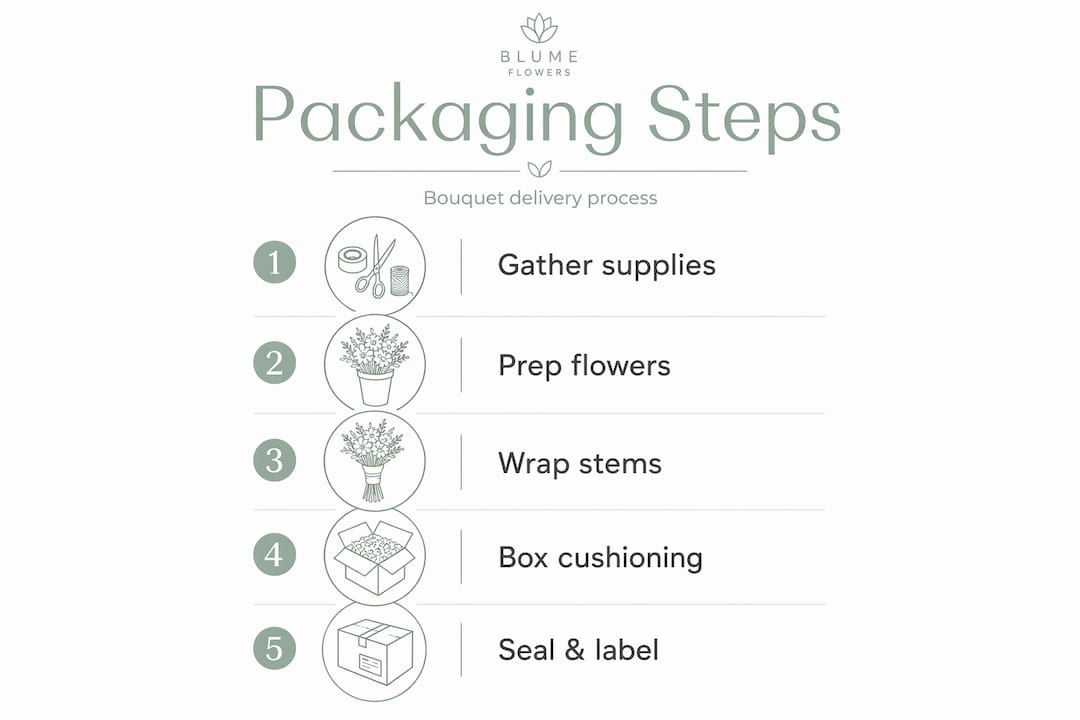
- How to package flowers for delivery: materials you need
- Preparing your flowers before packaging
- Assembling the bouquet packaging
- Shipping logistics and timing
- My honest take on packaging flowers properly
- Beautifully packaged bouquets, delivered with care
- FAQ
Key takeaways
| Point | Details |
|---|---|
| Never fully wrap in plastic | Sealing blooms in plastic traps moisture and gases, leading to rapid rot and mould. |
| Trim stems at 45 degrees | Angled cuts maximise water absorption and keep flowers hydrated during transit. |
| Use breathable fillers | Scrunched kraft or tissue paper secures flowers without blocking airflow inside the box. |
| Ship Monday or Tuesday | Avoiding late-week shipping prevents flowers sitting in warm warehouses over the weekend. |
| Pre-cool before packing | Hydrated, cooled stems survive transit far better than warm, thirsty ones. |
How to package flowers for delivery: materials you need
Before you touch a single stem, gather your materials. Rushing into packaging without the right supplies is where most mistakes begin.
Packaging materials
| Material | Function |
|---|---|
| Sturdy cardboard box | Protects against impact and compression during transit |
| Kraft paper | Breathable outer wrap and filler to cushion blooms |
| Tissue paper | Soft inner layer that protects delicate petals |
| Damp paper towels | Wrapped around stem ends to keep flowers hydrated |
| Sealed plastic bag | Covers the damp towel wrap only, keeping moisture away from petals |
| Floral tape | Holds stems together neatly before wrapping |
| 1 to 2 inch ribbon | Finishing detail for secure, elegant bouquet wrapping |
| Biodegradable filler | Fills empty box space to prevent flower movement |
You will also need scissors, rubber bands, adhesive labels, and a marker for writing recipient details. Do not underestimate the box itself. Too large and your flowers shift and bruise. Too small and you crush the petals before delivery begins.
For the outer presentation, neutral-toned wraps such as kraft paper or unbleached tissue are the professional standard. Avoid glittery cellophane or oversized bows. These materials trap moisture against petals and look garish compared to the understated elegance that high-quality floristry demands. If you want to understand why minimalist presentation has become the benchmark in luxury floristry, the art of floral presentation is worth exploring further.
Preparing your flowers before packaging
Preparation accounts for the majority of a flower’s condition on arrival. Rushing this stage costs you freshness every time.
-
Trim stems at a 45-degree angle. This is not decorative. A 45-degree stem cut creates a larger surface area for water absorption and prevents the stem end from sitting flat against the wrapping, which blocks uptake entirely.
-
Strip the lower foliage. Remove all leaves from the bottom two-thirds of each stem. Foliage left below the moisture wrap rots quickly and produces ethylene gas, which accelerates wilting across the entire bouquet.
-
Hydrate fully before packing. Keep flowers in water until the very last moment before packaging. A well-hydrated stem survives transit far better than one packed dry. Give your flowers a minimum of two hours in fresh, cool water after trimming.
-
Create a moisture wrap for the stems. Take several sheets of damp (not soaking) kitchen paper and wrap them snugly around the stem ends only. Place this wrap inside a sealed plastic bag. The goal is to keep the stems moist while keeping petals completely dry. Wet petals during transit are a direct route to mould.
-
Pre-cool before packing. Move your prepared flowers into a cool environment, ideally between 0 and 2 degrees Celsius, for at least one hour before boxing. Pre-cooling hydrated stems slows their metabolism, reduces water loss, and gives them significantly better resilience for the journey ahead.
Pro Tip: Never place ice directly against petals or blooms. Cold burn on petals looks like bruising and is irreversible. Cooling should happen in the air around the flowers, not in direct contact with them.
Assembling the bouquet packaging
This stage is where most amateur packaging falls apart. The principles are simple: breathable, snug, and secure.
The anti-mould rule
Never wrap the entire bouquet in plastic or bubble wrap. This is the single most important rule in flower packaging. Plastic seals in moisture and traps ethylene gas, creating the exact conditions that accelerate rot and mould. Even short journeys of a few hours can produce visible decay when flowers are sealed airtight.
Bubble wrap is equally problematic when placed directly against blooms. The texture bruises soft petals under any pressure, and the material does not breathe. Reserve bubble wrap for protecting the outside of the box if you must, and never let it contact the flowers directly.
“A snug but not squished fit inside the packaging prevents bruising; use organic, breathable fillers rather than plastic bubble wrap against blooms.”
Packing the box correctly
Start by lining the base of your box with a generous layer of scrunched kraft paper. This creates a cushioned bed that absorbs impact without restricting airflow. Pack the box snugly with breathable filler around the sides and over the top of the bouquet so the flowers cannot shift or roll during transit.
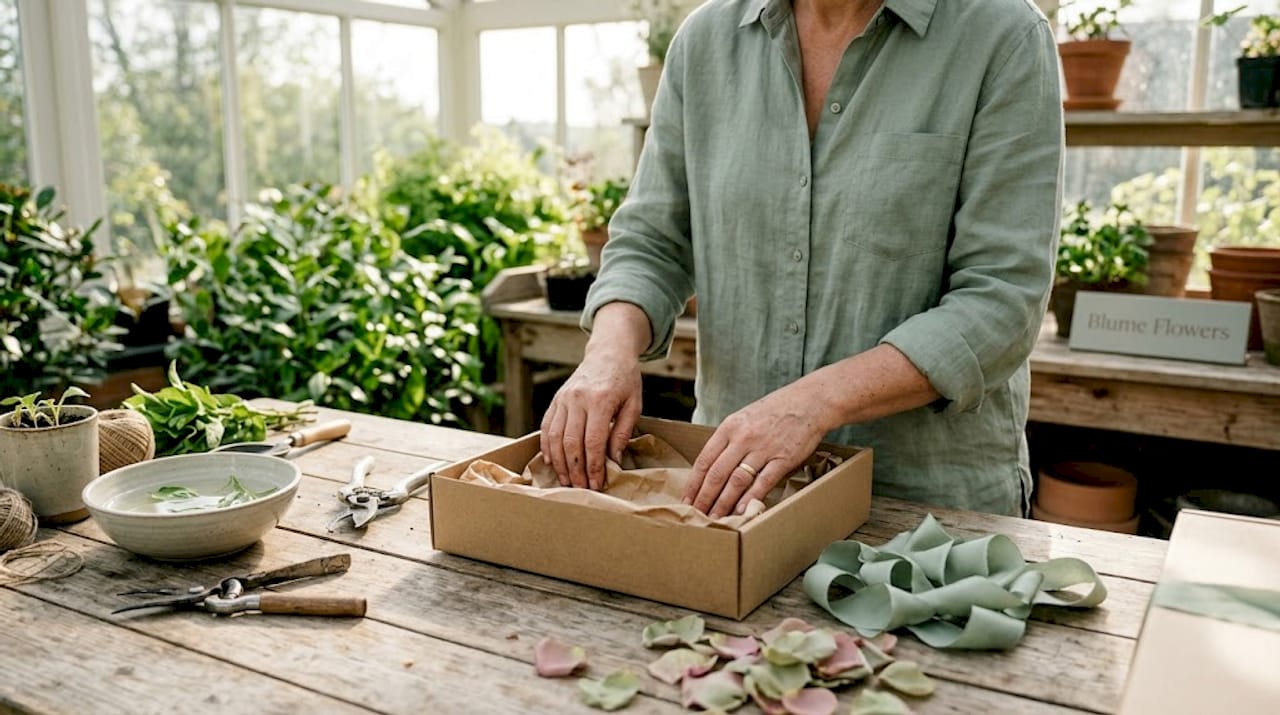
Choose a box that fits your bouquet with roughly two to three centimetres of filler space on each side. The blooms should feel held rather than compressed. If you pick up the sealed box and shake it gently, you should hear nothing moving inside.
Once your bouquet is positioned, secure the stems with a ribbon wrap. Use a 1 to 2 inch wide ribbon and overlap each turn by approximately half a centimetre for a clean, even finish. Wrap firmly enough that the stems are held together, but not so tightly that you cut off the moisture wrap below. Leave the very bottom of the stems accessible so the hydration wrap is not compressed flat.
Pro Tip: Place a small folded piece of tissue paper between the ribbon and the stems before wrapping. This small step creates a professional finish and prevents ribbon marks on soft stems.
For businesses interested in how luxury floral trends are shaping contemporary packaging expectations, clean and understated presentation is consistently what customers associate with quality.
Shipping logistics and timing
Even perfect packaging cannot save flowers from poor shipping decisions.
Choosing the right service
Ship only via overnight or 2-day express services and avoid standard ground shipping entirely. Cut flowers are perishable. Every hour in a warm warehouse or sorting facility costs you freshness and vase life. Express shipping is not optional for flowers. It is the minimum standard.
The best days to dispatch are Monday and Tuesday. This gives your parcel the full working week to move through the network without the risk of sitting over a weekend. Avoid Thursday and Friday shipments at all costs. A Friday dispatch can mean your flowers spend two full days in an unrefrigerated depot, and no packaging in the world recovers a bouquet from that.
Temperature management
Most cut flowers thrive between 0 and 2 degrees Celsius during transit. Tropical species such as bird of paradise or anthuriums are the exception and need temperatures above 10 degrees to avoid cold damage. Know your flowers before choosing a cooling method.
If you are using cooling gel packs, place them near the stem area, not against the petals. If using dry ice, always include rigid, vented dividers between the dry ice and the blooms to prevent cold burn. Dry ice also releases carbon dioxide gas, so your packaging must allow for venting. Sealed boxes with dry ice and no ventilation are a hazard.
Label every package clearly with full sender and recipient details and always use a tracked service. If a flower delivery goes wrong and you cannot locate the parcel, you have no recourse. Tracking is not a premium feature for perishable goods. It is a necessity.
Common mistakes to avoid
- Wrapping the entire bouquet in plastic or sealing it in cellophane, which creates mould conditions within hours
- Using bubble wrap directly against blooms, causing petal bruising
- Shipping on Thursday or Friday, leaving flowers at risk of weekend warehouse delays
- Under-hydrating stems before packing, which accelerates wilting during even short journeys
- Loose packaging that allows bouquets to shift, causing bruising and stem breakage
- Wrapping ribbon too tightly over the moisture wrap, compressing the stem hydration
Pro Tip: Before sealing the box, place a small card inside reading “Fresh flowers: open immediately.” It costs nothing and significantly reduces the risk of a recipient leaving the package closed for hours after arrival.
My honest take on packaging flowers properly
I have seen far too many gorgeous bouquets arrive in a state that would make any florist wince. And in almost every case, the damage came down to one of two things: plastic wrapping or a bad shipping day. Not inexperience with flowers. Not poor quality blooms. Entirely preventable packaging decisions.
The anti-mould rule is the single most important lesson I can pass on. Most people instinctively want to protect flowers by wrapping them as completely as possible. It feels protective. In practice, it is the fastest way to destroy them. Flowers need to breathe. The moment you seal them in plastic, you create a warm, humid, gas-filled environment that no flower survives for long.
What I have found actually works is this: treat the stems and the blooms as two completely separate problems. The stems need moisture and coolness. The blooms need air and protection from movement. Once you stop thinking of the bouquet as a single object to wrap and start thinking of it as two zones to manage differently, everything clicks into place.
The other thing I have learned from experience is that your courier matters more than your box. A beautifully packed bouquet sent on a Thursday via a slow service will lose every time to a modestly packed bouquet sent on a Monday via express. Time in transit is the enemy. Control what you can. And for anyone just starting out, do not be discouraged. These skills come quickly with practice, and the difference in arrival quality is immediately obvious.
— Steve
Beautifully packaged bouquets, delivered with care
At Blumeflowers, every bouquet is packaged using the techniques outlined here: breathable wraps, properly hydrated stems, and express delivery that prioritises freshness from first cut to front door.

Whether you are looking for a gift that makes a genuine impression or need reliable corporate flower delivery for your Birmingham or Solihull office, Blumeflowers handles the packaging and logistics so you do not have to. Browse the Beautifully Simple Peony Bouquet for a signature arrangement that travels exceptionally well, or explore The Cherry Hill Bouquet for a stunning same-day or next-day gift option. Every order leaves with the care and presentation it deserves.
FAQ
What is the best way to wrap flowers for delivery?
Use kraft paper or unbleached tissue as a breathable outer wrap and create a damp paper towel moisture wrap around the stem ends only. Never seal the entire bouquet in plastic, as this traps moisture and causes mould.
How do I keep flowers fresh during shipping?
Trim stems at a 45-degree angle, hydrate flowers fully before packing, and pre-cool them to around 0 to 2 degrees Celsius. Ship via overnight or 2-day express and avoid dispatching on Thursdays or Fridays.
Can I use bubble wrap to package flowers for delivery?
Do not place bubble wrap directly against petals or blooms. It does not breathe and will bruise soft petals under pressure. Breathable fillers such as scrunched kraft paper or tissue paper are the correct choice inside the box.
What size box should I use for shipping flowers?
Choose a box that leaves roughly two to three centimetres of space on each side of the bouquet. This allows for enough breathable filler to immobilise the flowers without compressing them, preventing both bruising and unnecessary movement in transit.
Which days are best for shipping flowers?
Monday and Tuesday are the safest dispatch days. This avoids the risk of flowers sitting in warm warehouses or depots over the weekend, which is one of the most common causes of wilted or damaged deliveries.