


How bouquets shape mood, luxury, and artful spaces
TL;DR:
- Bouquets are now regarded as mood-shaping experiences that convey emotion and character in luxury design and gifting.
- Creating lasting beauty requires deliberate construction, including conditioning, proportional planning, and thoughtful layering.
A bouquet placed on a sideboard is rarely just a bouquet. For those who care deeply about their environment, a well-chosen arrangement carries weight, memory, and intention. In luxury homes, thoughtfully curated floral displays communicate the character of a space long before any guest speaks a word. In gifting, the right bouquet lands as an emotional statement, not simply a bunch of flowers handed over at a door. The shift from treating bouquets as decoration to treating them as experience is one of the most significant, and least discussed, developments in contemporary interior and lifestyle design.
Table of Contents
- Bouquets as mood-shaping experiences
- Bouquet construction: The essentials of lasting beauty
- Bouquets in artful spaces: Still life and mid-century influences
- Bouquets as gifts: Crafting emotional impact through design
- Why most decor guides miss the emotional artistry of bouquets
- Experience luxury bouquets curated for ambience and gifting
- Frequently asked questions
Key Takeaways
| Point | Details |
|---|---|
| Bouquets set the mood | Luxury floral design uses flowers to shape the atmosphere and evoke emotion in spaces. |
| Build with intention | Constructing a bouquet with balanced structure and cohesive colour schemes enhances both beauty and longevity. |
| Artful wilted bouquets | Distressed or vintage bouquets can create poetic, narrative-rich accents in mid-century and art-inspired interiors. |
| Gifting is emotional | Choosing a bouquet based on the desired feeling ensures your gift delivers lasting impact. |
| Start with ambience | Effective decor and gifting begins with how you want people to feel, not just matching the colours. |
Bouquets as mood-shaping experiences
There is a fundamental difference between placing flowers in a vase and designing a floral experience. In affluent interiors and high-end events, flowers are rarely chosen on impulse. Every decision, from stem height to petal texture to the soft droop of a trailing vine, serves the atmosphere of the space. According to Modern Luxury, florals in luxury contexts are treated as mood-setting experiences rather than decoration, with designers beginning from the question of how a moment should feel before any visual choices are made.
That approach is transformative. When emotion leads design, everything changes. A bouquet intended to convey calm might feature soft whites, blush garden roses, and loose, airy movement. A bouquet expressing celebration might push upward with bold protea heads, lush greenery, and strong vertical structure. The physical form becomes a language.
Here is what separates luxury floral design from everyday arrangement:
- Form and silhouette are considered first. Round, dome-shaped arrangements suggest completion and elegance. Asymmetric, trailing designs feel more editorial and unexpected.
- Movement is built in deliberately. Sprays of clematis or jasmine vine soften rigid blooms and suggest a naturalness that still requires skill.
- Texture contrast elevates a piece. Pairing velvety ranunculus with spiky thistles or silk-smooth tulips with rough bark stems creates tactile interest that a single-variety arrangement cannot.
- Palette control is non-negotiable. A monochromatic palette reads as sophisticated restraint. A tonal range within one colour family, such as deep plum to pale lilac, communicates deliberate thinking rather than random assembly.
“In luxury and high-end event contexts, floral designers begin not with a flower type but with a feeling. The arrangement is the answer to an emotional question.”
Understanding this intention is precisely what elevates floral craftsmanship for luxury occasions from a skill into an art. Knowing how to read a room and translate that into botanical form is what separates a florist from a floral designer. For those exploring the range of styles available, discovering the various luxury bouquet types is a good starting point for building a visual vocabulary.
Bouquet construction: The essentials of lasting beauty
Understanding the intention behind bouquets is one thing. Knowing how to build them, or benchmark them as a buyer, is another. A beautifully designed arrangement that wilts within two days is a disappointment. Longevity and structure are not separate from aesthetics. They are part of the same design discipline.
The following method provides a reliable framework for constructing or commissioning bouquets with both visual impact and lasting allure. Research into floral arranging methodology confirms that conditioning and proportion are foundational to any arrangement that holds its beauty over time.
- Begin with conditioning. Cut all stems at a 45-degree angle before placing them in water. This increases the surface area for water absorption and extends freshness significantly. Allow stems to drink in clean, cool water for at least two hours before arranging.
- Build a strong greenery base. Eucalyptus, ruscus, or soft ferns create the structural scaffolding for everything above. Without this, focal blooms often droop or cluster without support.
- Plan height and width deliberately. The classic rule is to aim for an arrangement that is one and a half times the height of its vessel. However, for tall, sculptural vases, breaking that proportion intentionally creates drama.
- Choose a cohesive colour scheme before selecting blooms. Decide first whether the palette will be monochromatic, tonal, or complementary, then source flowers to fit. Colour-first decisions prevent the common mistake of purchasing beautiful individual blooms that clash together.
- Introduce focal flowers, then secondary blooms, then fillers. Focal blooms such as peonies or garden roses are the eye’s first stop. Secondary blooms add depth. Fillers like wax flower or gypsophila tie the arrangement together without competing.
- Remove all foliage below the waterline. Any leaf submerged in water decomposes rapidly and breeds bacteria, which shortens the life of every bloom in the vase.
- Refresh the water every two days. Stagnant water is the most common reason beautiful bouquets deteriorate faster than they should.
Pro Tip: Keep bouquets away from direct sunlight, ripening fruit, and air conditioning vents. Each of these accelerates petal deterioration in different ways, and avoiding them is the single easiest way to add days to an arrangement’s life.
| Element | Budget arrangement | Luxury arrangement |
|---|---|---|
| Stem conditioning | Often skipped | Always practised |
| Colour planning | Colour-matched loosely | Palette-led and intentional |
| Structural base | Minimal greenery | Considered layering |
| Bloom selection | Seasonal and available | Curated for mood and form |
| Vessel choice | Generic | Tailored to arrangement scale |
| Longevity care | Instructions rarely given | Guidance included as standard |
For more specific advice on what separates a truly compelling arrangement from a forgettable one, explore these stand-out floral arrangement tips, or take a broader look at impressive flower arrangements for every occasion.
Bouquets in artful spaces: Still life and mid-century influences
Now, let’s turn to their role in spaces where art and history intermingle. Not every beautiful bouquet is a fresh one, and not every impactful floral display is built for longevity. In homes where art and interiors share equal billing, the bouquet becomes a still-life subject in its own right.
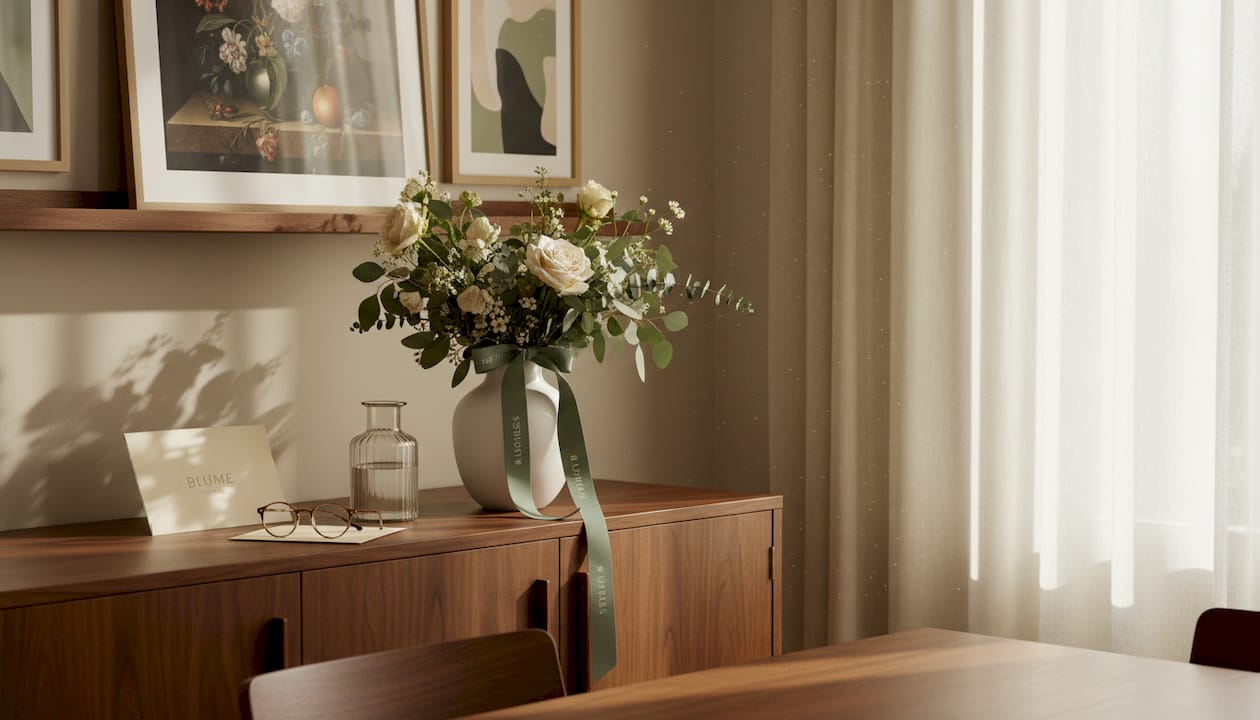
Consider the traditions of Dutch Golden Age painting. Those legendary floral compositions were never painted from a single bouquet. Artists assembled impossibly large, multi-seasonal arrangements from studies of individual blooms gathered across months. The result was an idealised, almost fictional bouquet that existed only on canvas. Today, that sensibility has found its way into the most considered interior design: the idea that a distressed or wilted bouquet can be intentionally curated as a still-life object, echoing Dutch floral painting moods and the passage of time, rather than being treated as a design failure.
This is where BLÜME Art, our collection of reclaimed mid-century inspired works, sits in natural dialogue with the world of flowers. A dried hydrangea head, its colour faded to dusty violet, placed beside a mid-century oil painting of a garden scene, creates layered meaning. The bouquet is no longer just a flower. It is part of a composition, a reference, a mood.
Here is how fresh and artful bouquets compare in purpose:
| Purpose | Fresh luxury bouquet | Artful or distressed bouquet |
|---|---|---|
| Primary function | Sensory experience, fragrance, freshness | Visual narrative, artistic reference |
| Lifespan concern | Maximum longevity is the goal | Ageing gracefully is the point |
| Ideal setting | Dining tables, entrance halls, gifting | Mantelpieces, studio shelves, art corners |
| Aesthetic reference | Contemporary luxury, garden style | Dutch still life, mid-century modernism |
| Emotional effect | Warmth, celebration, romance | Nostalgia, poetry, quiet beauty |
For spaces where artful bouquets serve a decorative and storytelling role, consider these approaches:
- Dried or preserved arrangements such as pampas, dried protea, or preserved roses hold their shape and colour for months, making them ideal for shelf and mantle styling.
- Vintage vessels add context. A dried arrangement in a tarnished silver urn or a 1950s ceramic vase reads as a curated decision, not a forgotten one.
- Sketch or paint from a wilting bouquet. The drooping tulip or the petal-dropped rose is a classic artistic subject. Encourage guests to see the arrangement’s lifecycle as part of its beauty.
- Layer with collected objects. A dried arrangement alongside a reclaimed painting, a piece of sculptural pottery, or an art book creates a genuine vignette rather than a simple display.
Seasonal choices also inform artistic styling powerfully. Seasonal arrangements for style not only honour what is naturally available but create an evolving, living gallery in your home. For those drawn to softer, romantic textures, luxury peony bouquets remain one of the most artistically versatile choices in any interior setting.
Bouquets as gifts: Crafting emotional impact through design
Moving from artful interiors, let’s consider bouquets from the perspective of gifting and emotional impact. A well-chosen bouquet as a gift does something that few other presents can: it communicates feeling without requiring words. When a bouquet is designed with intention, its mood-setting experience speaks immediately to the recipient.
The challenge for most buyers is that gifting decisions often begin with the wrong question. “What type of flower do they like?” is less powerful than “How do I want them to feel when this arrives?” Starting from emotion focuses the entire selection process.
Consider the following elements when choosing or commissioning a gift bouquet:
- Palette for personal taste. A recipient who dresses in rich, earthy tones will likely respond to deep burgundies, terracottas, and forest greens. Someone with a more minimal, contemporary aesthetic may appreciate a clean white and green arrangement with strong architectural form.
- Texture for tactile appeal. The physical pleasure of receiving a bouquet is part of the experience. Soft petals, velvety leaves, and cool stems are sensory details that land immediately in the hands and the memory.
- Structure for elegance. An arrangement that holds itself with posture, stems aligned, silhouette clear and intentional, communicates that thought and craft have gone into it. Structure signals respect for the recipient.
- Scale for the moment. A hand-tied posy says something different to a dramatic statement arrangement. Match the scale of the gesture to the occasion.
- Occasion and setting. A sympathy arrangement requires restraint and softness. A birthday bouquet can be theatrical. Understanding the context ensures the gift lands as intended.
Pro Tip: When ordering for someone else, describe the recipient’s home or personal style to the florist rather than naming specific flowers. A skilled designer will translate that description into a bouquet that feels genuinely personal rather than generic.
For gifting occasions where style and impression both matter, browsing stylish bouquet gifting options provides a helpful overview of what is possible. For significant or prestigious events, learning why discerning buyers choose designer bouquets for prestige occasions offers a useful framework for setting expectations.
Why most decor guides miss the emotional artistry of bouquets
Here is an observation we have arrived at through years of designing for Birmingham’s most considered clients: the vast majority of interior decor guides treat bouquets as finishing touches. Pick a colour that matches your cushions, they say. Choose a size that suits the table. Keep it seasonal. Tick the boxes and move on.
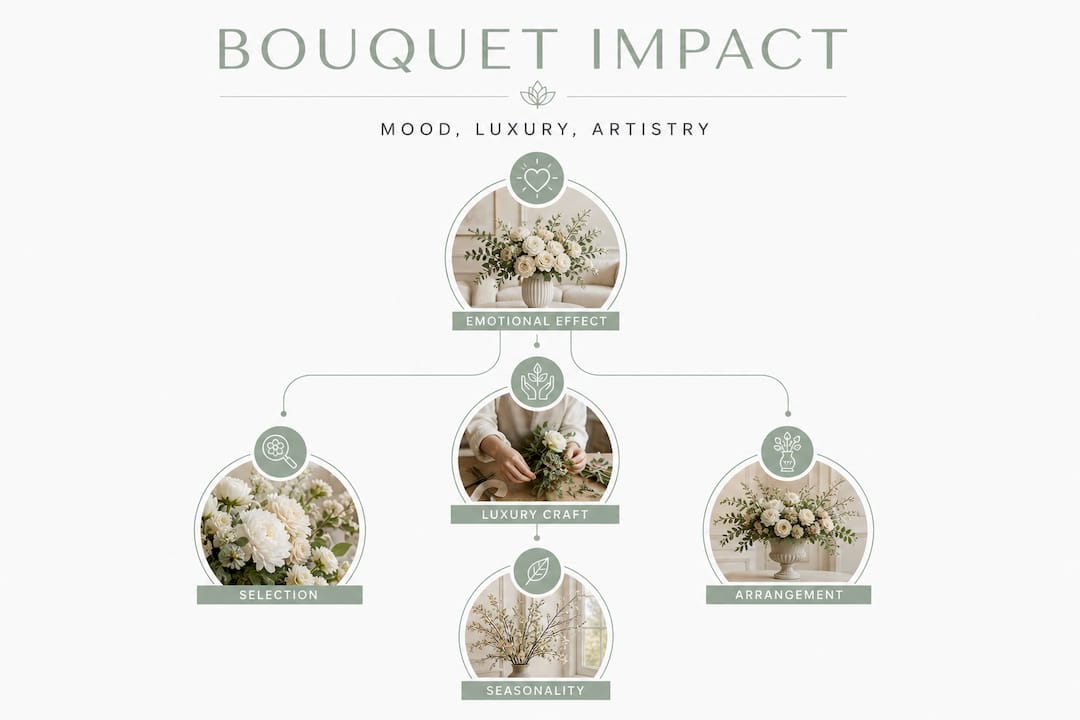
That advice is not wrong. It is just shallow. It addresses the surface while leaving the soul untouched.
The truth is that a bouquet placed with genuine intention does something no paint colour or furniture arrangement can replicate. It introduces life, in the most literal sense, into a room. It changes the air, the light, and the emotional register of the space it occupies. When we design arrangements for clients, we do not begin with colour swatches or stem counts. We begin with a question: what do you want to feel when you walk into this room?
The answer to that question, not the interior trend board, is what guides everything else. This is why two arrangements containing the same flowers can produce entirely different responses in a space. One was assembled for visual correctness. The other was built for feeling. The difference is almost always invisible to an untrained eye but always felt by anyone who enters the room.
Conventional guides also rarely address what happens when a bouquet ages. Petals drop, colours deepen, stems soften. In a luxury context, that process can be designed for, not just tolerated. A mid-century inspired space, for instance, benefits enormously from an arrangement that is allowed to evolve rather than one that is discarded the moment it shows its age. There is genuine beauty in botanical maturity, and recognising it is one of the more underrated skills in considered home styling.
For those looking to go further with their understanding of how premium flowers serve occasions at every level, our premium flower delivery insights bring together thinking from across the design spectrum.
Experience luxury bouquets curated for ambience and gifting
The thinking in this article reflects exactly how we approach every arrangement at BLÜME by Urban Design Flowers. Emotional intention, structural craft, and artistic sensibility are not extras. They are the foundation of everything we create and deliver across Birmingham, Solihull, and the surrounding regions.
Whether you are styling an elegant home, seeking a meaningful gift, or sourcing florals for a corporate environment, our collection covers every context with the same standard of care. Browse showstopping peony bouquets, seasonal arrangements, and curated gift sets that include premium chocolates and candles alongside fresh flowers. For corporate clients, we offer considered event and workspace arrangements that bring luxury floral thinking to your professional environment. Funeral tributes are also designed with sensitivity and sophistication, ensuring every farewell is dignified and beautiful.
Frequently asked questions
How can I make my bouquet last longer in a vase?
Trim stems at a 45-degree angle, remove leaves below the waterline, and refresh the water every two days. Cutting stems at an angle and keeping foliage out of the water are the two most effective steps for extending lifespan.
What is the difference between luxury bouquets and regular arrangements?
Luxury bouquets are curated for mood, intention, and artistic effect, rather than simply matching colour or flower type. Florals in luxury contexts are treated as mood-setting experiences where designers begin from how the moment should feel.
Can faux and wilted bouquets be stylish in home decor?
Yes, absolutely. Distressed or vintage bouquets can echo Dutch floral painting moods and the passage of time, functioning as intentional still-life objects with genuine narrative depth and quiet beauty.
How do I choose the right bouquet for a gifting occasion?
Start with the mood you want the recipient to feel, then choose a bouquet based on palette, texture, and structure to fit that intention. Designers always begin from how the moment should feel before making any visual choices.