


Your complete guide to event floral displays
Planning elegant floral displays for any event comes down to four things done well: booking at the right time, choosing blooms that suit the season and venue, using mechanics that keep flowers fresh, and having a clear plan for the day itself. Whether you are organising a wedding, a corporate dinner, or a community celebration, the principles are the same. Here is what you need to know before a single stem is ordered.
At a glance:
- Book several weeks ahead for weddings; shorter notice is usually fine for corporate or smaller events
- Follow the 3:2:1 stem ratio (foliage, filler, focal flower) for balanced arrangements
- Always conduct a site visit before finalising any design
- Choose seasonal British blooms for freshness, sustainability, and cost savings
- Appoint a “flower captain” on the day to manage hydration and petal refresh
- Carry a contingency budget for last-minute additions or unexpected costs
- Use foam-free mechanics wherever possible for better hydration and eco-credentials
How do you plan event florals on the right timeline?
Booking timelines vary considerably by event type. For weddings, book 8–16 weeks in advance as a minimum; peak months like june and december fill up fast, and the best florists work one wedding per weekend. Corporate events and private parties are more forgiving at 2–4 weeks, though high-profile dates around Chelsea Flower Show week or the festive season warrant earlier action.
The process typically runs: initial enquiry and consultation, mood board and bespoke proposal, then a booking fee to secure your date. Financial planning for event florals in the UK involves a booking fee to secure the date, with final payment due around four weeks before the event and a signed contract covering design, logistics, and any hired vessels.
- Confirm final guest numbers approximately eight weeks out, particularly for table centrepieces and buttonholes
- Share venue access details, loading bay restrictions, and lift sizes with your florist early
- Build flexibility into the plan for last-minute additions without scrambling at the end
What design principles make event floral displays work?
Professional floral design follows a stem ratio of 3 parts foliage, 2 parts filler, and 1 part focal flower. That formula creates visual balance without the arrangement looking sparse or overloaded, and it keeps costs sensible because foliage and filler are far cheaper than statement blooms.
Colour palette matters as much as flower choice. Weddings suit soft transitions, blush to apricot for example, which read beautifully in photographs. Corporate events benefit from brand-adjacent accents without overwhelming the room; navy, white, and deep green is a combination that ages well. Community celebrations can go bolder: dahlias and zinnias in mixed brights signal joy without any pretension.
Texture and scent both need managing. Fragrant stems like sweet peas and garden roses work brilliantly near entrances or photo corners, but keep them away from dining tables where strong scent competes with food. Low-scent options such as ranunculus, anemones, and lisianthus are elegant and guest-friendly in enclosed spaces.
Pro Tip: For luxury floral styling, mix at least three textures in every arrangement: something smooth (roses or tulips), something feathery (cosmos or astilbe), and something structural (foliage or seed heads). The contrast is what makes a display look considered rather than assembled.
Design styles worth knowing:
- Minimalist: clean lines, single-variety clusters, lots of negative space
- Lush romantic: layered blooms, trailing foliage, garden-gathered feel
- Modern: sculptural stems, architectural foliage, monochrome palettes
- Vintage or boho: wildflowers, dried grasses, relaxed hand-tied shapes
- Branded corporate: brand colours as accents, structured arrangements, consistent vessel choice
Why does a site visit change everything for venue florals?
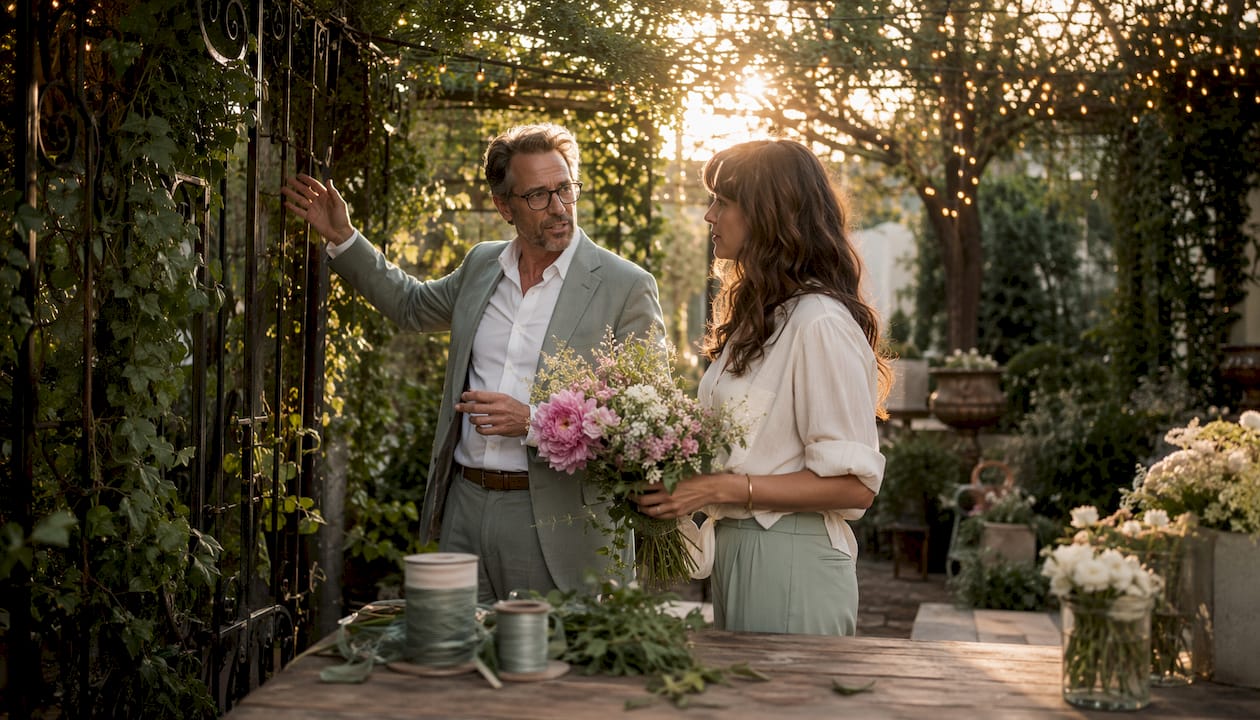
Site visits are where good floral design actually begins. Ceiling height tells you whether tall installations are feasible or whether low centrepieces are the only option. Lighting temperature changes how colours read: warm amber light makes rust and burgundy glow, while cool white light flatters crisp whites and greens.
For seated dinners, keep centrepieces either under 35cm or above 60cm to maintain clear sightlines across the table. The in-between zone blocks conversation without adding drama. Narrow aisles need compact arrangements with no trailing foliage that guests will brush past or knock.
- Check rigging permissions, flame policies, and water access before committing to any design
- Confirm floor protection requirements; water rings on polished parquet are nobody’s idea of a good start
- Identify where the AV team will be working, as lighting rigs and floral installations need to coexist
Pro Tip: Always meet the venue’s technical lead before install day. They know about load-bearing limits, restricted zones, and access windows that never appear in the venue brochure. One conversation saves hours of renegotiation on the morning.
What mechanics and sustainable practices should UK event florists use?
Sustainable mechanics like chicken wire, moss, pin frogs, and water tubes are now the preferred choice over traditional floral foam across UK event floristry. They provide better hydration, produce no microplastic waste, and often look more natural in the finished display.
Public Liability insurance of £5–10 million is standard for professional florists working in established UK venues, alongside a Risk Assessment and Method Statement for any large or high-level installation. Venues will ask for both; having them ready signals professionalism and speeds up approvals.
- Use reusable vessels: cylinder vases, compotes, and urns that can be hired or repurposed across multiple events
- Plan for post-event waste: composting green waste, donating bouquets to care homes or charities, and returning hired vessels
- Appoint a “flower captain” for the event itself, someone responsible for hydration top-ups and moving arrangements between ceremony and reception spaces
Blumeflowers’ approach to event florals reflects this commitment to eco-conscious design, sourcing seasonal British blooms and favouring foam-free mechanics that align with current UK industry best practice.
Which seasonal flowers offer the best value for UK events?
UK seasonal flowers deliver better freshness and lower cost than imports, and they reduce the environmental footprint of your event considerably. Forcing peonies in october or tulips in august means paying a premium for tired stems that will not last the day.
Seasonal highlights by time of year:
- Spring: tulips, ranunculus, narcissi, anemones, lilac, fritillaria
- Early summer: peonies (late may to june), garden roses, sweet peas, delphinium, scabiosa
- Late summer/autumn: dahlias, amaranthus, sunflowers, chrysanthemums, rose hips, copper foliage
- Winter: hellebores, anemones, paperwhites, ilex berries, eucalyptus, magnolia foliage
Budget ranges for UK event florals: hand-tied bouquets typically run £35–75; vase arrangements £120–350 or more for large focal pieces; corporate table centrepieces £45–140. Using local growers reduces transport costs and supports freshness, with suppliers in Cornwall, Lincolnshire, and Scotland providing quality stems with lower freight emissions than Dutch or Kenyan imports.
Blumeflowers sources through a trusted network of growers to bring that same quality and seasonal value to events across Birmingham and the wider Midlands.
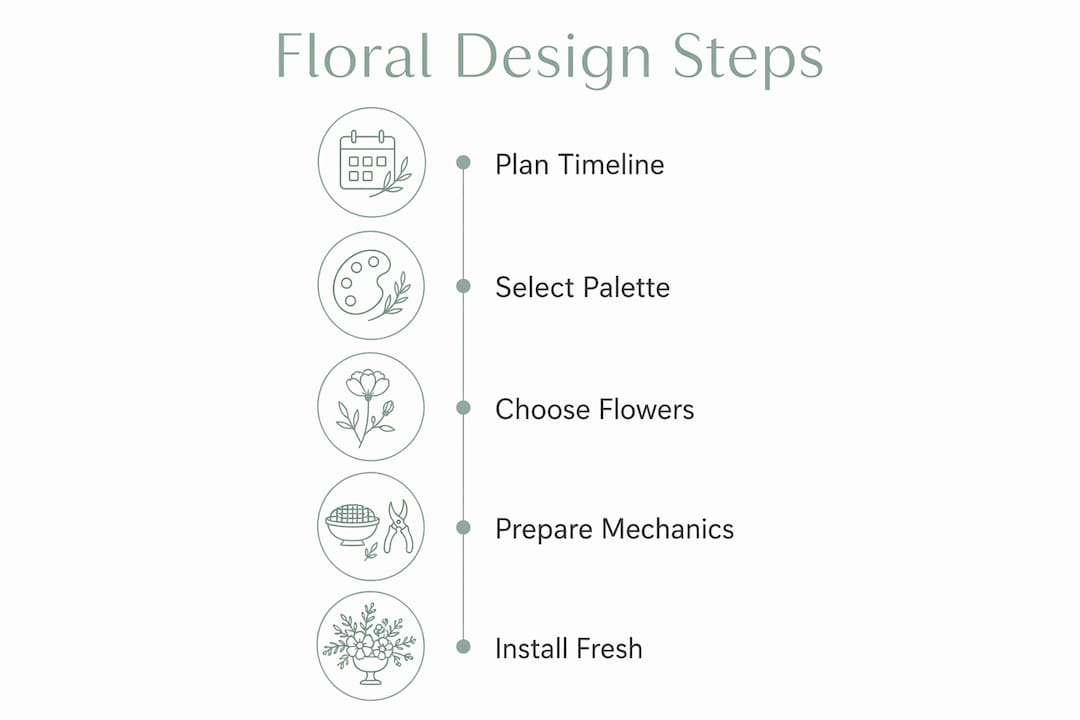
How do you create and install event floral displays step by step?
The process has distinct phases, and rushing any of them shows in the finished result.
- Finalise the design brief including stem counts, vessel list, and a written recipe for each arrangement
- Order flowers from suppliers several weeks in advance for large events; confirm volumes and colour flexibility with growers
- Condition stems 2–3 days before the event, cutting at an angle and placing in clean, cool water
- Build large installations first, then table arrangements, then personal flowers last; bridal bouquets are constructed around 24 hours before the event for peak bloom condition
- Load and transport carefully, keeping arrangements upright and away from direct sunlight or heat
- Install on site following the agreed floorplan, protecting floors and walls throughout
- Lighting check with the AV team before guests arrive; cool versus warm colour temperatures alter how flowers read in a room
- Final sweep for stray leaves, water spills, and candle alignment before doors open
What are the most common event floral challenges and how do you fix them?
Heat is the most frequent problem. Air conditioning dehydrates blooms quickly, while warm rooms accelerate wilting. Position arrangements away from direct vents, choose sturdier varieties like chrysanthemums, lisianthus, and hydrangea for warm spaces, and schedule water top-ups mid-event.
Sightline errors are the second most common issue, and they are entirely avoidable with a site visit. A centrepiece that sits at 45cm blocks conversation without providing the drama of a tall arrangement. Commit to one height or the other before ordering a single stem.
Last-minute changes happen at almost every event. A table is added, a buttonhole is forgotten, a ceremony arch needs to be relocated. The solution is a contingency budget set aside from the start, plus a florist who has confirmed the venue’s access policy for mid-event adjustments.
- Scent complaints: swap heavily fragrant stems for ranunculus, anemones, or orchids near dining areas
- Outdoor wind: use weighted bases, foliage-heavy designs, and wind-stable mechanics; have a backup indoor location confirmed
- Foam-free arrangements looking loose: pack chicken wire tightly and use pin frogs at the base for structure
How do you keep event flowers fresh throughout the day?
Conditioning flowers 2–3 days before the event gives stems time to hydrate fully and blooms time to open to the right stage. Arrangements built too early or left without water for even a few hours will show it by mid-afternoon.
On the day, the flower captain’s role is practical and specific: check water levels in vases every two hours, mist delicate petals if the room is warm or air-conditioned, and relocate ceremony flowers to the reception space promptly so nothing sits in a hot, empty room. Keep a small kit on site: sharp scissors, a water jug, and a few spare stems for any arrangement that needs refreshing.
Direct sunlight is the fastest way to age a display. Position arrangements in shaded or indirectly lit areas where possible, and avoid placing them near radiators, ovens, or south-facing windows during summer events.
Bring your event to life with Blumeflowers
Blumeflowers brings the same care and attention to detail to every event, from intimate birthday celebrations to large corporate receptions. Whether you need a statement peony bouquet as a centrepiece gift or a full suite of corporate reception flowers for a Birmingham venue, the team at Blumeflowers combines seasonal expertise with modern floral styling to make every occasion memorable. Browse the full collection at blumeflowers.co.uk and get in touch to discuss your event.
Key takeaways
Successful event floral displays depend on early booking, seasonal bloom selection, and mechanics that keep flowers hydrated from conditioning through to the final hour of the event.
| Point | Details |
|---|---|
| Book early by event type | Weddings need 8–16 weeks’ notice; corporate and smaller events require 2–4 weeks minimum. |
| Use the 3:2:1 stem ratio | Three parts foliage, two parts filler, one part focal flower creates balance and controls costs. |
| Conduct a site visit | Ceiling height, lighting temperature, and sightlines all shape the design before a stem is ordered. |
| Choose seasonal British blooms | Peonies, dahlias, and sweet peas in season cost less and last longer than out-of-season imports. |
| Appoint a flower captain | One person responsible for water top-ups and petal refresh keeps displays looking fresh all day. |