


Event floral planning: your complete 2026 guide
TL;DR:
- Event floral planning involves designing and installing flowers to shape the guest experience and atmosphere. It requires early budgeting, understanding spatial balance, and close collaboration with florists to create impactful arrangements. Proper logistics and clear communication ensure floral designs enhance the event’s overall ambiance and visual storytelling.
Event floral planning is the process of selecting, arranging, and installing flowers to create a cohesive atmosphere that shapes how guests experience an occasion. Whether you are organising a wedding in Birmingham, a corporate dinner in Solihull, or an intimate celebration at home, flowers do far more than fill space. They direct attention, set mood, and leave a lasting impression. This guide covers budgeting, design principles, logistics, and supplier collaboration so you can approach your event with confidence and clarity.
What is explaining event floral planning and why does it matter?
Event floral planning is the industry term for the full process of designing, sourcing, and installing flowers as part of an event’s overall décor strategy. It goes well beyond choosing a bouquet. It involves understanding your venue, your budget, your timeline, and the visual story you want to tell. Flowers account for 8–12% of the total wedding budget. That figure alone shows why treating florals as an afterthought is a costly mistake.
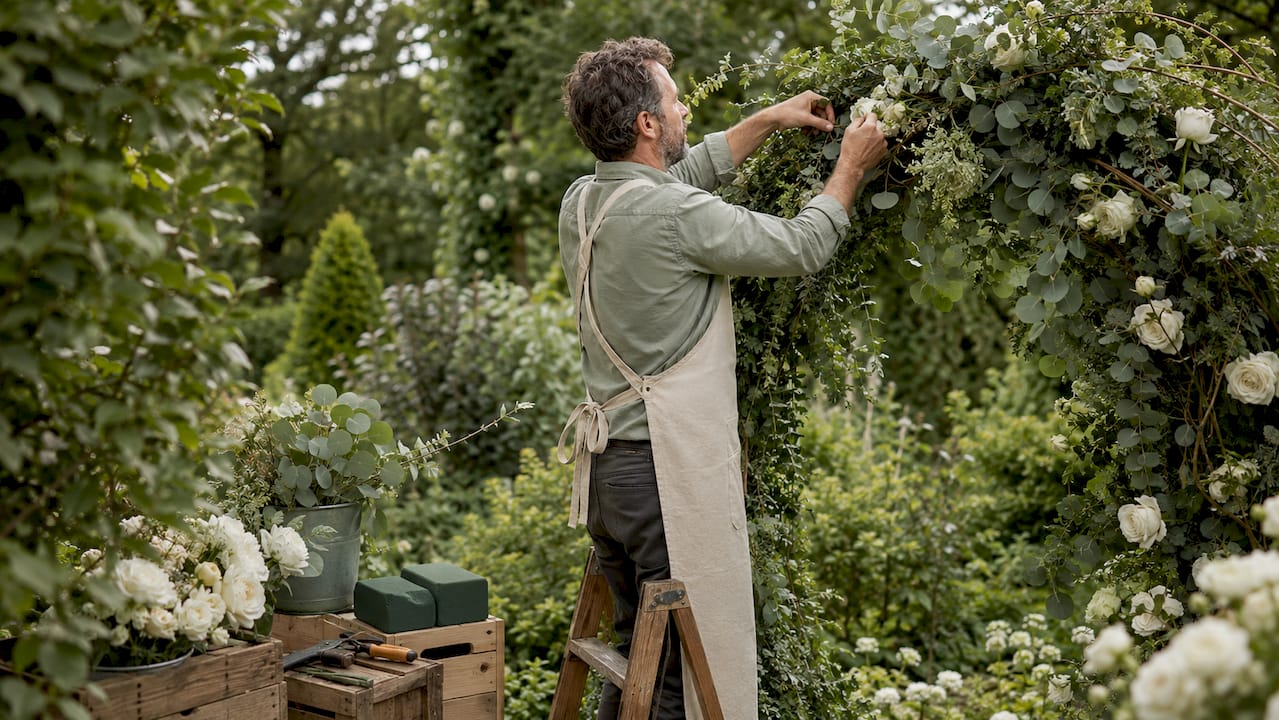
Florists who specialise in events think in terms of guest flow, photography angles, and spatial balance. A well-planned floral scheme guides guests from entrance to reception, reinforces your colour palette, and creates the moments people photograph and remember. Planning florals as part of your event infrastructure, rather than as decoration bolted on at the end, elevates the entire production value of the occasion.
How do you plan and budget for event flowers effectively?
Budgeting for event flowers requires more structure than most people expect. Start with a clear total event budget, then allocate your floral spend accordingly. The steps below give you a reliable framework.
-
Set your floral budget early. Flowers typically represent 8–12% of a wedding budget. For corporate or private events, the proportion varies, but fixing a number before you approach florists prevents scope creep.
-
Book well in advance. Peak-season bookings require an 8–14 month lead time. Florists working at the luxury end of the market fill their calendars quickly, particularly for june, july, and september dates.
-
Understand deposit requirements. Most florists require a deposit of 25–40% to secure your date. Budget for this upfront payment when you plan your cash flow.
-
Order a stem buffer. Add a 20% stem buffer to your total order. Breakage, wilting, and last-minute adjustments are normal. That buffer prevents shortages on the day.
-
List every floral element. Write down bridal bouquets, buttonholes, centrepieces, ceremony arch flowers, table garlands, and any entrance or bar arrangements. Pricing surprises almost always come from elements that were not listed at the outset.
-
Schedule deliveries and installations. Confirm with your venue when florists can access the space. Most installations require at least 3–5 hours before guests arrive. Build this into your event day schedule.
Pro Tip: Ask your florist for a line-item quote rather than a single total. Seeing the cost per centrepiece, per bouquet, and per installation makes it far easier to adjust the scope without losing the overall design vision.
What are the key floral design principles and trends for events?
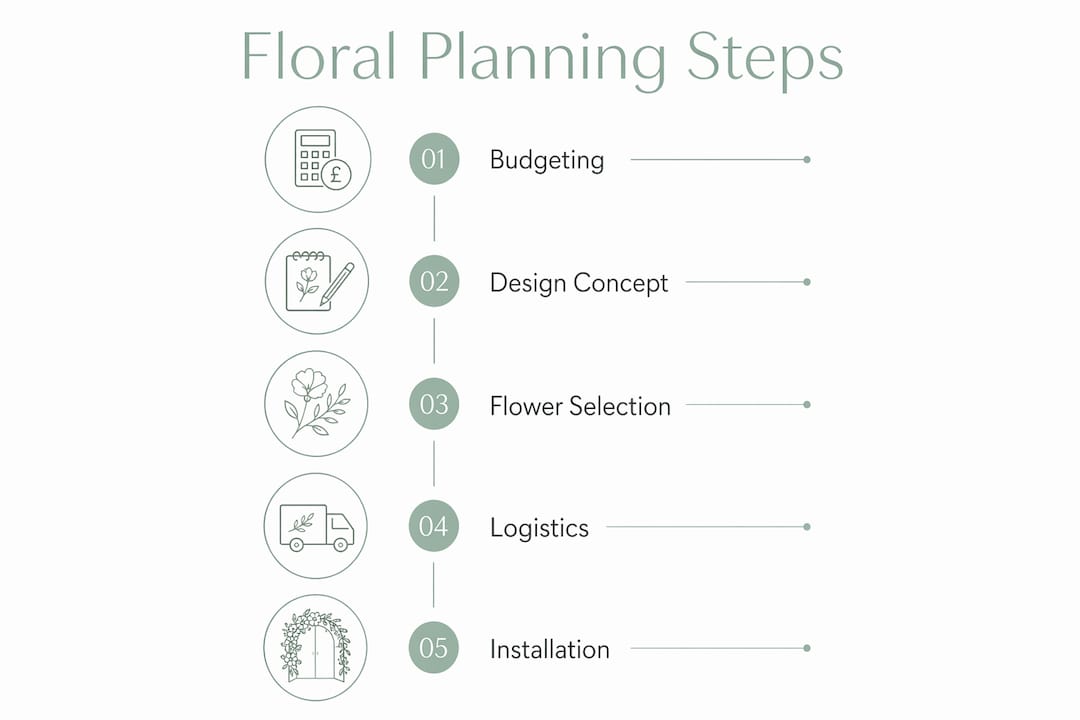
Good floral design follows structure. The 3-5-8 flower ratio is the most widely used framework: three focal flowers, five secondary blooms, and eight filler stems per arrangement. This ratio creates visual depth without making arrangements look cluttered or flat. It works equally well for table centrepieces and large ceremony installations.
Traditional florists vs full-service event designers
Traditional florists focus on individual arrangements. Full-service event designers create cohesive venue environments where every floral element connects to the next. For a small dinner party, a traditional florist is often sufficient. For a wedding or large corporate event, a full-service designer brings the spatial thinking and supplier network that individual arrangements cannot replicate.
- Traditional florist: Produces bouquets, buttonholes, and standard centrepieces. Best for smaller events or supplementary arrangements.
- Full-service event designer: Plans the entire floral environment, coordinates with venue and catering teams, and manages large-scale installations.
- Hybrid approach: Many mid-range florists offer partial event design. Clarify exactly what is included before signing a contract.
| Criteria | Traditional florist | Full-service event designer |
|---|---|---|
| Scope | Individual arrangements | Whole venue environment |
| Coordination | Limited | Full team and venue liaison |
| Best for | Small events | Weddings, galas, corporate |
| Cost | Lower | Higher |
Modern trends shaping event floral design in 2026
Modern floral trends favour grounded, focal installations over scattered filler displays. A single dramatic arch or a low garden-style tablescape creates more visual impact than a dozen small vases spread across a room. Investing in one impactful focal installation delivers stronger photographic appeal and a clearer design statement. You can explore the latest directions in the 2026 floral trends guide from Blumeflowers.
Pro Tip: Lock in your colour palette months ahead, not specific flower varieties. Committing to a palette gives your florist flexibility to source the best seasonal blooms available, which often look better and cost less than forcing out-of-season varieties.
How do you manage logistics and install floral arrangements successfully?
Logistics are where many event floral plans fall apart. A beautiful design means nothing if the flowers arrive late, wilt before guests sit down, or cannot be rigged safely in the venue. Address these points before your event date.
- Conduct a site inspection. Site inspections assess load-bearing capacity, fire codes, and power access. These constraints directly affect what installations are physically possible. Never commission a hanging floral installation without confirming the venue’s rigging points and weight limits.
- Condition flowers before the event. Flowers need time to hydrate and open after delivery. Allow 3–5 hours between delivery and the start of the event for conditioning and final arrangement.
- Use the grid technique. Floral tape grids placed across vase openings prevent stems from slumping and extend vase life. Professional florists use this on every table arrangement.
- Coordinate with venue and catering teams. Florists need to know when tables are set, when catering begins, and where power sources are located. Poor coordination between suppliers is the most common cause of installation delays.
- Plan for large-scale installations separately. Sculptural or ceiling-hung installations require early collaboration with venue technical teams. Large-scale floral installations need rigging, safety checks, and often a structural assessment well before the event.
Pro Tip: Ask your florist to walk the venue with you at least six weeks before the event. Seeing the space together resolves most logistical questions before they become day-of problems.
What practical tips improve communication with your florist?
Clear communication with your florist is the single biggest factor in whether your event floral vision is realised. Vague briefs produce generic results. Specific briefs produce exactly what you imagined.
-
Write a detailed brief. Include your colour palette, event date, venue name, guest count, and a list of every floral element you need. Attach reference images from Pinterest or Instagram to show the style you are aiming for.
-
Understand how florists work. Professional florists use detailed floral recipes with stem counts and specifications for each arrangement. Ask to see this document. It confirms that your florist has planned the order accurately and leaves no room for shortages.
-
Discuss contracts and contingency plans. A written contract should cover deposit terms, cancellation policy, substitution clauses for unavailable flowers, and delivery times. A substitution clause protects you if a specific bloom becomes unavailable close to the event.
-
Request regular updates. Check in with your florist at six months, three months, and six weeks before the event. These touchpoints catch problems early and keep the design on track.
-
Commission a floral mockup. A floral mockup costs between $250 and $650 and provides a realistic preview of your centrepiece design. For large events where centrepieces are repeated across many tables, a mockup pays for itself by preventing expensive last-minute changes. For a broader overview of arrangement styles, the floral arrangements guide from Blumeflowers covers options for every occasion type.
Pro Tip: Send your florist the final venue floor plan as soon as it is confirmed. Knowing exact table dimensions and room layout allows them to scale centrepieces correctly and avoid arrangements that block sightlines.
Key takeaways
Effective event floral planning requires early budgeting, clear design principles, and close collaboration with your florist from the very first brief.
| Point | Details |
|---|---|
| Budget early and accurately | Flowers represent 8–12% of event costs; list every element before approaching florists. |
| Book well in advance | Secure your florist 8–14 months ahead for peak-season dates to avoid losing your preferred supplier. |
| Apply the 3-5-8 ratio | Use three focal, five secondary, and eight filler stems per arrangement for visual balance. |
| Prioritise one focal installation | A single impactful installation delivers stronger visual and photographic results than scattered small arrangements. |
| Communicate with a detailed brief | Provide colour palettes, reference images, and a full element list to get accurate quotes and consistent results. |
Why I think most people plan florals in the wrong order
Most event planners I speak with treat flowers as the final item on the checklist. They book the venue, confirm catering, finalise the menu, and then, a few weeks before the event, start thinking about flowers. That order is backwards. Flowers are not decoration. They are architecture. They define how a space feels the moment guests walk in, and they shape every photograph taken that day.
The planners who get the best results treat florals the way they treat catering: as a core part of the event’s infrastructure. They brief their florist at the same time they brief the caterer. They share the venue floor plan. They discuss intentional floral design that supports guest flow, not just table decoration. The difference in the final result is significant.
The other mistake I see constantly is locking in specific flower varieties too early. A client insists on garden roses in a particular shade of blush, books them nine months out, and then discovers they are unavailable or double the expected price in the week before the event. Lock the palette. Trust your florist to source the best blooms that fit it. That flexibility is what separates a good floral scheme from a great one. For anyone wanting to understand the craft behind luxury arrangements, the Blumeflowers guide to floral craftsmanship is worth reading before your first florist meeting.
— Steve
Discover Blumeflowers’ curated bouquets and event florals
Blumeflowers designs and delivers premium floral arrangements across Birmingham, Solihull, and surrounding areas, with same-day and next-day options available. Whether you need a statement centrepiece or a beautifully simple gift bouquet to complement your event, the collection covers every occasion.
The Beautifully Simple Peony Bouquet is a popular choice for events and gifting alike, offering a refined, modern aesthetic that photographs beautifully. For corporate events and office reception flowers, Blumeflowers provides a dedicated corporate flowers service tailored to Birmingham and Solihull businesses. Get in touch with the Blumeflowers team to discuss your event requirements and arrange a personalised consultation.
FAQ
What percentage of an event budget should go on flowers?
Flowers typically account for 8–12% of a wedding budget. For corporate or private events, the proportion varies based on the scale and style of the occasion.
How far in advance should I book a florist for my event?
Book your florist 8–14 months ahead for peak-season dates such as summer weddings. For off-peak events, three to six months is generally sufficient.
What is the 3-5-8 flower ratio?
The 3-5-8 ratio means using three focal flowers, five secondary blooms, and eight filler stems per arrangement. This balance creates depth and visual interest without overcrowding.
Do I need a floral mockup for my event?
A mockup is strongly recommended for large events where centrepieces are repeated across many tables. Mockups typically cost between $250 and $650 and prevent expensive last-minute design changes.
What is the difference between a florist and an event floral designer?
Traditional florists produce individual arrangements, while full-service event designers create a cohesive floral environment across the entire venue. For weddings and large events, a full-service designer offers broader coordination and spatial planning.