


Best condolence flowers list: 10 meaningful choices
TL;DR:
- Choosing condolence flowers involves selecting symbols that reflect the deceased’s personality and the occasion’s cultural context.
- Personalized arrangements with meaningful flowers and heartfelt messages provide lasting comfort to grieving families.
Choosing the right flowers when someone is grieving is one of those quietly difficult tasks that nobody teaches you how to do. You want to say something meaningful without overstepping, to honour the person who has died without getting the symbolism wrong. The best condolence flowers list is not a one-size-fits-all solution — it is a starting point for a thoughtful decision shaped by the deceased, the family, and the occasion. This guide will walk you through what each flower means, when to send it, and how to make your choice count.
Table of Contents
- Key takeaways
- What makes the best condolence flowers list work
- 1. White lilies
- 2. White roses
- 3. Chrysanthemums
- 4. Carnations
- 5. Orchids
- 6. Hydrangeas
- 7. Gladioli
- 8. Forget-me-nots
- 9. Calla lilies
- 10. Peace lily plant
- Quick-reference guide to condolence flowers
- Thoughtful tips for choosing and sending condolence flowers
- My honest take on condolence flowers
- Send something beautiful with Blumeflowers
- FAQ
Key takeaways
| Point | Details |
|---|---|
| Symbolism guides your choice | Each flower carries a specific meaning; matching that meaning to the occasion shows genuine thought. |
| Culture matters significantly | Certain colours and flower types carry different meanings across cultures — always consider this before ordering. |
| Order 24 to 48 hours ahead | For funeral service delivery, placing your order at least a day in advance prevents delays and disappointment. |
| Personalisation offers deeper comfort | Flowers that reflect the deceased’s favourite blooms provide far more comfort than generic arrangements. |
| The card message often lasts longer | A sincere, handwritten note alongside flowers is frequently what families keep and return to. |
What makes the best condolence flowers list work
Not all sympathy flowers are created equal, and selecting the right ones requires more than grabbing whatever is available at the nearest shop. A few considered criteria will help you choose with confidence.
Symbolic meaning is your foundation. Flowers for sympathy gifts carry centuries of layered meaning. White communicates purity and peace. Soft pink expresses gentle love. Yellow suggests friendship and warmth. Getting these right means your flowers speak even before anyone reads the card.
Cultural and religious awareness should never be overlooked. Red flowers signal happiness, not mourning, in several East Asian traditions, making them wholly inappropriate for a funeral setting. Some religions favour plants over cut flowers, while others welcome elaborate floral tributes. When in doubt, ask a family member or opt for white and cream tones, which tend to be universally respectful.
Timing and delivery matter more than most people realise. Order condolence flowers 24 to 48 hours before the service if you are sending directly to a funeral home. For home delivery to the bereaved family, there is more flexibility. Many florists, including Blumeflowers, offer timed delivery for both.
Occasion context also shapes the decision. Funeral service arrangements tend to be formal and structured. Home delivery gifts lean towards softer, longer-lasting options such as plants or seasonal bouquets. Knowing where your flowers will go helps you choose the right scale and style.
Pro Tip: If you are unsure whether to send flowers to the service or the home, sending a thoughtful arrangement to the family’s home a week or two after the funeral can provide comfort during the period when most support has already faded.
1. White lilies
White lilies are arguably the most recognised flower on any top funeral flower arrangements list. They represent purity, restored innocence, and the peace of the soul after death. In Christian traditions especially, the white lily carries profound symbolic weight, connecting to resurrection and spiritual renewal.
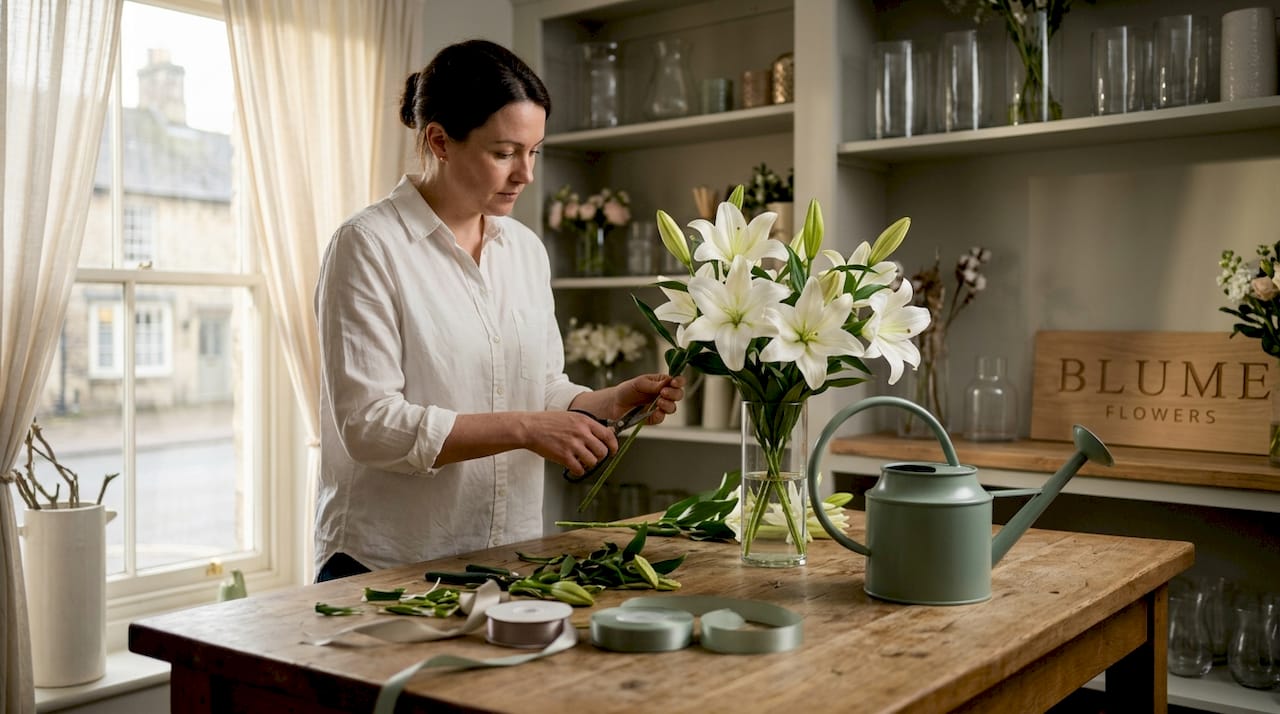
They are bold in scale but calm in colour, making them a strong centrepiece for a funeral arrangement. White lilies are among the most widely accepted sympathy flowers in Western traditions. If you are unsure what to choose, a lily-led arrangement rarely puts a foot wrong.
2. White roses
Roses are never just romantic. White roses carry reverence, humility, and a deep, quiet love. They are one of the most appropriate flowers for funerals because their message is unambiguous and universally understood. A spray of white roses on a coffin or within a sympathy bouquet communicates respect without needing explanation.
Pink roses suggest admiration and gentle affection, making them thoughtful for someone who was particularly loved for their warmth or kindness. Red roses, though traditionally associated with passion, can also appear in memorial arrangements to express deep grief and abiding love for a close partner or parent.
3. Chrysanthemums
Chrysanthemums deserve a nuanced mention on this best condolence flowers list. In the United Kingdom and across much of Europe, white chrysanthemums are strongly associated with funerals and mourning. They represent grief, remembrance, and the expression of sorrow.
However, their meaning shifts significantly across cultures. White and yellow chrysanthemums are standard funeral flowers in East Asian traditions, which makes them a particularly considered choice for multicultural services. If you know the family’s background, chrysanthemums can be a quietly respectful nod to that heritage.
4. Carnations
Carnations are an often underestimated flower on any thoughtful memorial flower options list. Pink carnations express undying remembrance. White carnations symbolise pure love and innocence. Red carnations communicate deep admiration. Combined in a sympathy arrangement, they offer a layered emotional message.
They are also one of the most practical choices. Carnations are long-lasting blooms, meaning a home delivery arrangement will remain beautiful for longer than many more delicate flowers. For families who are busy in the days after a bereavement, this longevity is quietly appreciated.
5. Orchids
Orchids carry a message of enduring love and refined elegance. They are less common in traditional funeral arrangements, but they are among the best blooms for condolences when you are sending a gift directly to the family home. A potted orchid in particular offers something deeply meaningful: a living, lasting symbol of care that will continue to bloom long after the service is over.
Meaningful selection matters more than tradition when the relationship with the grieving person is close. If the person who died loved orchids, sending them is far more comforting than defaulting to lilies out of habit.
6. Hydrangeas
Hydrangeas are not the first flower people reach for as condolence choices, but they deserve a place on this list. Their full, voluminous heads communicate heartfelt emotion and gratitude. In a sympathy arrangement, they soften the formality of lilies or roses and add a gentle warmth that suits home delivery particularly well.
White and soft blue hydrangeas work beautifully in bereavement gifting. They are substantial flowers that make a bouquet feel generous and considered, and they last reasonably well when properly cared for. If the family is receiving visitors at home, a hydrangea arrangement creates a quietly comforting atmosphere.
7. Gladioli
Gladioli are strong, vertical flowers that communicate moral integrity, strength of character, and sincerity. They appear frequently in formal funeral arrangements and are a particularly fitting choice for tributes to individuals who served in the military, held positions of leadership, or were known for their determination and resilience.
Their height and structure make them well-suited to standing sprays and formal funeral floral displays rather than hand-tied home bouquets. If you are coordinating flowers with the funeral director, gladioli are worth including for the gravitas they bring to the arrangement. The Blüme guide on coordinating funeral flowers offers further practical advice on how to do this well.
8. Forget-me-nots
Forget-me-nots are small, but they carry one of the most direct messages of any flower on this list. Their name says everything. Forget-me-nots symbolise faithful remembrance across many European cultures, representing the promise that the person who has died will not be forgotten.
They work beautifully as part of a mixed sympathy arrangement rather than as a standalone bouquet, threading through larger blooms as a quiet and intentional gesture. Including them in a wreath or posy alongside white lilies or roses gives the arrangement an added layer of meaning that attentive families will notice and appreciate.
9. Calla lilies
Calla lilies are distinct from standard white lilies in both form and meaning. Their smooth, trumpet-shaped blooms are associated with resurrection and the beauty of the soul returning to something greater. They are a popular choice for celebrations of life specifically, where bright and meaningful flowers are embraced to honour the personality and spirit of the deceased.
A calla lily arrangement communicates that the service is not only about loss, but also about a life well lived. They photograph beautifully, which matters for services where memorial photography is planned, and their sculptural shape lends elegance to any arrangement.
10. Peace lily plant
The peace lily deserves special mention as a popular condolence flower type because it occupies a different category from cut flowers. As a plant, it offers something ongoing. The peace lily provides a lasting message of peace and healing, making it an increasingly popular sympathy gift for home delivery well beyond the immediate funeral.
Sending a peace lily plant a week or two after the service, when most other gestures have passed, can be especially meaningful. Practical and lasting gifts sent weeks after the service are deeply appreciated when families feel most isolated. A peace lily requires only moderate care, so it does not become a burden to someone already overwhelmed.
Quick-reference guide to condolence flowers
| Flower | Core meaning | Best occasion | Cultural notes | Longevity |
|---|---|---|---|---|
| White lily | Purity, peace | Funeral service | Widely accepted in the West | Moderate |
| White rose | Reverence, love | Service or home | Universal | Moderate |
| Chrysanthemum | Grief, remembrance | Funeral service | Standard in East Asia | Long |
| Carnation | Devotion, remembrance | Service or home | Widely accepted | Very long |
| Orchid | Enduring love | Home delivery | Suitable for all cultures | Very long (plant) |
| Hydrangea | Heartfelt emotion | Home delivery | Western European | Moderate |
| Gladiolus | Strength, integrity | Formal service | Suited to dignified tributes | Moderate |
| Forget-me-not | Faithful remembrance | Mixed arrangement | European traditions | Short (use fresh) |
| Calla lily | Resurrection, beauty | Celebration of life | Modern, less traditional | Moderate |
| Peace lily | Healing, ongoing peace | Home delivery | Broadly appropriate | Very long (plant) |
Thoughtful tips for choosing and sending condolence flowers
The most memorable condolence gestures tend to share one quality: they feel personal. Here are the principles that make the difference between a generic gesture and a genuinely comforting one.
Reflect the person, not just convention. If the deceased had a favourite flower, even an unconventional one, sending it communicates that you actually knew and cared for them as an individual. Personalised flower choices that reflect the deceased’s preferences provide more comfort than generic arrangements.
Write the card with care. The condolence card message is often what families keep long after the flowers have faded. A short, sincere note mentioning a specific memory of the deceased is worth far more than an expensive arrangement with a blank card.
Know who sends flowers and to whom. There is a common misunderstanding here. Immediate family members traditionally receive flowers rather than send them. Friends, colleagues, and extended family are the ones who send condolence flowers to the funeral or the family home.
Consider timing alternatives. Sending flowers to the service is expected. Sending a thoughtful sympathy bouquet or plant two weeks later, when the house has gone quiet and the casseroles have stopped arriving, can be even more impactful.
Pro Tip: When delivering flowers directly to a funeral home, always include the full name of the deceased, the date of the service, and the family’s name on the delivery note. This prevents confusion when multiple services are running on the same day.
My honest take on condolence flowers
I have seen people spend considerable time worrying about choosing the “correct” flower when the person grieving would have been deeply moved by almost any gesture sent with genuine thought. The obsession with tradition can sometimes work against the very thing you are trying to do, which is let someone know they are not alone.
In my experience, the flowers that are remembered are not the most expensive. They are the ones that arrived with a note that mentioned something specific. The arrangement that used the deceased’s favourite colour, even if it was not white or cream. The potted plant that was still alive three months later, sitting in a sunny window, a quiet presence in a changed home.
I would also gently push back on the idea that flowers must go to the service. There is real merit in the delayed gesture. Grief does not end on the day of the funeral. The second or third week, when the world has resumed its rhythm but the bereaved person has not, is often when a thoughtful delivery means the most.
Choose with intention. Keep the note simple and specific. Do not overthink the flower itself as long as the sentiment behind it is genuine.
— Steve
Send something beautiful with Blumeflowers

Blumeflowers offers a curated selection of elegant condolence and funeral bouquets, designed with the sensitivity this occasion demands. Whether you need a formal arrangement for the service or a softer, lasting gift for the family at home, every arrangement is crafted with care and delivered on time. Explore the elegant funeral flowers range for classic and refined options suited to any memorial occasion. For something quieter and deeply heartfelt, the beautifully simple peony bouquet offers a premium, understated tribute that says everything without overstatement. Same-day and next-day delivery is available across Birmingham, Solihull, and surrounding areas.
FAQ
What are the most appropriate flowers for a funeral?
White lilies, white roses, and chrysanthemums are the most widely accepted funeral flowers in British tradition. They communicate peace, love, and remembrance without ambiguity.
Should I send flowers to the service or the family home?
Both are appropriate, but sending flowers to the family home a week or two after the service can provide comfort during a time when most other support has passed.
Which flowers should I avoid at a funeral?
Avoid red flowers for services involving East Asian families, as red traditionally represents happiness rather than mourning. Bright, bold arrangements are generally better reserved for celebrations of life unless you know the family’s preferences.
Do flower colours carry different meanings at funerals?
Yes. White represents purity and peace, pink expresses gentle love and admiration, yellow suggests friendship, and red conveys deep grief or passionate love. When in doubt, white and cream tones are universally appropriate.
Is it acceptable to send a plant instead of flowers?
Absolutely. A peace lily plant or potted orchid is a thoughtful, long-lasting alternative that continues to offer comfort well beyond the initial period of bereavement.